Paysage de Genêt — History & Facts
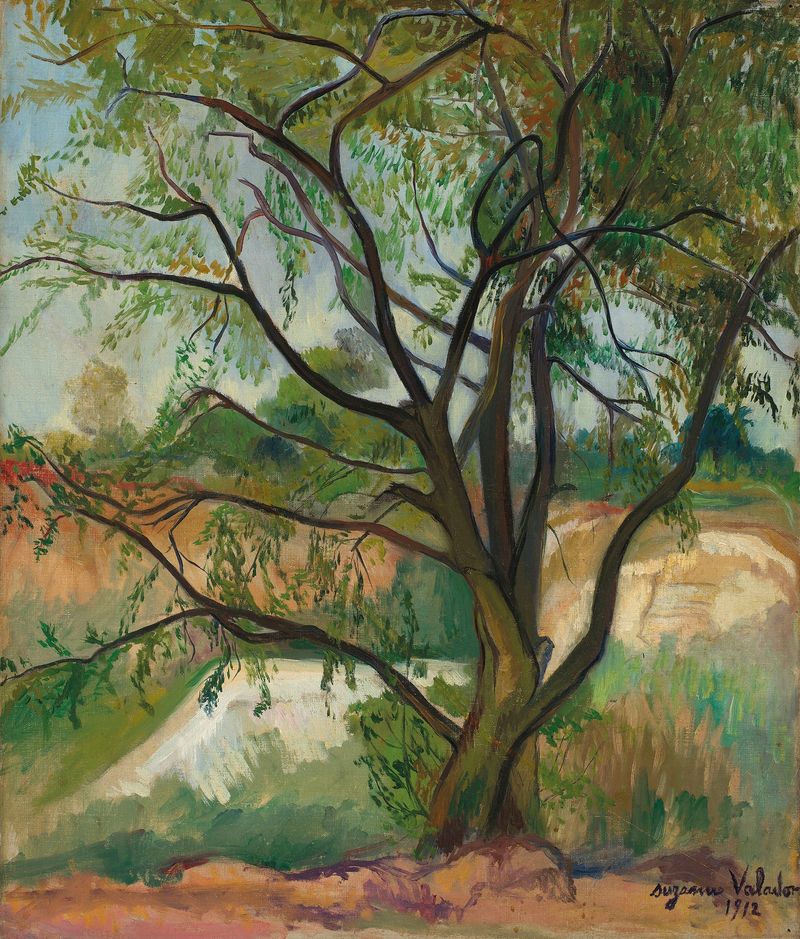
Can beauty exist without sorrow? In Paysage de Genêt, a vibrant landscape beckons us to ponder the relationship between joy and melancholy. This painting invites the viewer to contemplate the faith that underlies nature's splendor. Focus on the sweeping fields of golden genista, where each stroke of yellow dances under a cerulean sky. Notice how the lush greenery subtly recedes into the background, allowing the warm hues to dominate the scene.
The careful balance of color and form reveals an artist attuned to both the vibrancy of life and the whispers of nostalgia. The composition draws you in, creating an almost ethereal atmosphere that speaks volumes through simplicity. Delve deeper and you'll uncover the contrasts at play—between the bright blooms and the shadowy, murmuring hills, embodying the duality of existence. The ephemeral beauty of the flowers hints at transience, serving as a reminder that even the most radiant moments are fleeting.
Here, faith intertwines with nature, suggesting an underlying belief in renewal and rebirth despite life's inevitable sorrows. Suzanne Valadon painted Paysage de Genêt in 1922 during a period of personal evolution and artistic exploration. After transitioning from a model to a celebrated artist, she was establishing her distinct style amid a world that was rapidly changing. Valadon’s bold use of color and form reflects the emerging modernist movement while simultaneously honoring her connection to the Impressionists.
This work encapsulates her journey, echoing her faith in both art and life.