Einlaufender Dampfer — History & Facts
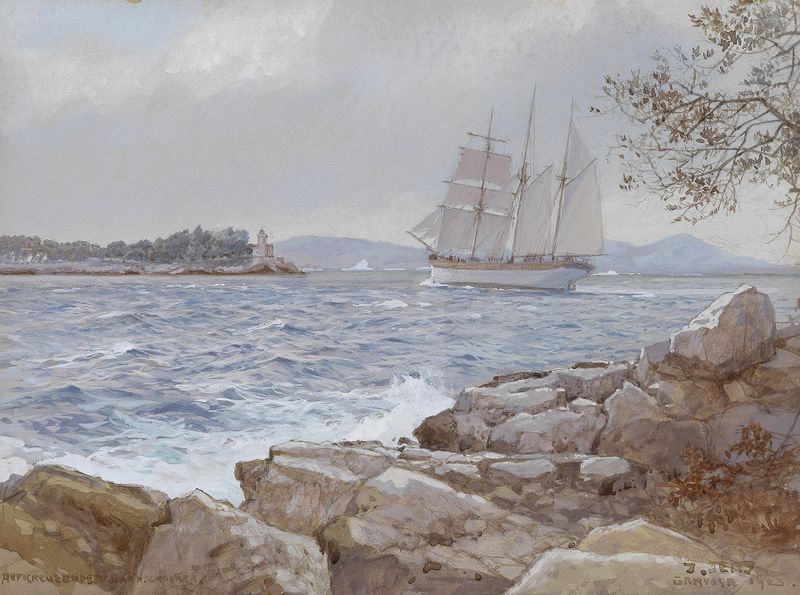
In the stillness of a moment captured, one senses the tumultuous joy that brews beneath the surface, as the viewer stands on the brink of an arrival, an ecstatic encounter with the unknown. Focus on the left side of the canvas, where the vessel looms, its shadow dancing on the water’s surface. The vessel's steam billows upward, merging with the vibrant hues of dusk, casting a warm glow that contrasts with the cool blues of the sea. Notice how the brushstrokes convey movement — the rippling water seems to pulse and breathe, echoing the excitement of an impending welcome. The interplay of light and shadow serves as a metaphor for anticipation and revelation.
The steaming ship symbolizes a new beginning, while the figures ashore, despite their stillness, radiate an undercurrent of energy and expectation. This juxtaposition between the vibrant chaos of the ship and the serene composure of those awaiting evokes a profound tension — the thrill of what lies ahead versus the calm of the present moment. Created in 1923, Einlaufender Dampfer reflects Johann Seits' exploration of modern life and its rapid transformations post-World War I. Painted in Germany, during a time when the art world was shifting towards expressionism, Seits sought to capture the momentous joy and hope emerging from the wreckage of the past, portraying a society on the cusp of rediscovery and rebirth.