Aufkreuzende Schonerbark — History & Facts
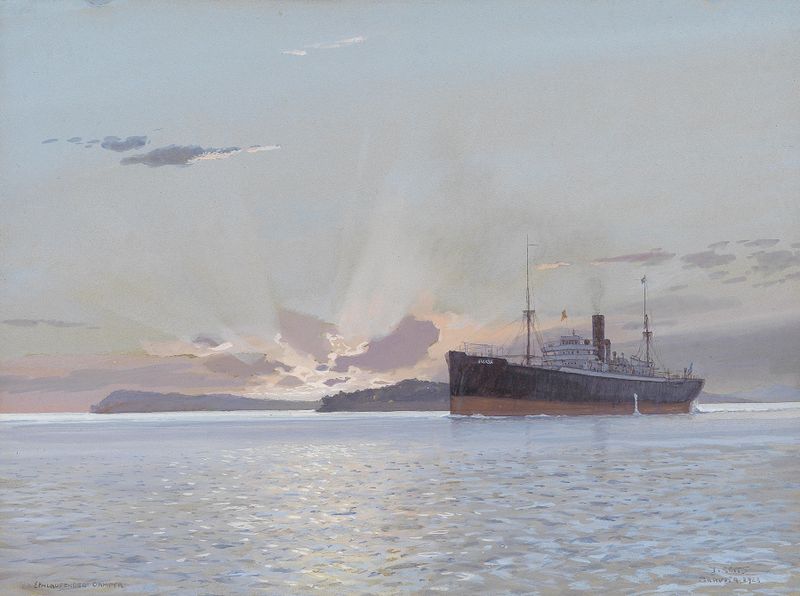
Did the painter know this moment would outlive them? In the ebb and flow of time, beauty finds a way to resonate, long after the brushstrokes have dried. Focus on the vivid hues of blue and green as they dance across the canvas, inviting your gaze to the horizon. Notice how the interplay of light and shadow creates a sense of movement, particularly in the billowing sails that catch the wind. Each stroke seems deliberate, yet free, suggesting both the power of nature and the grace of human craftsmanship.
The overall composition balances serenity with a hint of tension, as if the scene is caught in the delicate moment before a storm. Hidden within this seemingly tranquil maritime scene are subtle themes of perseverance and the transient nature of existence. The ships, poised gracefully against the expansive sky, symbolize both adventure and the unknown. The contrast between the vibrant sails and the darkening clouds hints at the inevitable challenges that lie ahead.
This juxtaposition evokes a sense of longing, serving as a reminder that every beauty is accompanied by a shadow of uncertainty. In 1923, Johann Seits painted this work during a period marked by post-war disillusionment and the rise of modernism. Living in Europe, he navigated a rapidly changing art world that sought to break away from traditional forms. At that time, artists were exploring new styles and perspectives, often reflecting societal upheavals.
Aufkreuzende Schonerbark stands as a testament to Seits’ engagement with these currents, capturing a fleeting moment that transcends the era in which it was created.