
Einzug des Infanterieregiments unter Anton Freiherr Mollinary von Monte-Pastello — History & Facts
What secret hides in the quiet of the canvas? In Einzug des Infanterieregiments unter Anton Freiherr Mollinary von Monte-Pastello, the stillness belies the chaos of a moment halted in time, inviting viewers to ponder the unfolding story beneath the surface. Focus first on the soldier in the foreground, his posture stiff yet commanding, drawing your gaze toward the intricate details of his uniform, richly adorned with insignia. Notice how the golden light catches the brass buttons, illuminating the vibrancy of the colors against the muted backdrop. The composition is carefully orchestrated, with the regiment arranged in a semi-circle, their ranks creating an echo of structure amidst the otherwise turbulent energy conveyed by their expressions. Beyond the immediate allure of military grandeur, deeper meanings ripple through the piece.
The tension between the regiment's disciplined appearance and the hint of restlessness in their eyes suggests an unvoiced apprehension, perhaps of impending conflict. The contrast between the tranquil landscape behind them and the charged atmosphere of the soldiers captures the precarious balance of peace and chaos that defines military life, evoking a sense of impending turmoil and uncertainty. In 1878, when this work was created, Schönn was entrenched in a world that oscillated between the aftermath of the Franco-Prussian War and the shifting dynamics of European powers. The military was a prominent theme in art, reflecting both pride and the realities of conflict.
Schönn’s work embodies this complex dichotomy, revealing a moment of solemnity that conceals the chaos of the world outside the frame.
More Artworks by Alois Schönn
Browse all →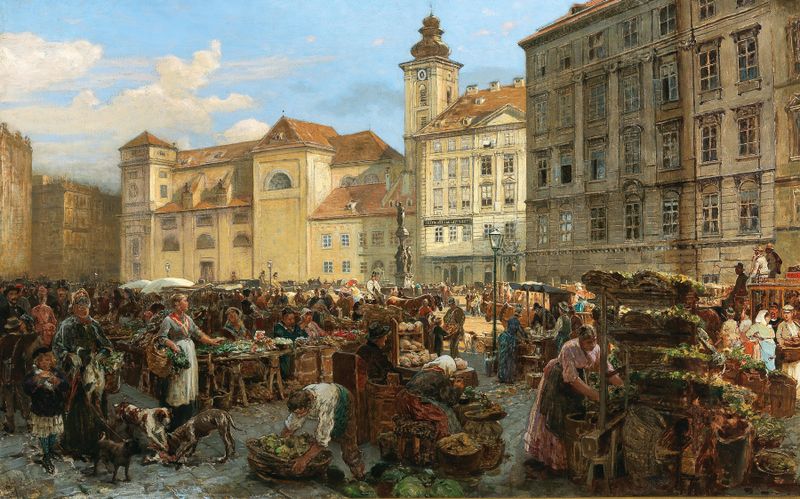
Vienna, a view of the market on Freyung
Alois Schönn
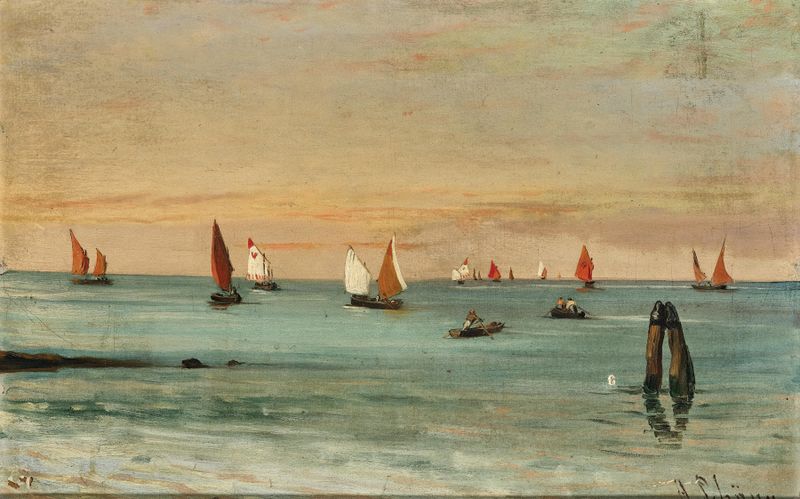
Sailing in a lagune
Alois Schönn
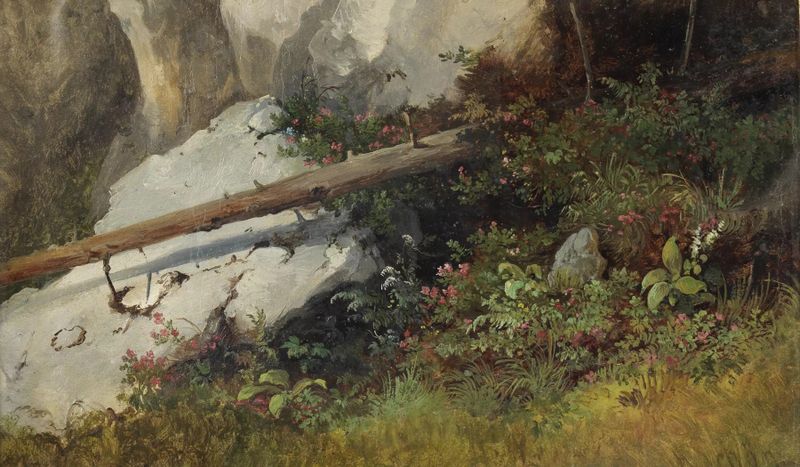
Wiesenstück vor felsigem Hintergrund
Alois Schönn
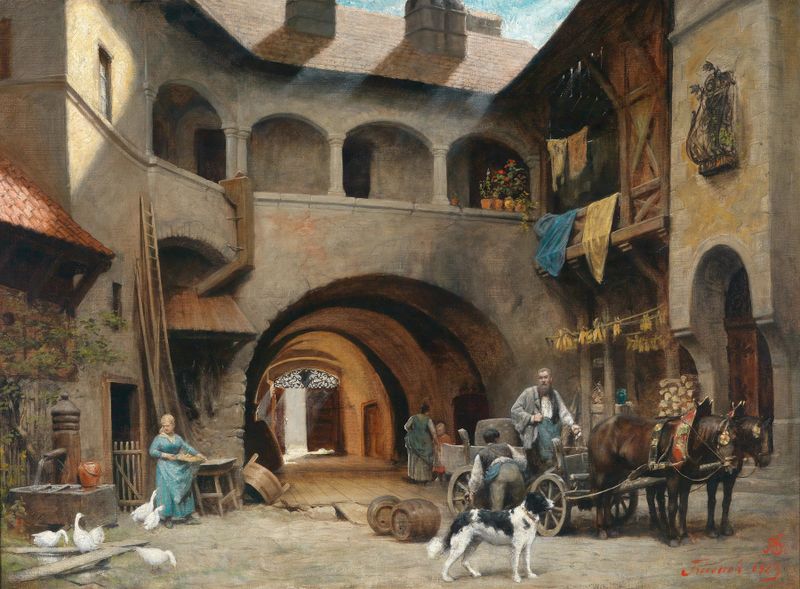
Alter Hof in Friesach mit Fuhrwerk
Alois Schönn
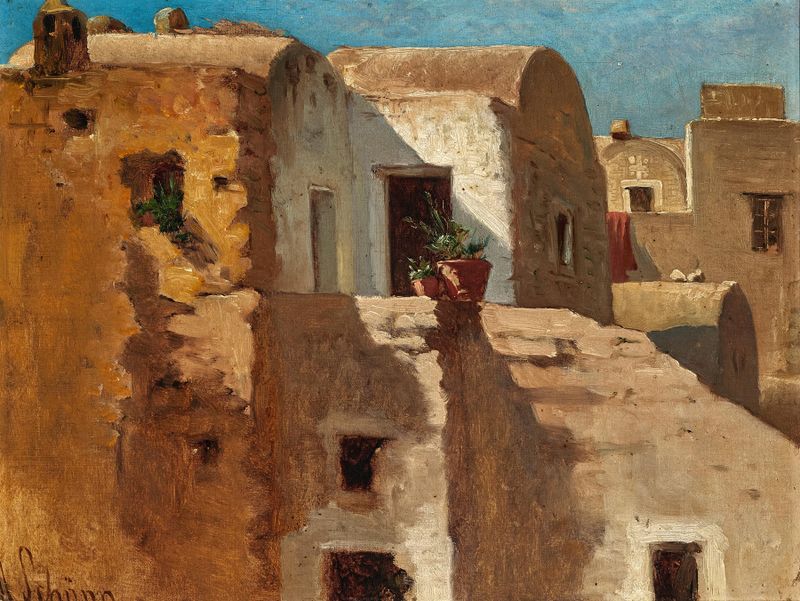
A Terrace in Taormina, study
Alois Schönn
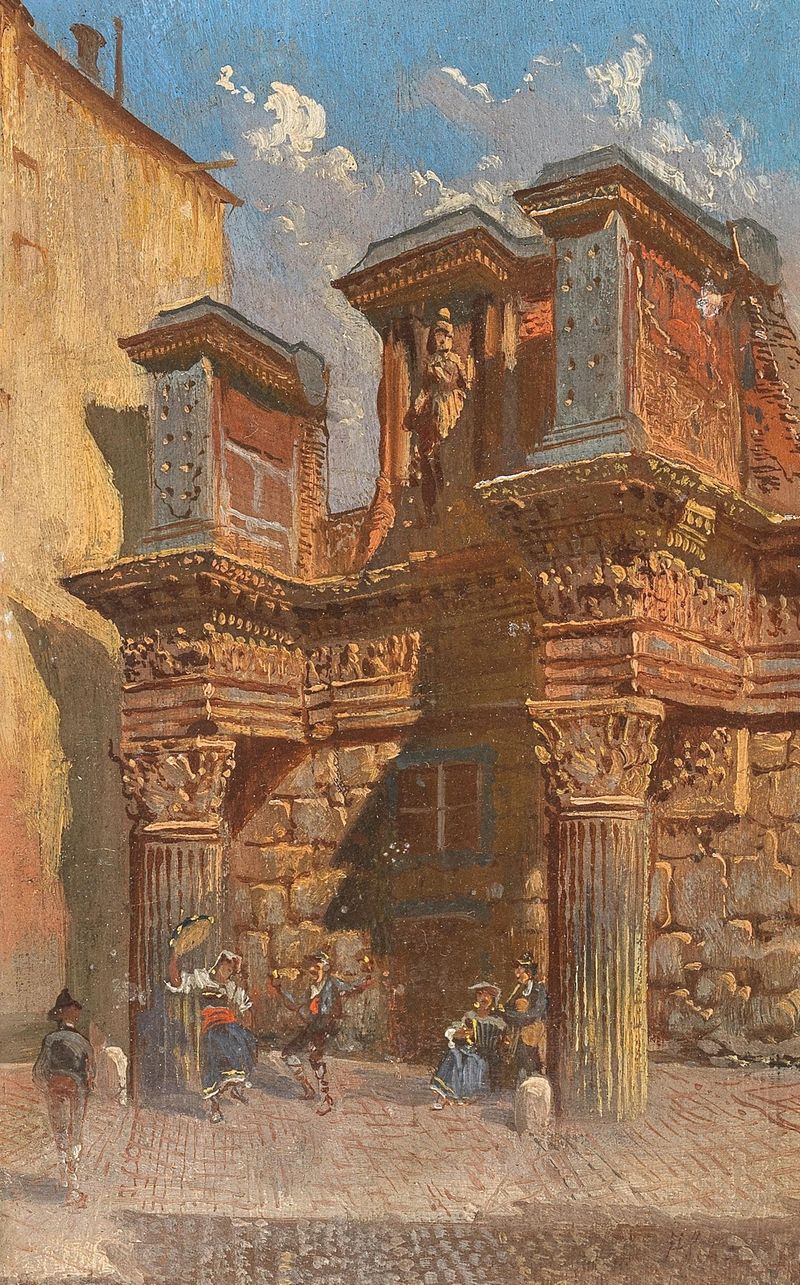
Rome, Columns in Torre dei Conti
Alois Schönn
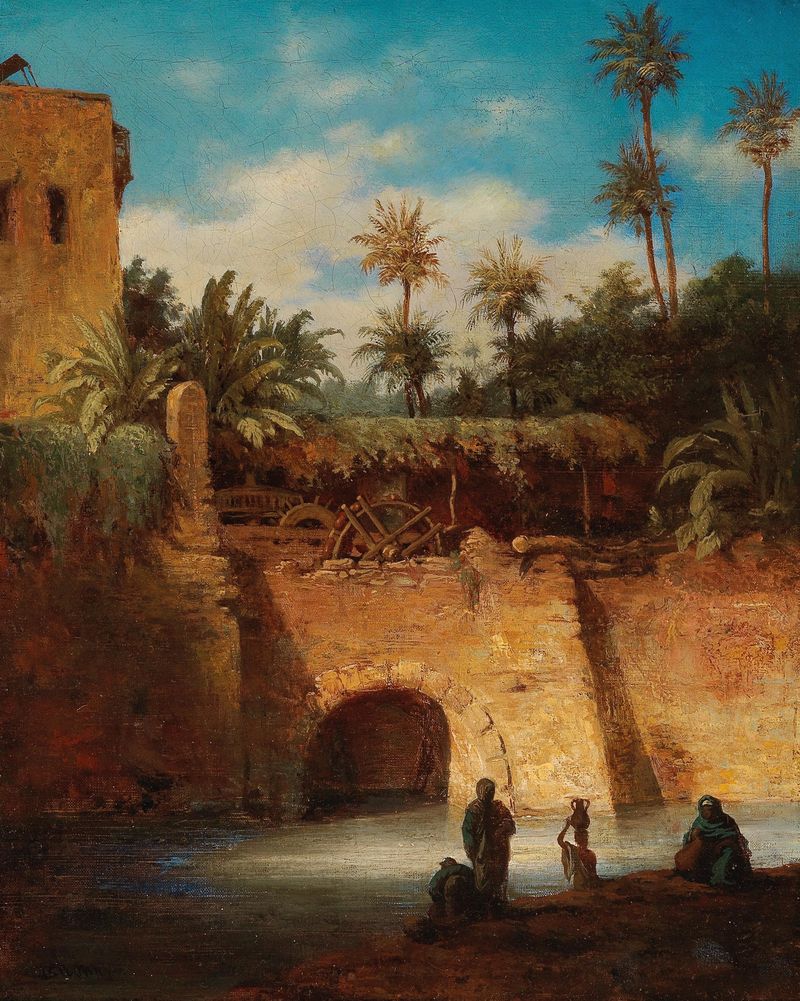
Water Carriers By The Mill
Alois Schönn
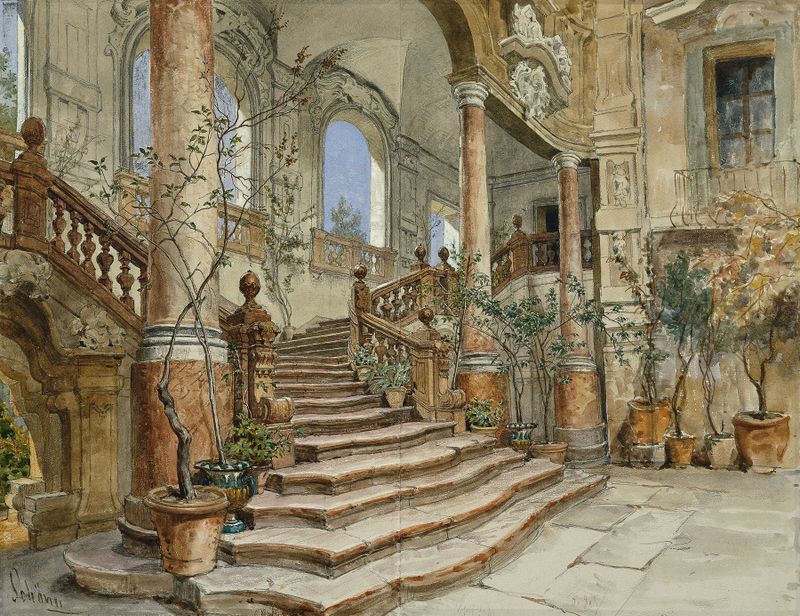
Marmortreppe im Palazzo Bonagia in Palermo
Alois Schönn
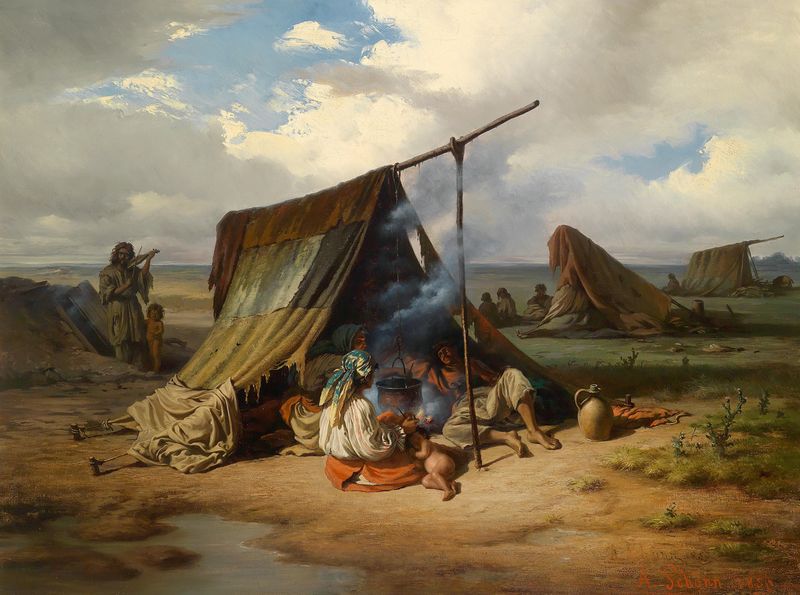
Lagernde Zigeuner
Alois Schönn
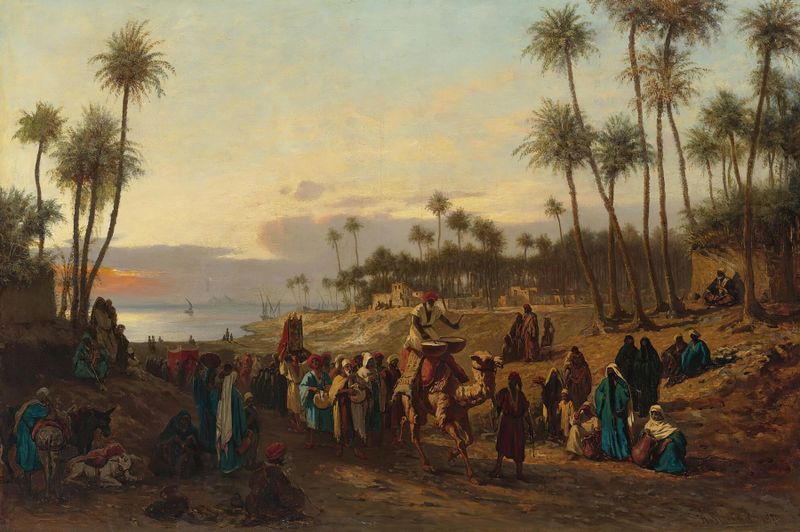
L’arrivée de la mariée
Alois Schönn
More Historical Art
Browse all →
The Night Watch Militia Company of District II under the Command of Captain Frans Banninck Cocq
Rembrandt van Rijn

Lincoln Memorial
Henry Bacon

The Third of May 1808
Francisco de Goya

Isaac and Rebecca, Known as ‘The Jewish Bride’
Rembrandt van Rijn

The Charge of the Mamelukes (1814)
Francisco de Goya

De vier ruiters van de apocalyps
Albrecht Dürer