
Eisgrübl, Vienna — History & Facts
What secret hides in the quiet of the canvas? The stillness in Eisgrübl, Vienna invites viewers to peer into a world where awakening breathes just beneath the surface. Look to the lower center of the piece, where a soft light glimmers on the icy surface, creating a delicate interplay of shadows and hues. The subtle gradations of blues and whites merge, pulling the eye toward the faint outline of trees teetering at the edge of the frozen water. Notice how the brushstrokes evoke a sense of tranquility, while hints of darker tones in the background suggest a looming transformation, a whisper of life reemerging from winter's grip. Beneath this serene façade lie tensions of contrast—between stillness and movement, warmth and cold, life and dormancy.
The stark landscape, punctuated by the slivers of light, reflects a delicate balance of nature's rhythms. This duality encourages contemplation: are we witnessing a moment of peace or the impending thaw? The painting captures a transitional state, where stillness heralds the promise of awakening, urging the viewer to embrace change. Franz Poledne created this piece amidst an era of burgeoning Impressionism, likely during the late 19th century in Vienna. At that time, the art world was experiencing a shift toward capturing the ephemeral moments of life and nature.
Poledne, part of this movement, explored the nuanced interplay between light and texture, reflecting the evolving artistic philosophies of his time.
More Artworks by Franz Poledne
Browse all →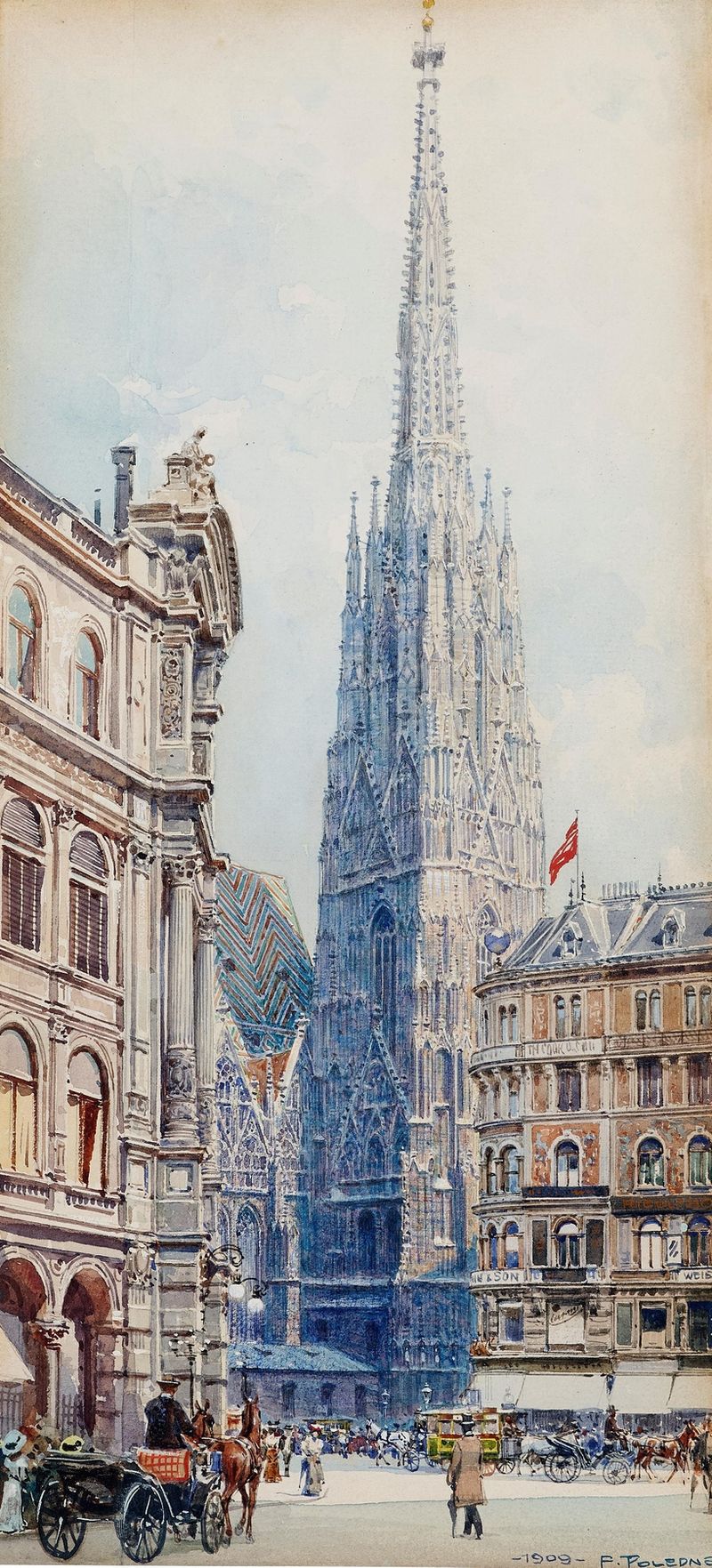
View from Graben to St. Stephen’s cathedral
Franz Poledne
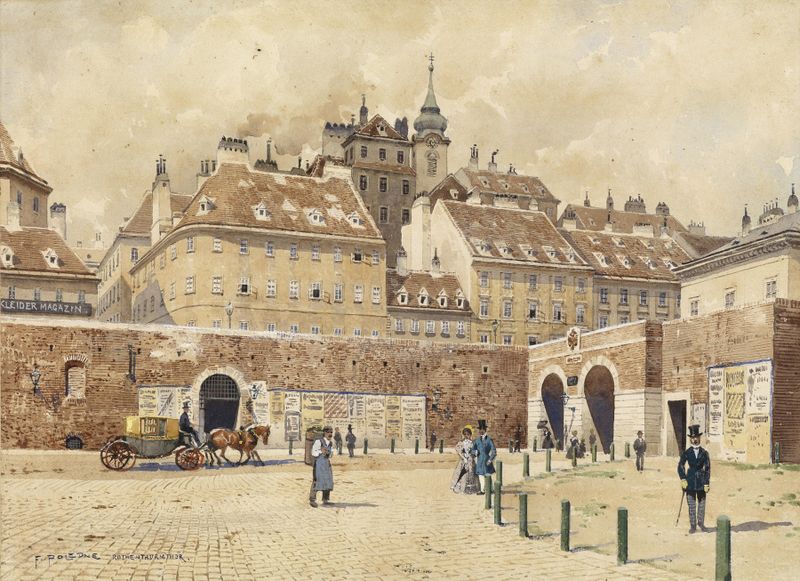
Blick auf Wien vom Rotenthurmtor
Franz Poledne
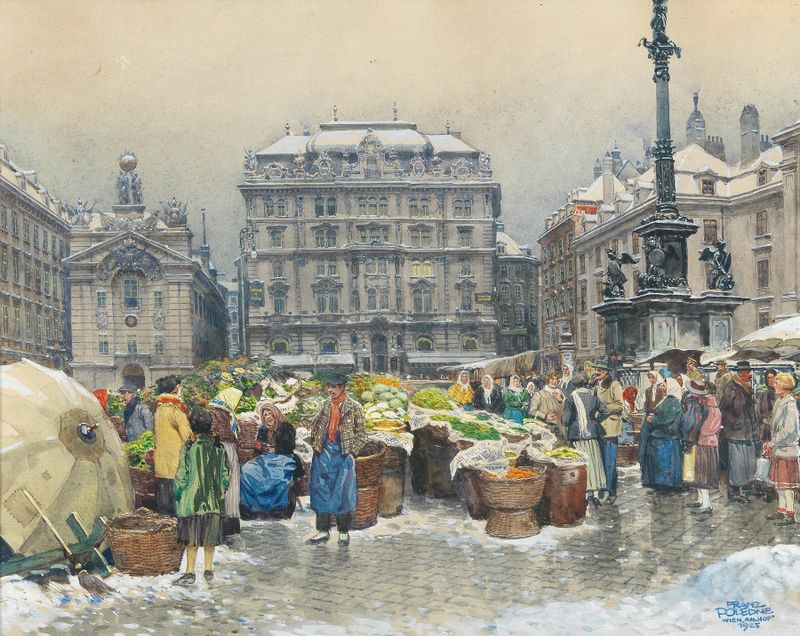
The vegetable market Am Hof
Franz Poledne
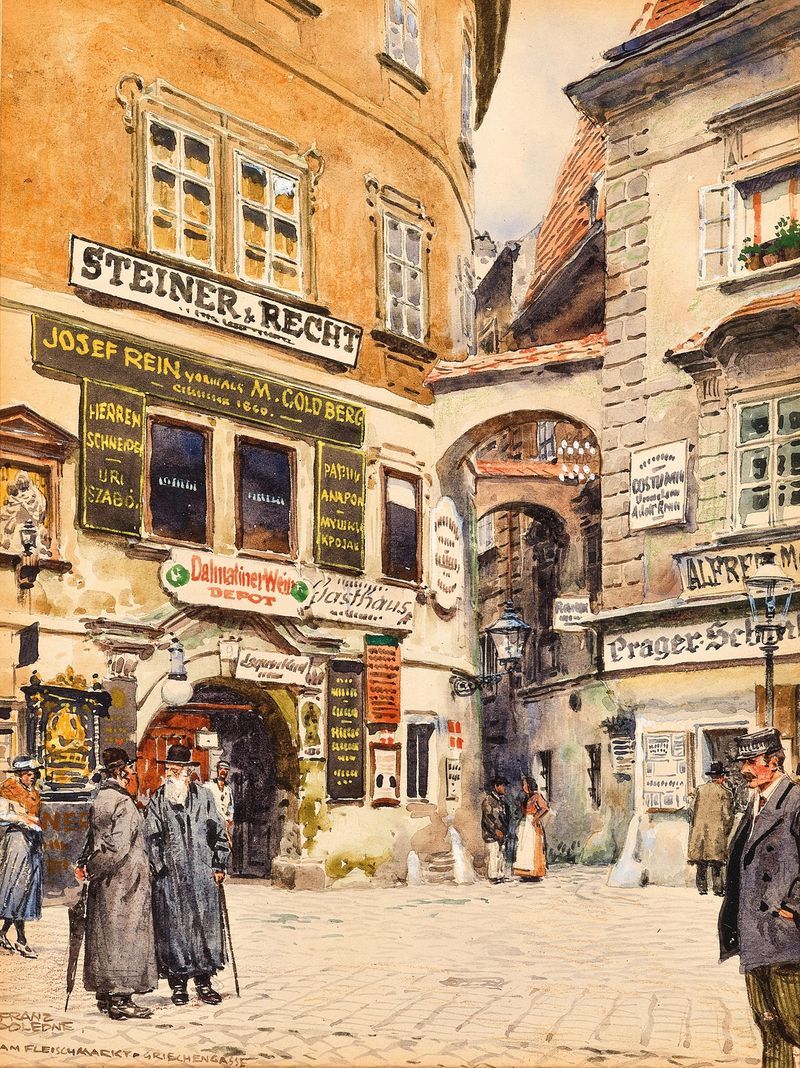
Fleischmarkt in Vienna with figural staffage and a view into Griechengasse
Franz Poledne

Weißenkirchen in der Wachau
Franz Poledne

Kohlmarkt in Vienna and the Kunsthandlung Artaria, carriages, a post man and shopping strollers
Franz Poledne
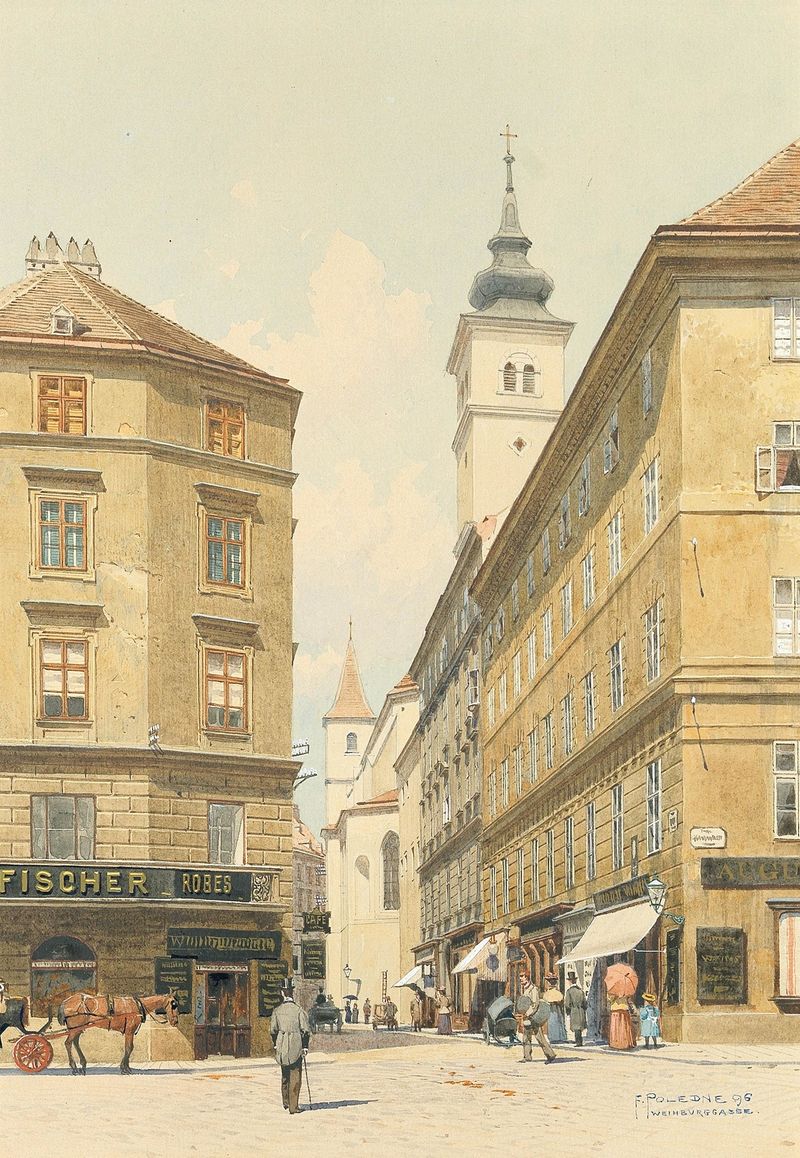
Weihburggasse
Franz Poledne

Kirchturm in Zbyszyce
Franz Poledne
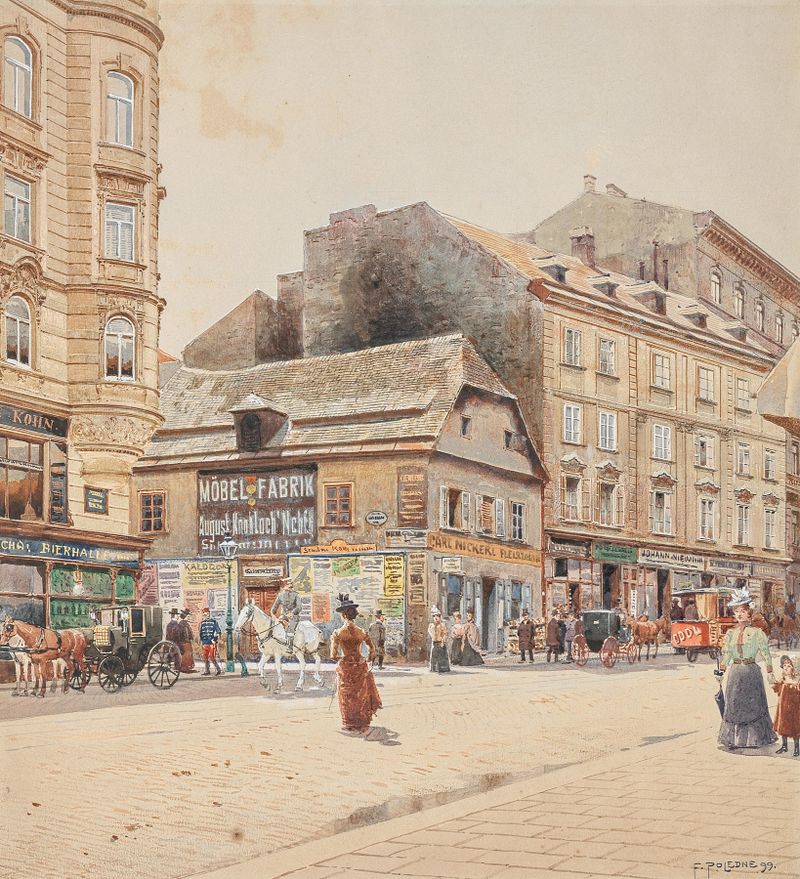
Ecke Ecke Mariahilferstraße und Königsklostergasse
Franz Poledne
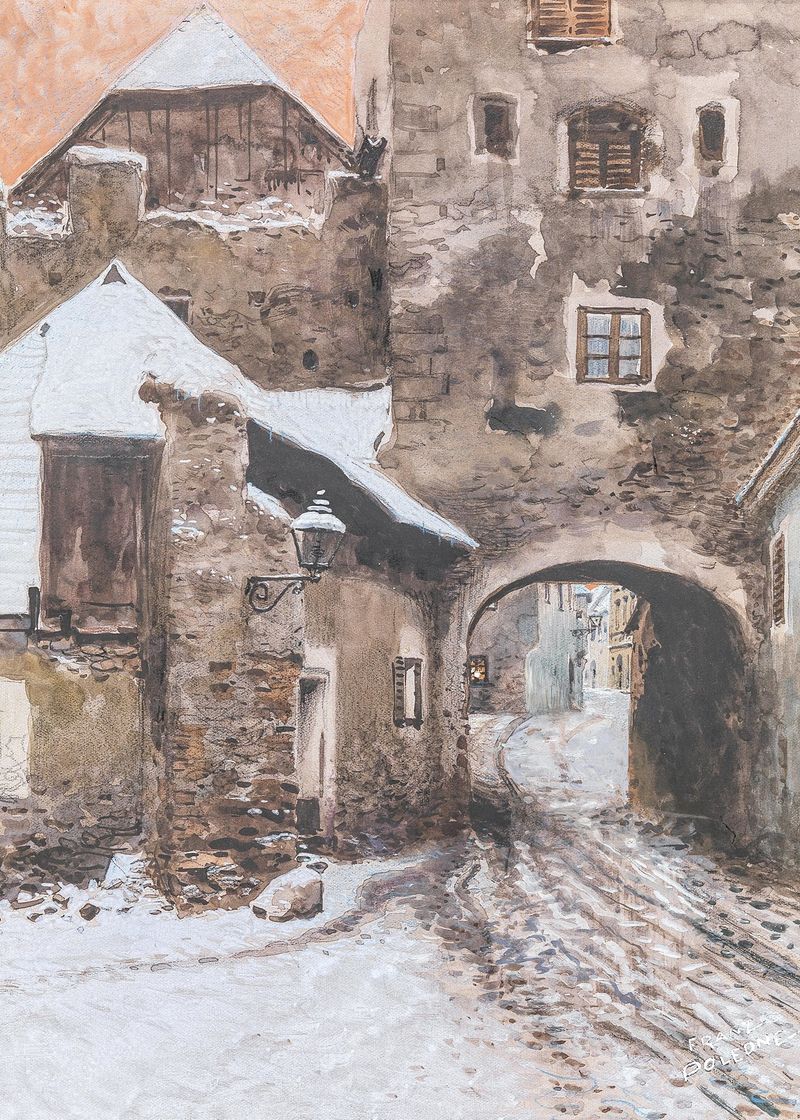
Kremser Tor in Dürnstein im Winter
Franz Poledne





