
Weihburggasse — History & Facts
Where does light end, and longing begin? In the brushstrokes of destiny, we find the delicate dance of hope and yearning intertwined with the ephemeral glow of twilight. Look to the left at the soft hues cascading down the cobblestone street, where the warm glow of street lamps spills into the cool shadows of the evening. Notice how the buildings rise like silent sentinels, their facades imbued with a gentle, inviting amber light that contrasts with the deepening indigo sky. This play of light captures a moment of transition, a fleeting stillness that invites introspection and stirs the heart. Yet, amid this serene landscape, a tension brews.
The long shadows stretch across the path like whispers of the past, hinting at stories untold and lives long spent in this urban tableau. Observe the solitary figure striding along the street: an embodiment of both presence and absence, symbolizing the restless search for belonging in a world that often feels unyielding. The juxtaposition of the intimate evening glow against the encroaching darkness suggests a bittersweet longing, suggesting that every destination carries with it the weight of unfulfilled dreams. In 1896, at a time when Vienna was a burgeoning hub of artistic experimentation, Poledne sought to encapsulate the essence of urban life in Weihburggasse.
Amidst a rapidly changing society, the artist found himself influenced by the burgeoning movement of Impressionism, which emphasized capturing ephemeral moments and the interplay of light. This work reflects both his personal explorations and the wider artistic dialogues of the period, as he navigated the intricate landscape of a city alive with possibilities and shadows.
More Artworks by Franz Poledne
Browse all →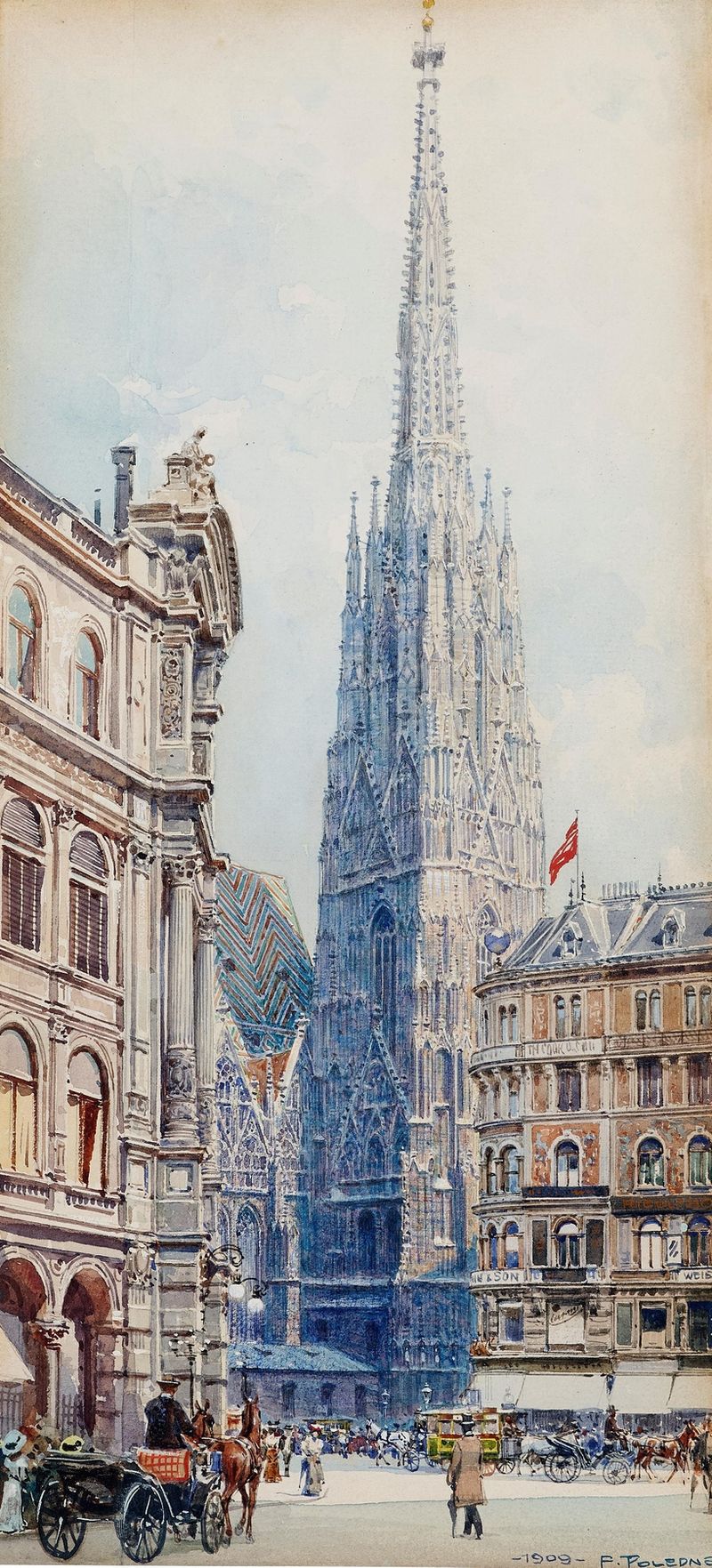
View from Graben to St. Stephen’s cathedral
Franz Poledne
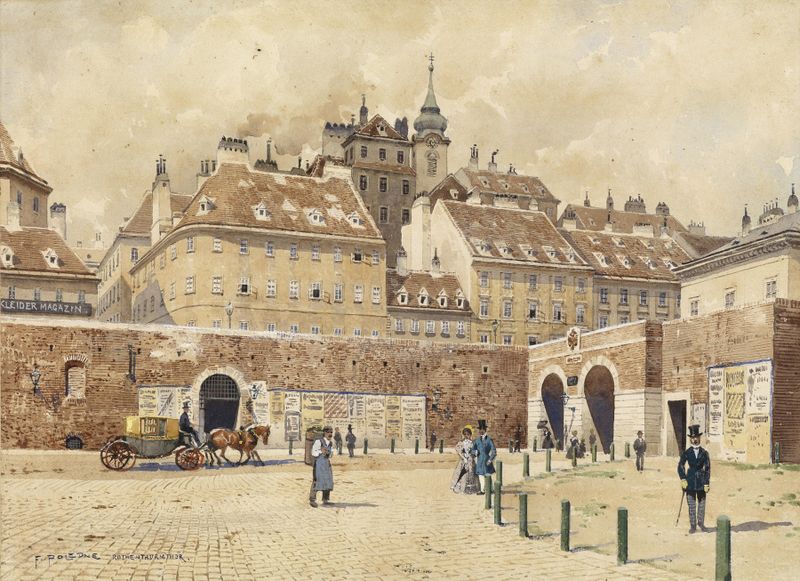
Blick auf Wien vom Rotenthurmtor
Franz Poledne
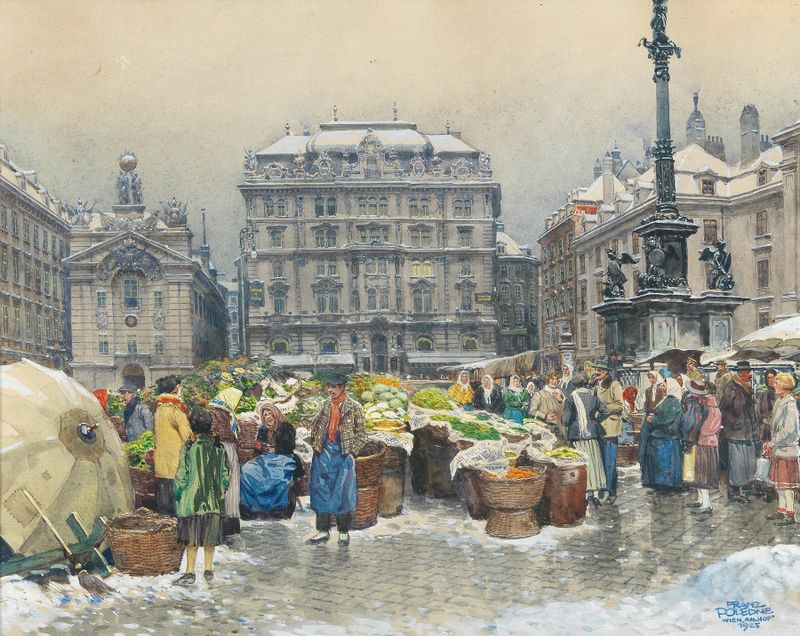
The vegetable market Am Hof
Franz Poledne
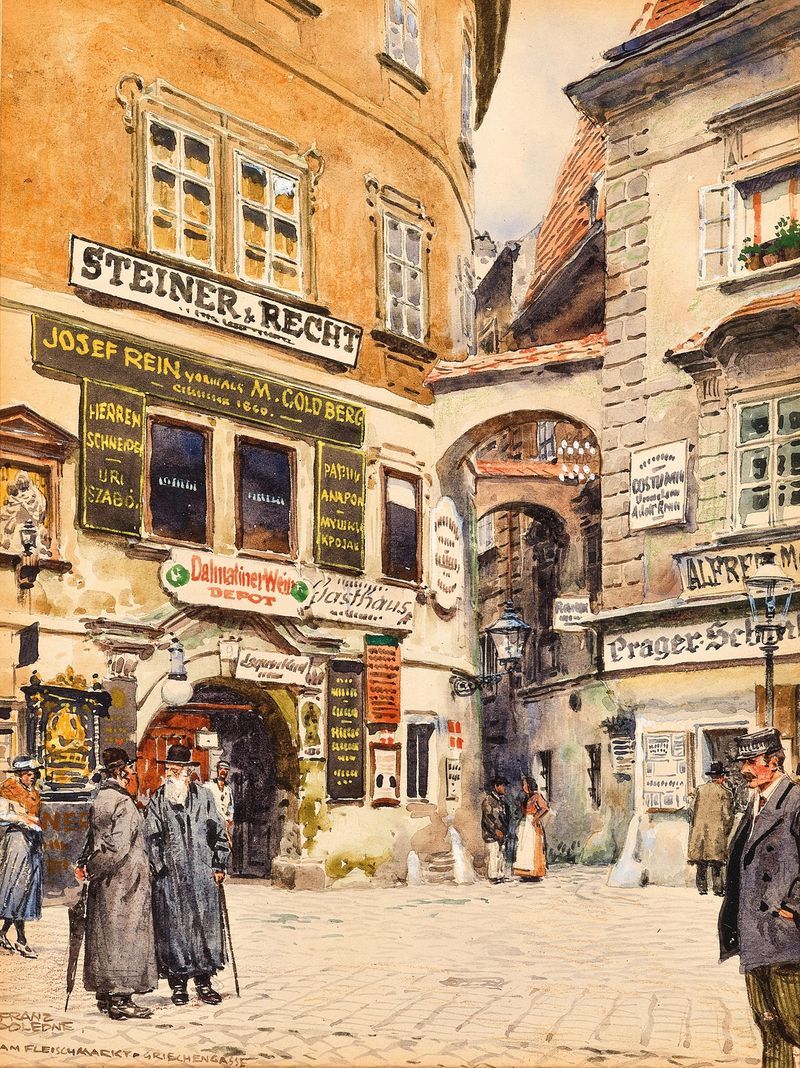
Fleischmarkt in Vienna with figural staffage and a view into Griechengasse
Franz Poledne

Weißenkirchen in der Wachau
Franz Poledne

Kohlmarkt in Vienna and the Kunsthandlung Artaria, carriages, a post man and shopping strollers
Franz Poledne

Kirchturm in Zbyszyce
Franz Poledne
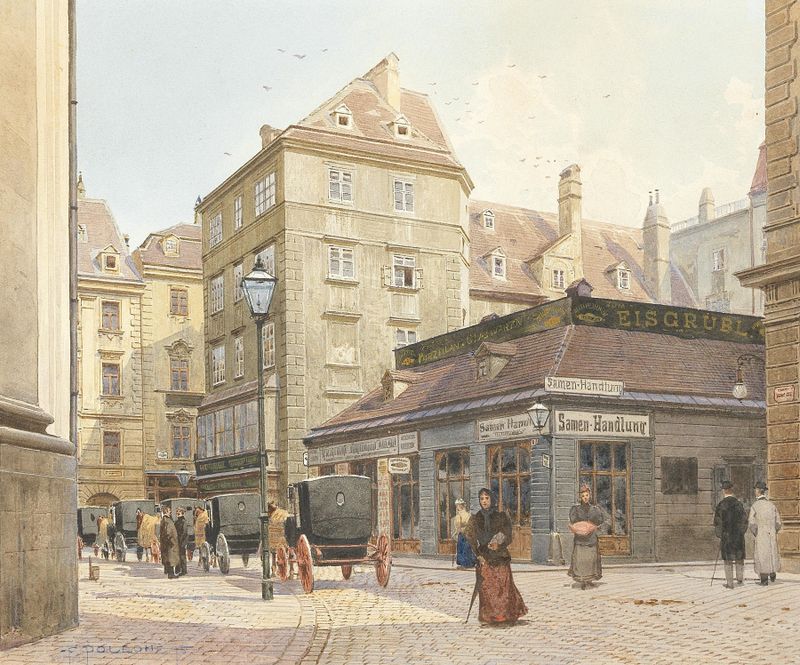
Eisgrübl, Vienna
Franz Poledne
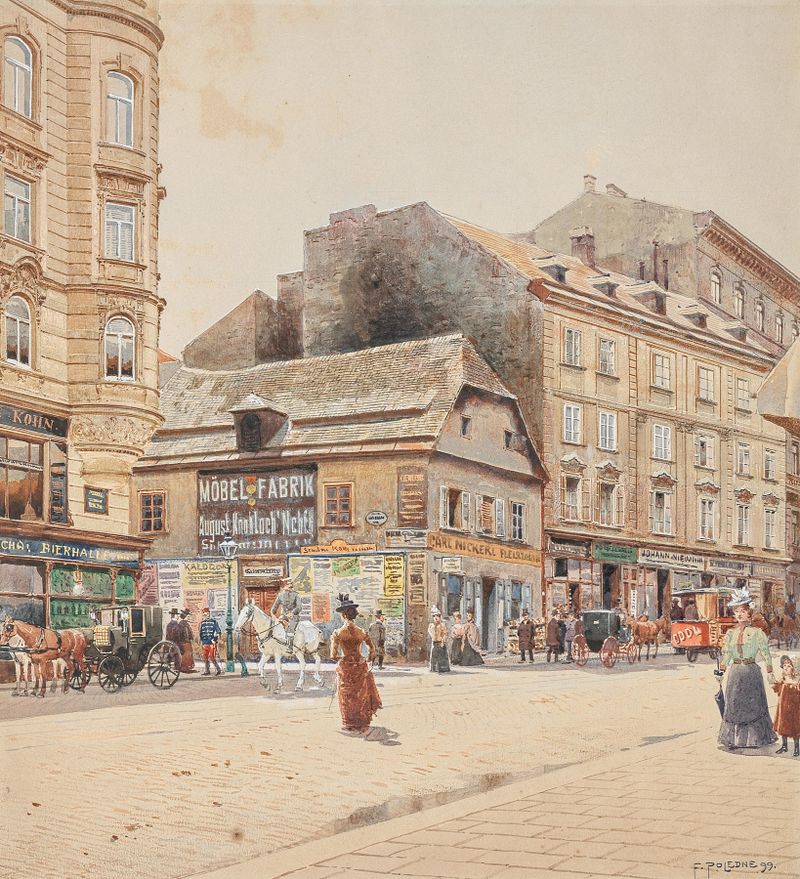
Ecke Ecke Mariahilferstraße und Königsklostergasse
Franz Poledne
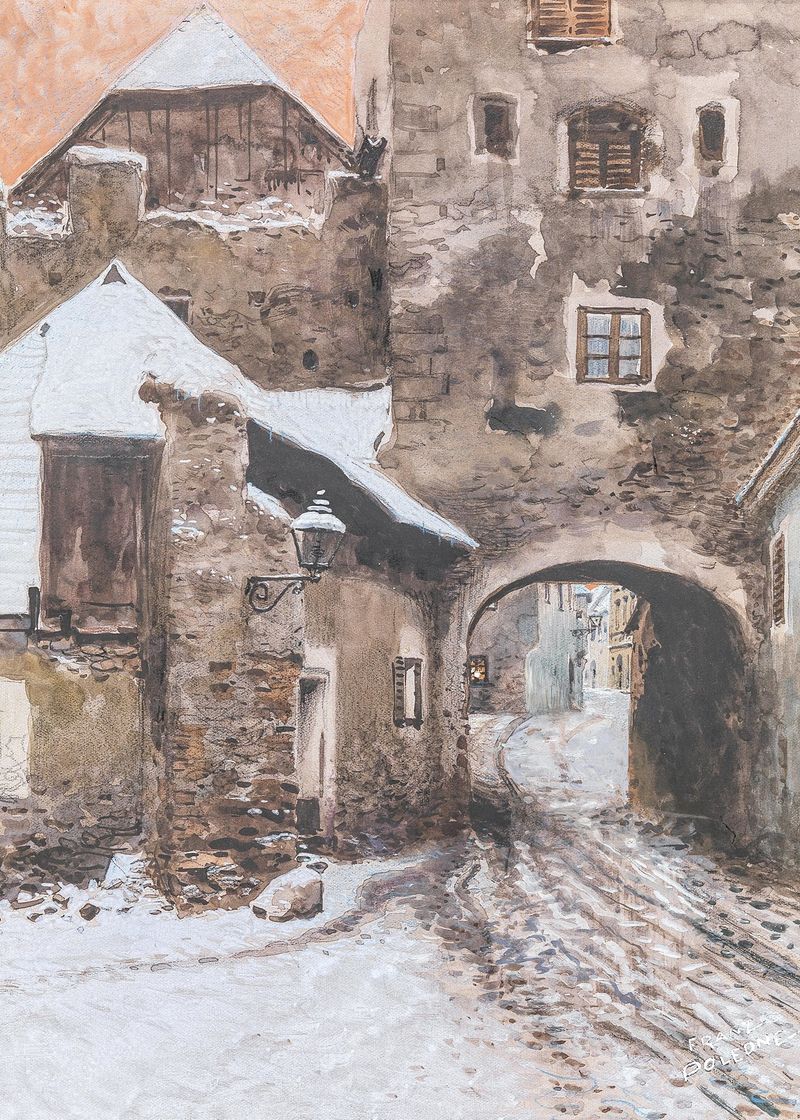
Kremser Tor in Dürnstein im Winter
Franz Poledne





