Ekspedisjonens medlemmer i kajakker på vei mot Kornok natten 7. april 1889 — History & Facts
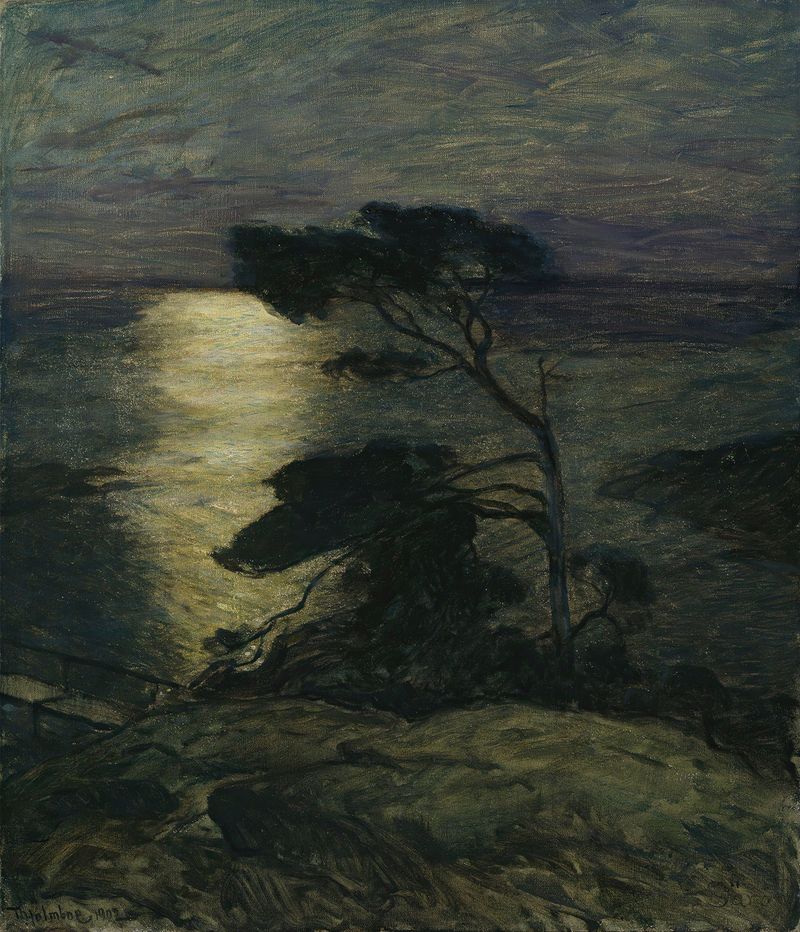
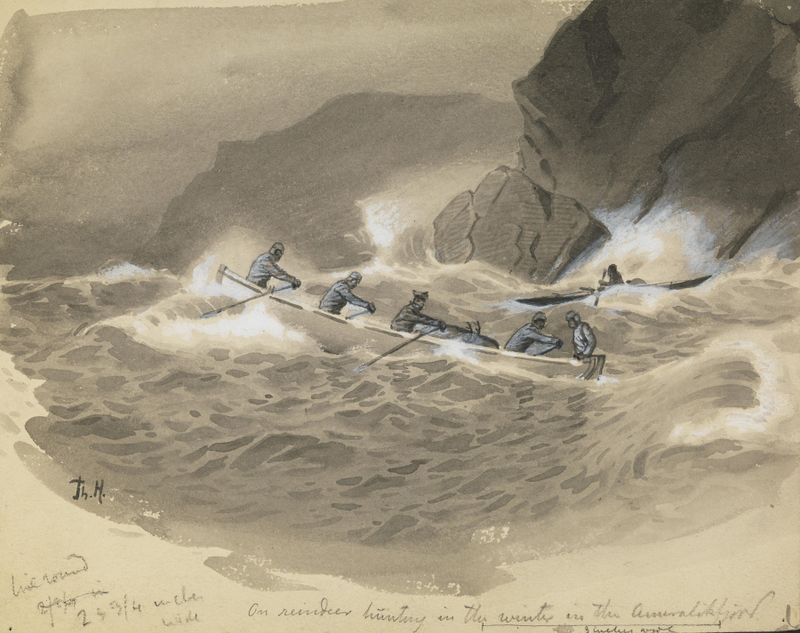
Who listens when art speaks of silence? In the stillness of a night scene, the emptiness resonates, offering a haunting reflection on presence and absence. Focus first on the vast expanse of dark water that dominates the lower half of the canvas. The deep blues and blacks meld seamlessly, interrupted only by the gentle ripples suggesting movement. To the left, the silhouettes of the kayakers emerge, their forms almost dissolving into the night.
The subtle highlights on the paddles mirror the moonlight, guiding the eye upward toward the sparse, starlit sky that seems to cradle the scene in its vast embrace. Delve deeper into the contrasts within this work. The quiet tension between man and nature is palpable; the kayakers are dwarfed by the immensity of their surroundings. Each figure, although small, carries with it the weight of exploration and the quest for discovery.
The emptiness of the landscape juxtaposes the intimacy of their shared endeavor, inviting contemplation on the human spirit's vulnerability in the face of nature's grandeur. In 1889, when this piece was created, Thorolf Holmboe was steeped in the spirit of exploration that characterized the era. Working in Norway during a time when Romanticism still influenced artistic thought, he captured the profound relationship between humanity and the natural world. This period saw an increased fascination with the Arctic and its stark beauty, and Holmboe’s work reflects not only his personal experiences but also the broader artistic movements that sought to express both wonder and solitude in a rapidly changing world.