
Weeping Willows — History & Facts
Can paint confess what words never could? In Weeping Willows, shadows dance beneath the weeping branches, whispering secrets of sorrow and solace in their embrace. Look to the center where the willows arch gracefully, their long limbs cascading like gentle curtains. The textured brushwork gives life to the leaves, each stroke infused with a vibrant green that invites you to trace the delicate outlines. Notice how the light filters through the foliage, casting dappled patterns upon the ground, creating a rhythm between light and shadow that breathes depth into this tranquil scene. Beneath the calm surface lies a world of emotional tension.
The heavy presence of the willows suggests a melancholic solitude, while the interplay of light hints at hope and renewal. Each shadow captures a fleeting moment, reflecting the impermanence of feelings and memories, inviting viewers to contemplate their own sense of loss and longing. This duality speaks to the universal human experience, where grief and beauty coexist beneath the surface. In 1907, the artist created this piece in Norway, a time when the art world was embracing naturalism and the emotive power of landscapes.
Holmboe found inspiration in the serene yet complex beauty of his surroundings, reflecting his own introspections. The willows symbolize both resilience and fragility, mirroring the artist’s own struggles and aspirations within the burgeoning modern art movement, a dance between tradition and innovation.
More Artworks by Thorolf Holmboe
Browse all →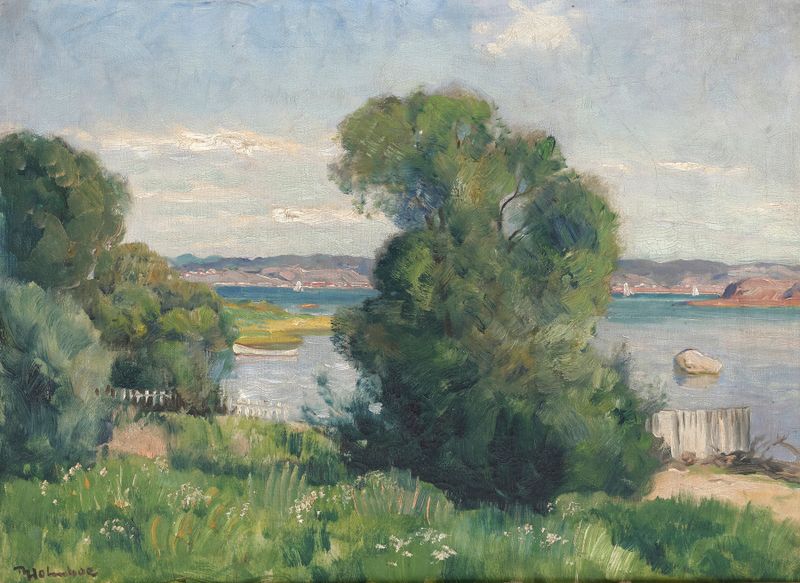
A summer’s day in Norway
Thorolf Holmboe
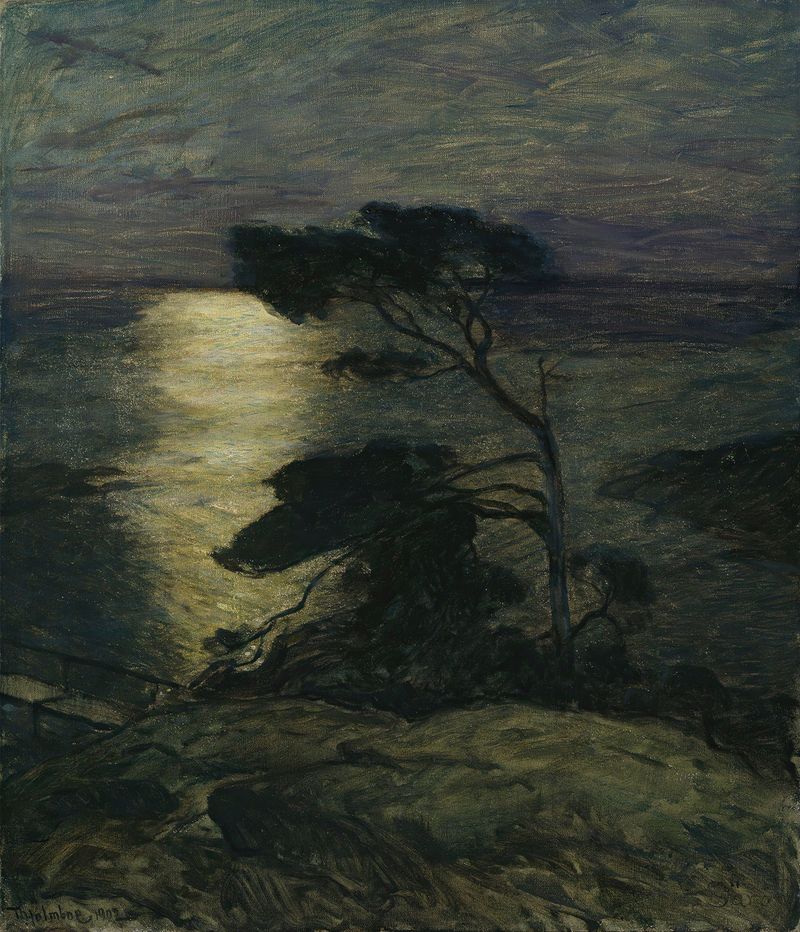
Pine Tree on the Coast in Moonlight
Thorolf Holmboe
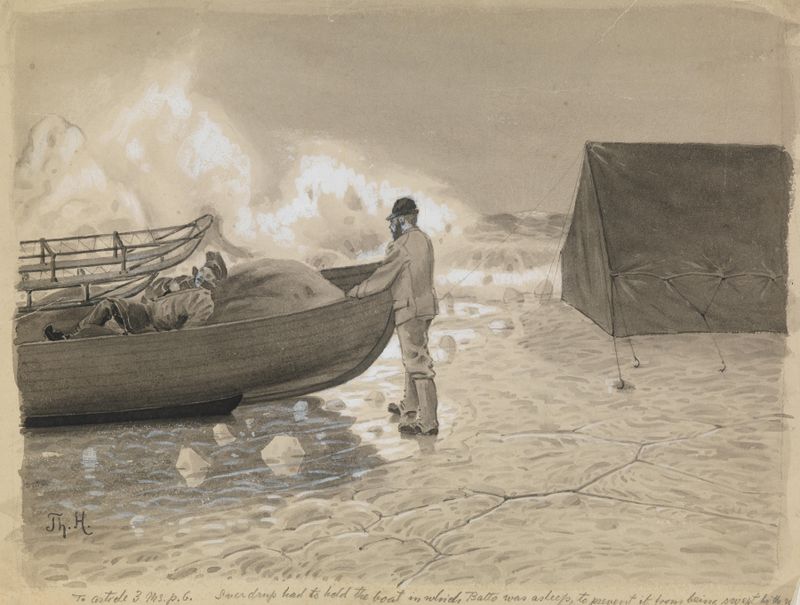
Teltplass på et isflak ved østkysten av Grønland
Thorolf Holmboe
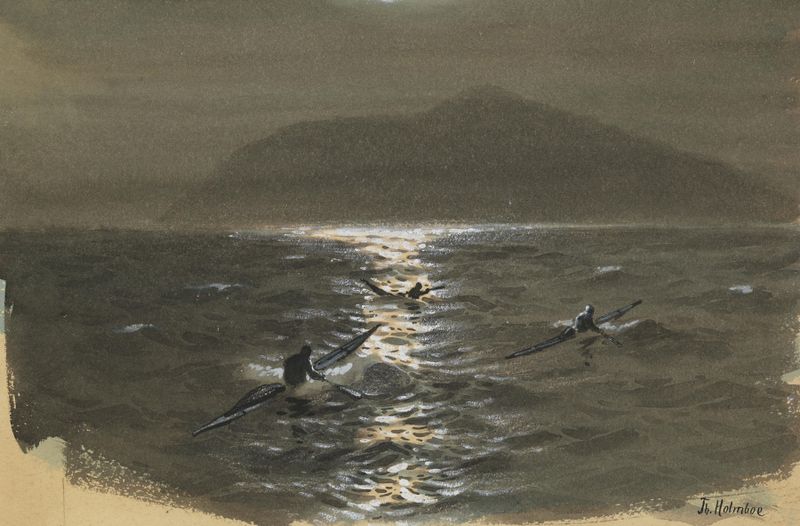
Ekspedisjonens medlemmer i kajakker på vei mot Kornok natten 7. april 1889
Thorolf Holmboe
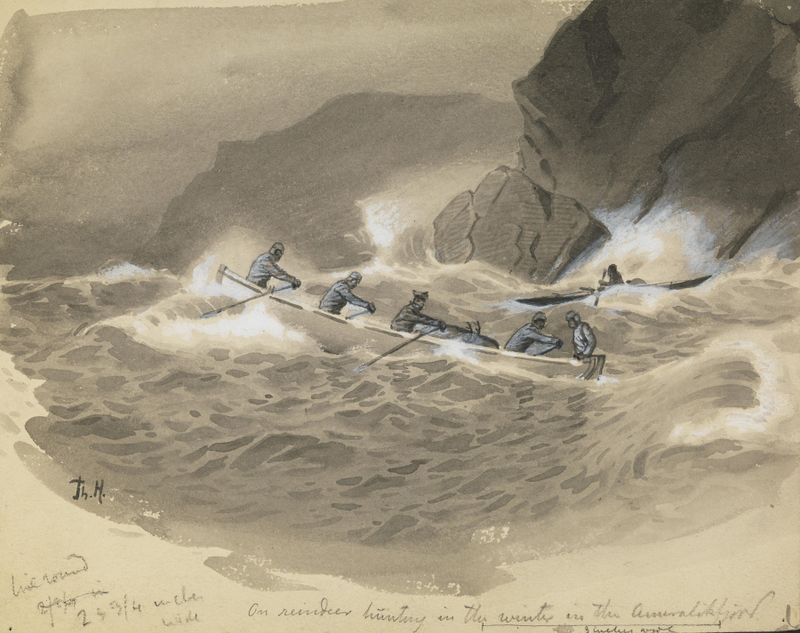
Ekspedisjonen i en båt etter jakten på reinsdyr ved Ameralikfjorden (Grønlands vestkyst)
Thorolf Holmboe





