
Embouchure de l’Aare dans le lac de Thoun — History & Facts
In the quiet embrace of this observation lies a reflection on the emptiness captured in Embouchure de l’Aare dans le lac de Thoun. The painting resonates with a stillness that invites deep contemplation, exposing the fragile boundaries between absence and presence. Look to the foreground, where the gentle curves of the river meet the expansive lake. The palette is a symphony of cool blues and muted greens, evoking a serene yet haunting atmosphere.
Notice how the subtle shifts in light create a mesmerizing play of reflections on the water’s surface, drawing your eye to explore the delicate interplay between land and liquid. The horizon stretches infinitely, suggesting both openness and a profound void, compelling the viewer to linger in this tranquil yet melancholic moment. The central theme of emptiness emerges in the juxtaposition between the fluidity of the water and the stillness of the surrounding landscape. Here, nature's beauty poses a question about existence, whispering of the quiet isolation felt by both the artist and the environment.
The almost spectral quality of the trees, cloaked in mist, reinforces a sense of longing and introspection, while the expansive sky seems to stretch endlessly, echoing the vastness of unfulfilled dreams and unspoken thoughts. Created during the tumultuous years between 1915 and 1945, Embouchure de l’Aare dans le lac de Thoun reflects Heinrich Rieter's response to the upheaval of World War I and the ensuing societal changes. As Europe grappled with its past and future, Rieter sought solace in serene landscapes, using his brush to capture fleeting moments of beauty amidst chaos. This piece stands as an emblem of that search, a poignant exploration of human emotion within the natural world.
More Artworks by Heinrich Rieter
Browse all →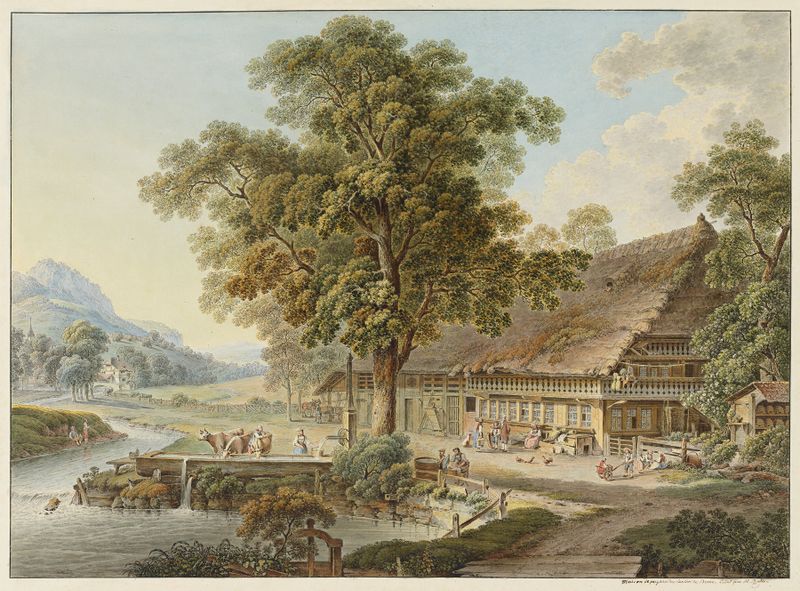
Maison de paysan du Canton de Berne
Heinrich Rieter

Vue de Morat sur le lac du même nom
Heinrich Rieter

Vûe prise à Iseltwald, sur le lac de Brientz
Heinrich Rieter
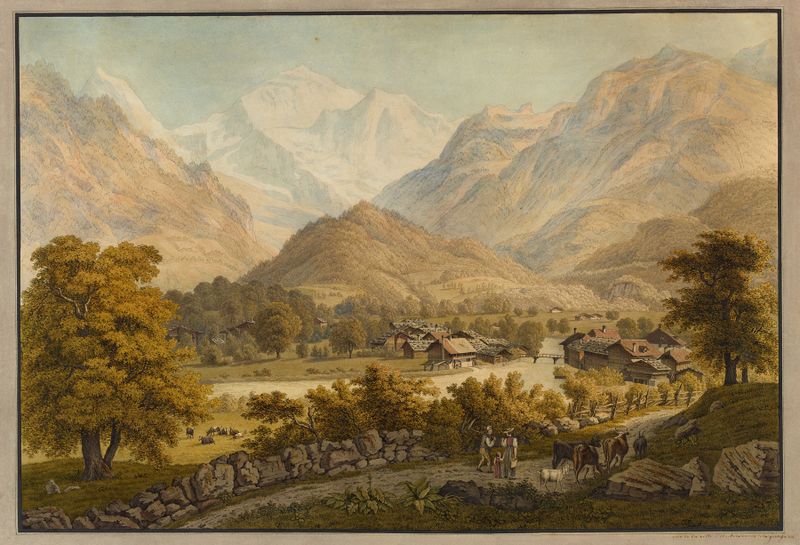
vue de la ville d’Unterseen & de la jungfrau
Heinrich Rieter

La Maison du Paysan
Heinrich Rieter
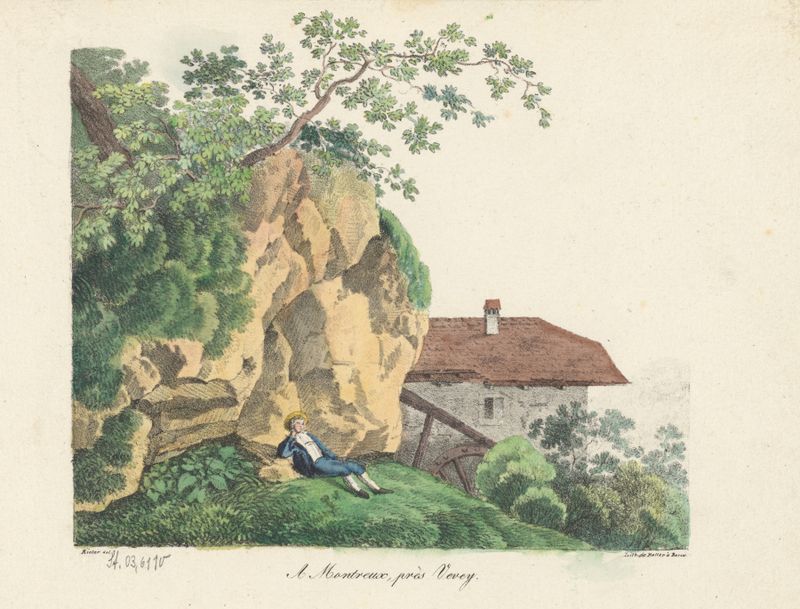
Haller (Bern)
Heinrich Rieter
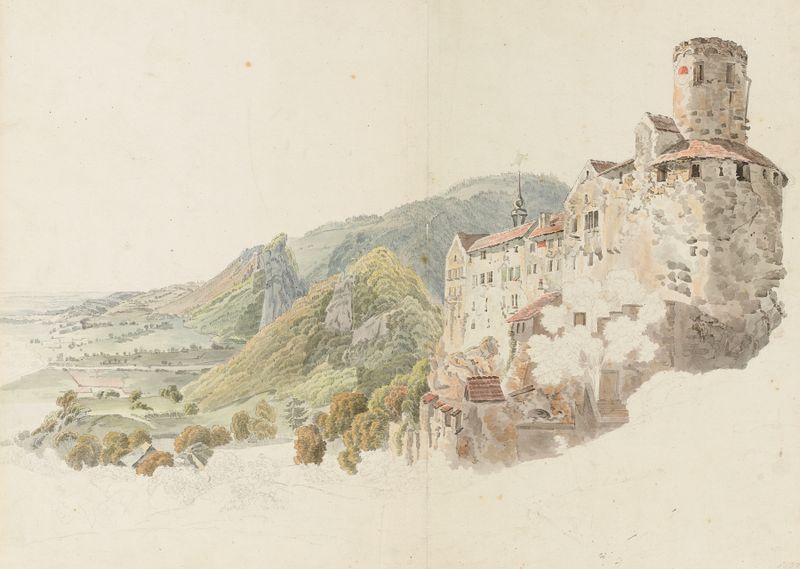
Etude du Chatau de Pechbourg dans le Canton de Soleure
Heinrich Rieter
Forest Treetops Struck by Light
Heinrich Rieter
Derniere Cascade du Reichenbach dans la vallèe d’Oberhasli
Heinrich Rieter

Ansicht bei Erlach
Heinrich Rieter





