Empress Kyōmō — History & Facts
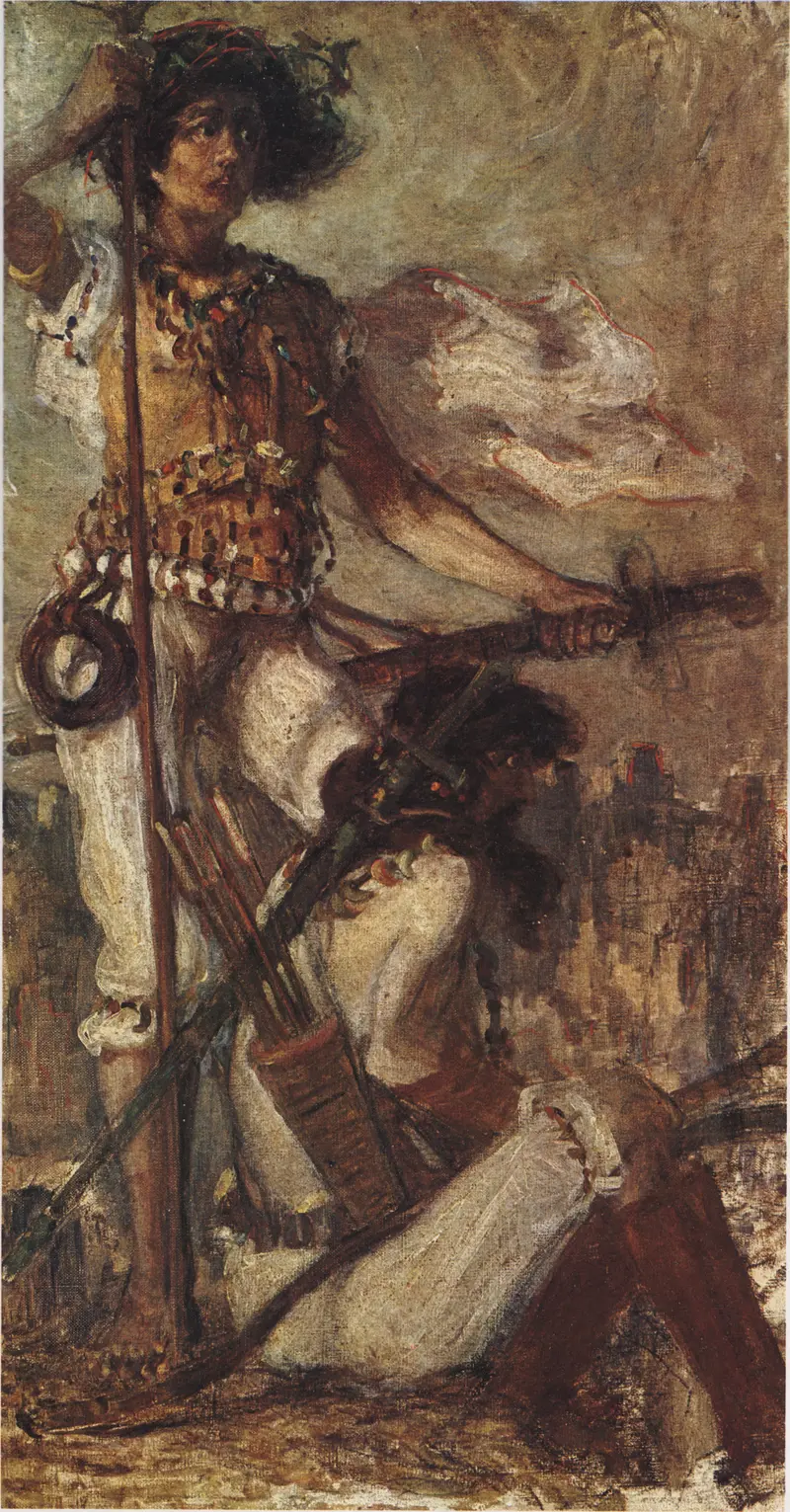
A single figure commands the canvas, her presence both regal and remote, as if she has stepped from the folds of a distant legend into the charged stillness of the early twentieth century. Her gaze, unwavering and slightly averted, draws the viewer into a world of ritual and authority, while the intricate headpiece and layered robes signal her elevated status. The artist, Aoki Shigeru, uses a palette of deep indigos and muted golds, letting the rich fabrics and delicate patterns speak as much as the sitter’s expression.
Every brushstroke seems to weigh the burden and isolation of power, the hands folded in composure, the upright posture a silent testament to discipline and expectation. Light falls softly, illuminating the face and upper body, while the background recedes into shadow, heightening the sense of separation between the empress and her surroundings. Painted in 1905, this work belongs to the ferment of modern Japanese art, when painters like Aoki Shigeru were forging new paths between tradition and innovation. The Meiji era had opened Japan to the world, and artists absorbed both Western techniques and a renewed pride in national subjects.
Portraits of historical or legendary figures—especially women of power—became a way to explore identity and continuity in a rapidly changing society. While little is recorded about the journey of this particular painting, its inclusion in a 1972 compendium of modern Japanese art attests to its quiet significance. The empress’s steady gaze invites us to linger, to imagine the world she ruled and the artist who, for a moment, brought her to life.