
End of the Village, Dardennes — History & Facts
In the delicate strokes of Pissarro's End of the Village, a yearning for tranquility and belonging emerges. This piece speaks to the insatiable human desire for harmony, inviting viewers to contemplate their own longings amidst the complexity of life. Focus your gaze on the foreground, where gentle pastels and earthy tones create a serene landscape punctuated by the silhouettes of quaint cottages. Notice how the soft light spills over the scene, casting elongated shadows that dance along the rolling hills.
Each brushstroke, meticulously applied, conveys not only the physical beauty of the village but also an unseen tension—an unfulfilled longing that coils around each element of the composition. Delve deeper into the painting’s layers, where contrasts abound. The vibrant greens of nature breathe life into the muted colors of the village, suggesting a desire for connection between the human and the natural. Every cottage, nestled closely yet separated by distance, embodies the duality of community and isolation.
This juxtaposition whispers of the complexities of belonging, making the viewer acutely aware of the quiet presence of desire threading through the work. Lucien Pissarro created End of the Village in 1931 while living in England, grappling with the aftermath of World War I and the shifting tides of modernism in art. This period marked a significant moment for the artist, as he sought to blend impressionistic techniques with a modern perspective, reflecting a world that was in turmoil yet yearning for peace. In this piece, he captures not just a picturesque scene but the universal pursuit of solace amidst chaos.
More Artworks by Lucien Pissarro
Browse all →
A Hilly Landscape
Lucien Pissarro
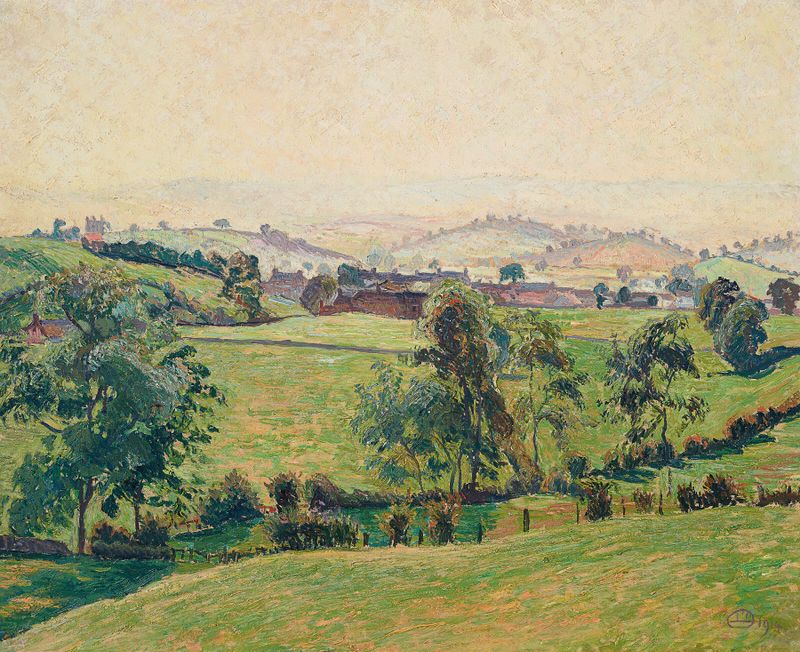
Brough, Misty Afternoon
Lucien Pissarro
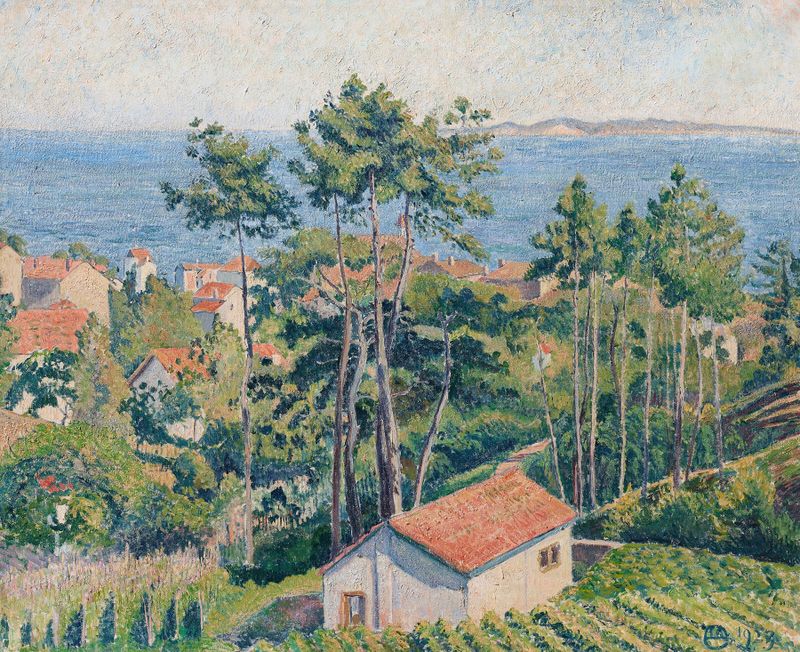
Vue du Lavandou avec mer bleue
Lucien Pissarro
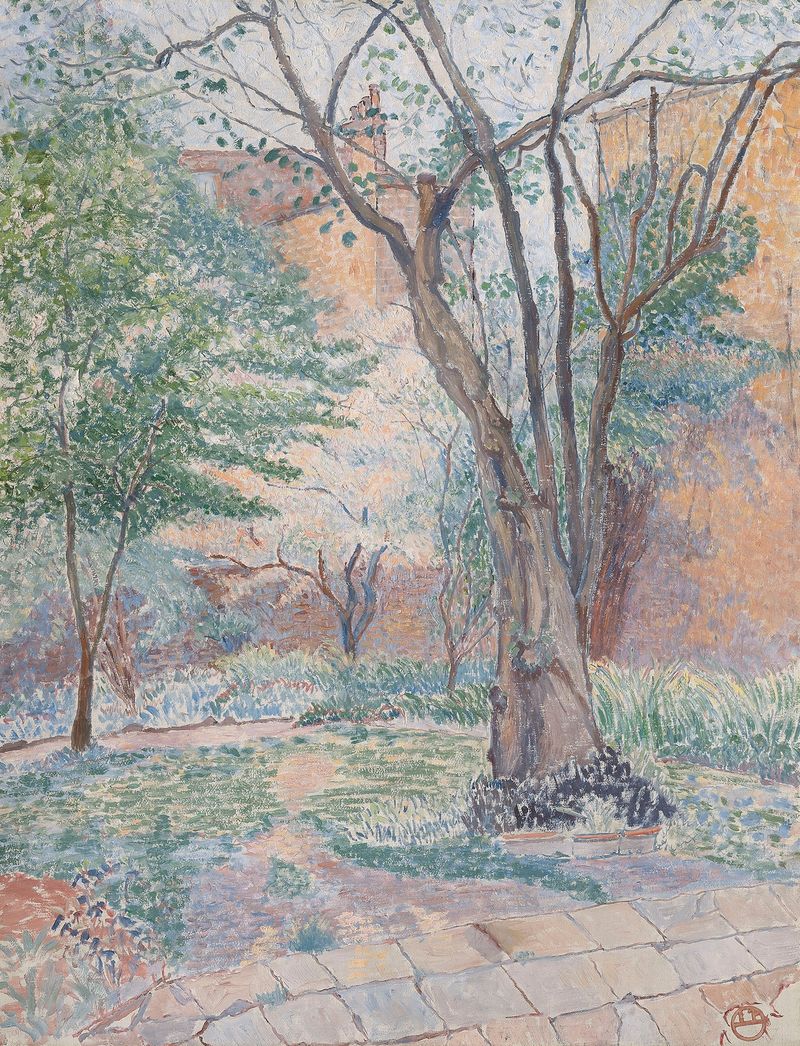
The Nut Tree
Lucien Pissarro
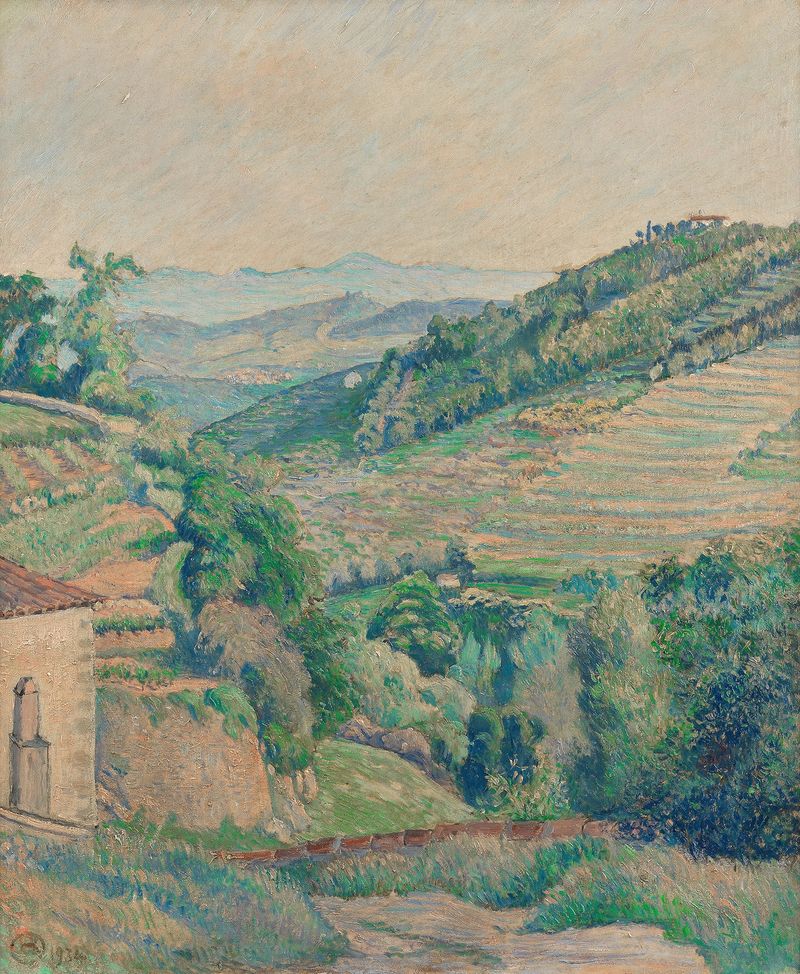
Le Mont Verdaille, Cotignac
Lucien Pissarro
Un Rocher du Faron (Soleil) Toulon
Lucien Pissarro
Prairie De Thierceville
Lucien Pissarro
Gouvernes, près Lagny
Lucien Pissarro
Le grand chêne
Lucien Pissarro





