
Prairie De Thierceville — History & Facts
Could beauty survive in a century of chaos? Lucien Pissarro’s Prairie De Thierceville invites us to ponder this question, as it encapsulates a moment of serene existence amid the tumult of change. Look to the foreground and observe the vibrant strokes of green and gold that delineate the undulating fields, sweeping gracefully beneath a vast, cloud-laden sky. The use of light—soft yet penetrating—illuminates the landscape, creating a dialogue between shadow and luminosity. As you follow the horizon, notice how Pissarro’s deft brushwork merges realism with impressionistic elements, lending the scene a palpable, almost ethereal quality. The emotional undertones of the piece speak to loss and yearning, as the tranquil beauty of the countryside contrasts sharply with the industrial upheaval that characterized the late 19th century.
The distant trees, standing resolute against the encroaching sky, symbolize resilience, while the gentle hills suggest the fragility of nature amid human progress. Every brushstroke captures a fleeting moment, urging viewers to reflect on what is at stake when beauty is threatened by inevitable change. In 1888, Pissarro painted this work in France, a period marked by artistic experimentation and social transformation. As an integral figure in the Impressionist movement, he explored themes of rural life and the relationship between humanity and nature at a time when the world was rapidly modernizing.
His commitment to capturing the essence of his surroundings can be seen as both a celebration and a lament for a landscape forever altered by time.
More Artworks by Lucien Pissarro
Browse all →
A Hilly Landscape
Lucien Pissarro
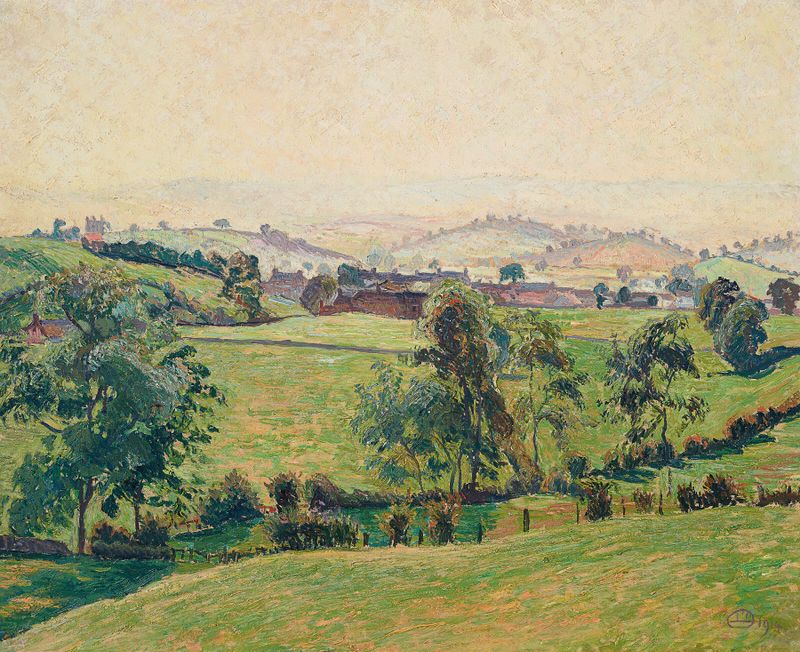
Brough, Misty Afternoon
Lucien Pissarro
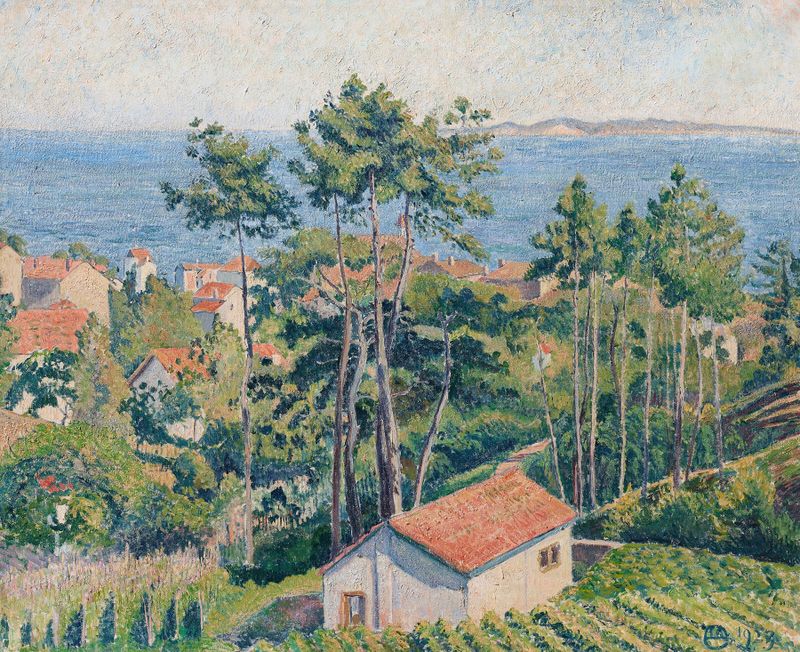
Vue du Lavandou avec mer bleue
Lucien Pissarro
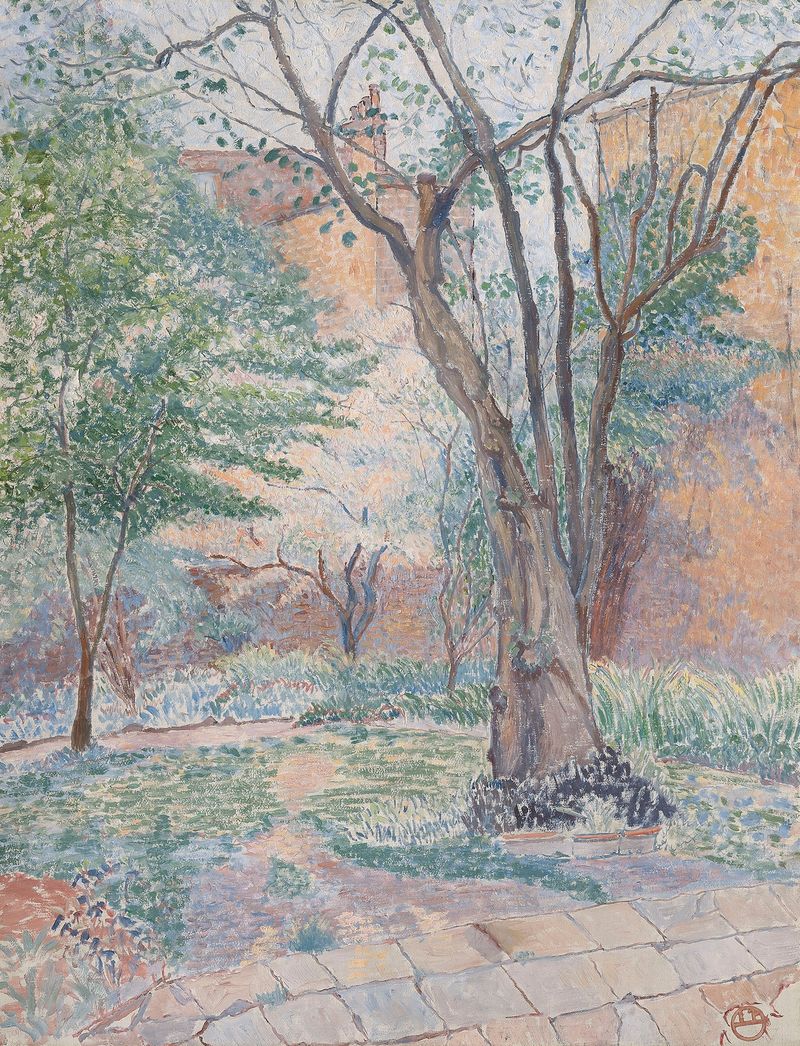
The Nut Tree
Lucien Pissarro
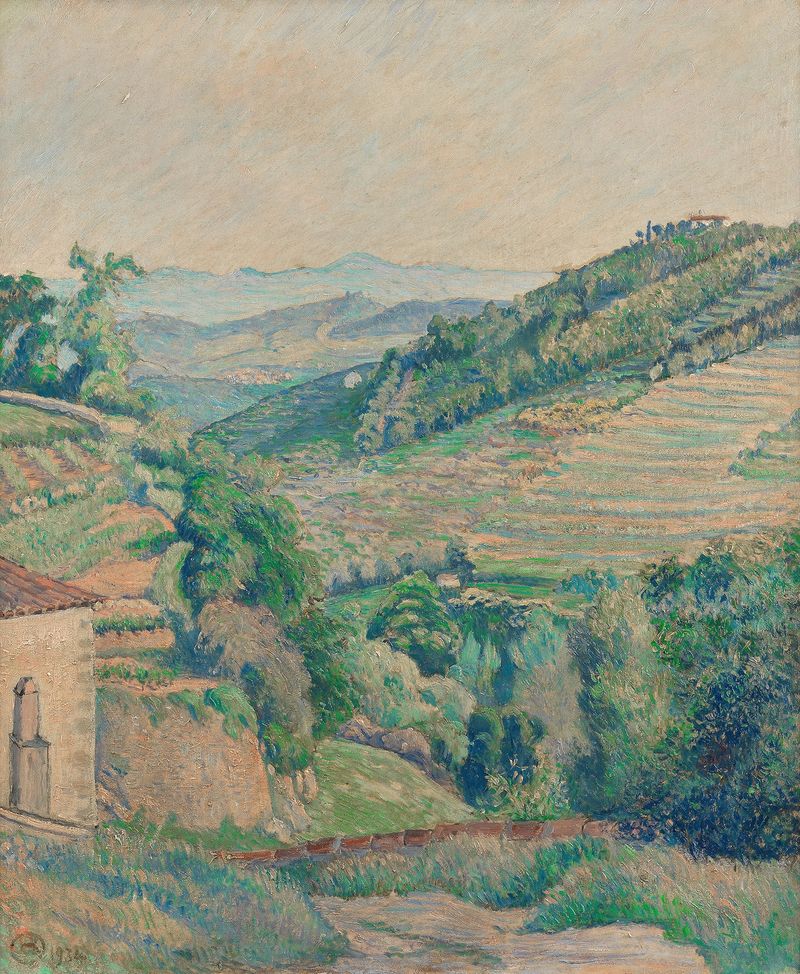
Le Mont Verdaille, Cotignac
Lucien Pissarro
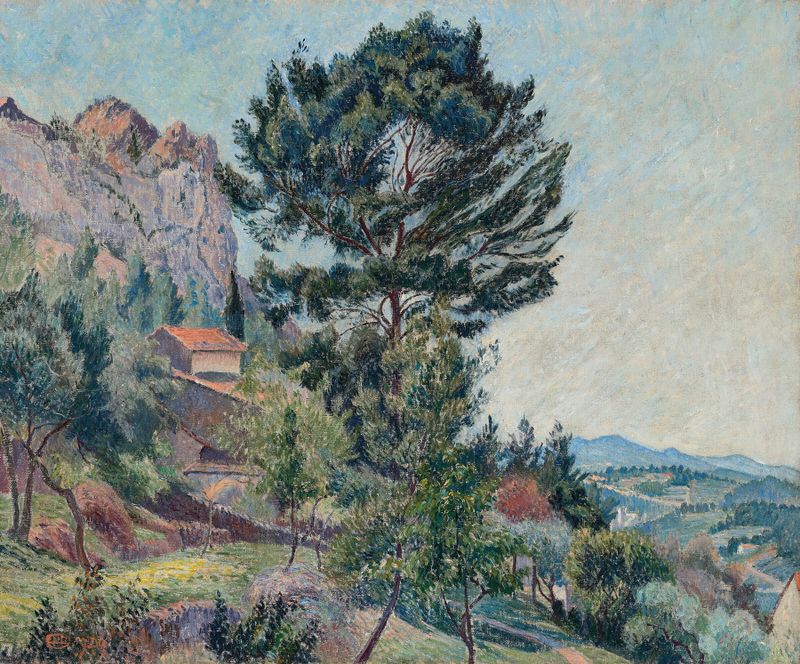
Un Rocher du Faron (Soleil) Toulon
Lucien Pissarro

End of the Village, Dardennes
Lucien Pissarro
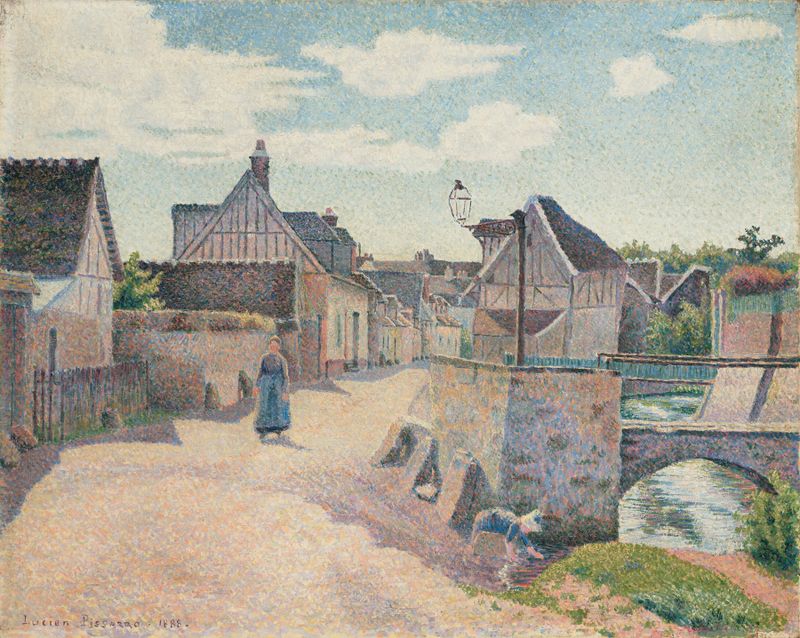
Gouvernes, près Lagny
Lucien Pissarro
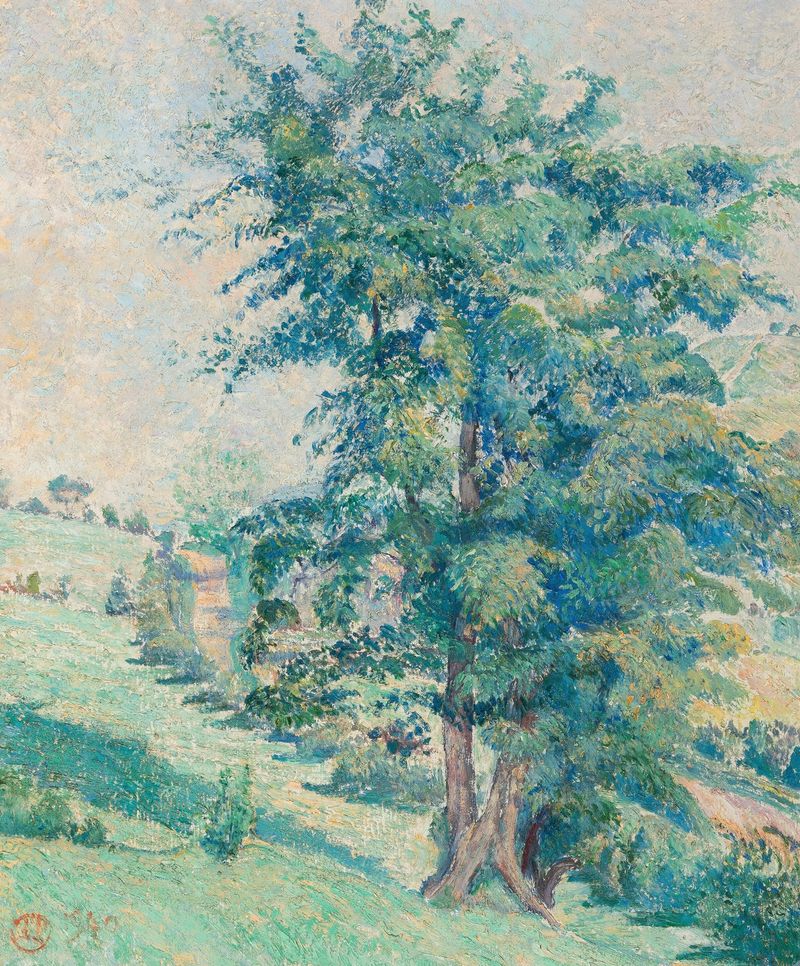
Le grand chêne
Lucien Pissarro





