Enlèvement d’un ballon — History & Facts
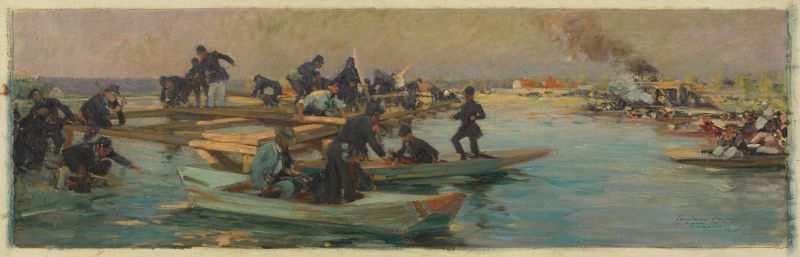
Where does light end, and longing begin? In this poignant moment captured on canvas, a delicate interplay of color and emotion converges, evoking a sense of melancholy that lingers like a fading sunset. Focus on the luminous balloon at the center, its vibrant hue stark against the soft, muted background. The gentle brushstrokes convey a sense of movement, as if the balloon itself is poised to float away, carrying with it the dreams and aspirations of the figures below. Notice the expressions etched on their faces—each glance and gesture holds a narrative, revealing a connection tethered by unspoken words and unfulfilled desires. Beneath the surface, layers of meaning unfold.
The balloon symbolizes fleeting joy, a moment snatched away by the winds of time, while the distant figures represent the weight of reality—caught between the pull of hope and the gravity of existence. The contrast between the bright balloon and the somber tones surrounding it hints at the bittersweet nature of aspiration, suggesting that every dream has its price, echoing the persistent ache of longing. In 1880, Raoul Arus created this work amid a transformative period for the French art scene, where Impressionism was gaining momentum. Influenced by the changing world around him, the artist sought to explore deeper emotional landscapes within seemingly ordinary moments.
This painting stands as a testament to his ability to capture the ephemeral beauty of life, reflecting both personal introspection and the broader artistic currents of his time.