Enten am Bach — History & Facts
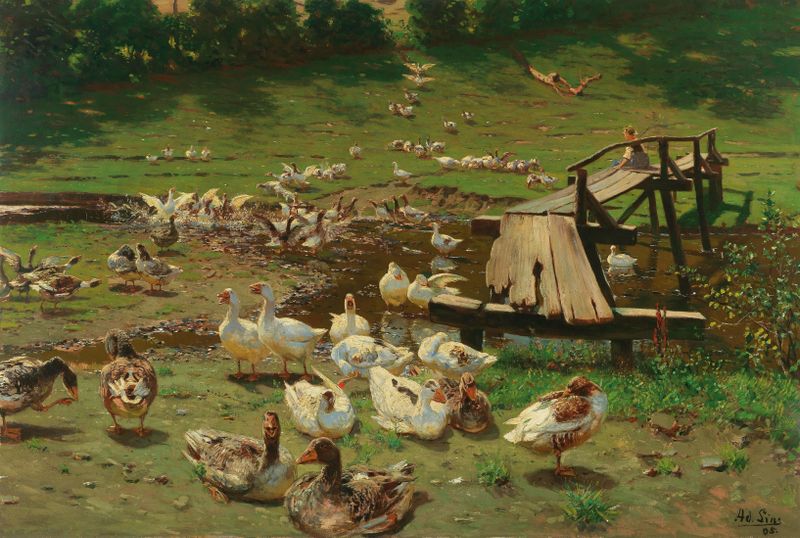
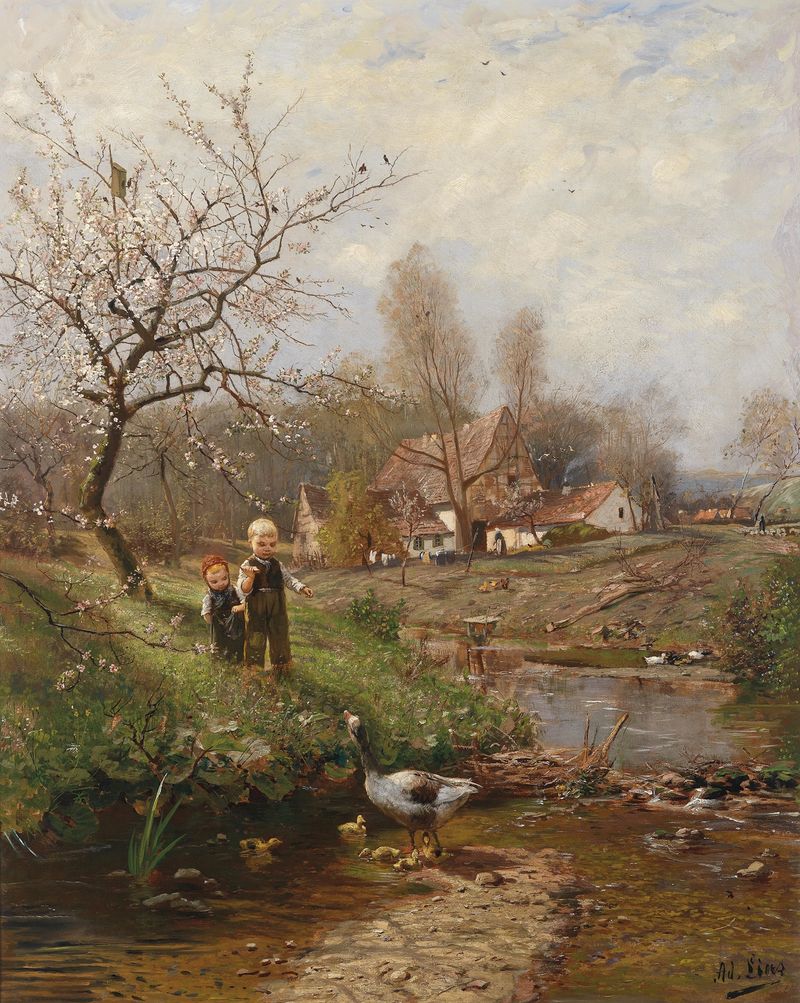
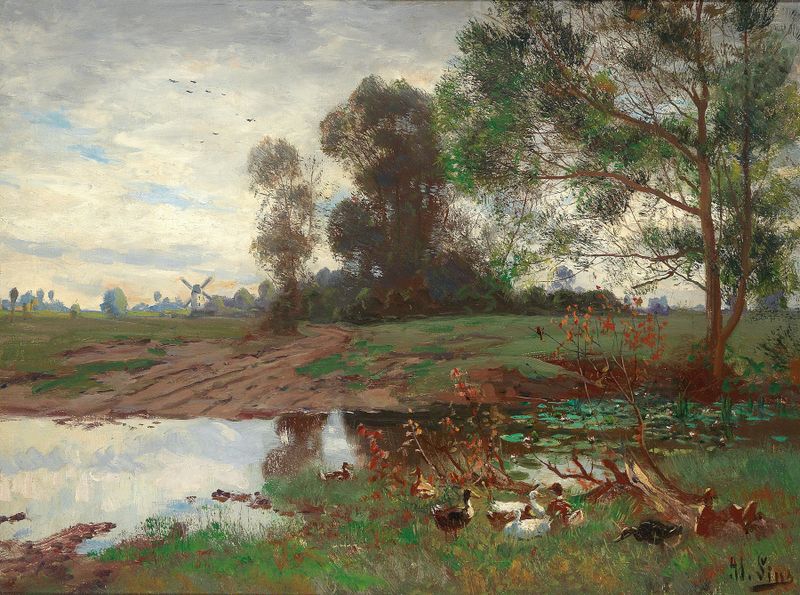
In the gentle hush of a sun-dappled riverbank, moments linger like whispers, inviting us to pause and reflect on the beauty of simplicity. Look to the center of the canvas where two ducks glide lazily across the water, their serene forms mirrored in the rippling surface. Notice how the artist masterfully captures the soft interplay of light and shadow, the vibrant greens of the reeds framing the cool blues of the stream. This careful balance creates a tranquil harmony that seems to transcend the mundane, inviting the viewer into a world where time stands still. As you delve deeper, observe the intricate details: the delicate feathers of the ducks, the shimmering reflections that dance around them, and the gentle curves of the bank that cradle the scene.
Each element hints at a deeper narrative about coexistence and the fleeting nature of life. The contrast between the flowing water and the stillness of the surrounding foliage evokes a sense of peace while simultaneously reminding us of the relentless passage of time. In an undefined period, Enten am Bach emerged from the hands of Adolf Lins, an artist known for his enchanting landscapes. Living during a time when romanticism was giving way to modernity, Lins sought to capture the ephemeral qualities of nature.
His works often reflect a yearning for tranquility, as they invite viewers to step into serene moments that echo the past while celebrating the present.