Enten am Weiher — History & Facts
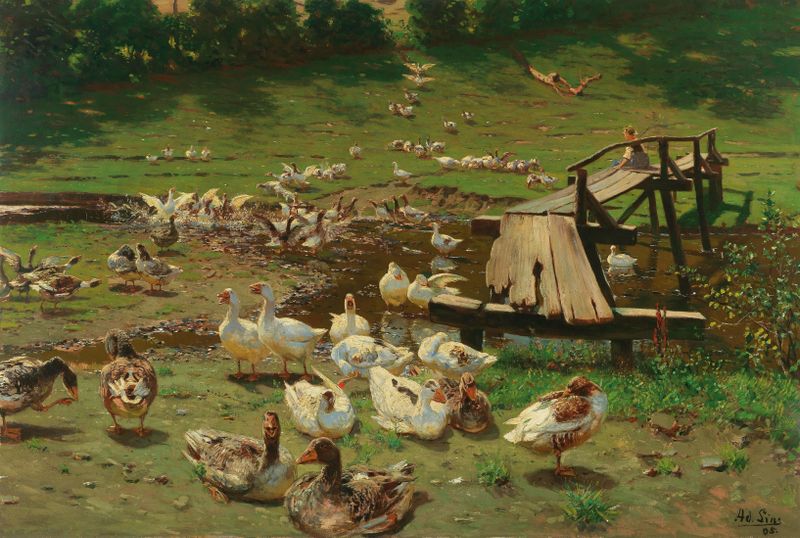
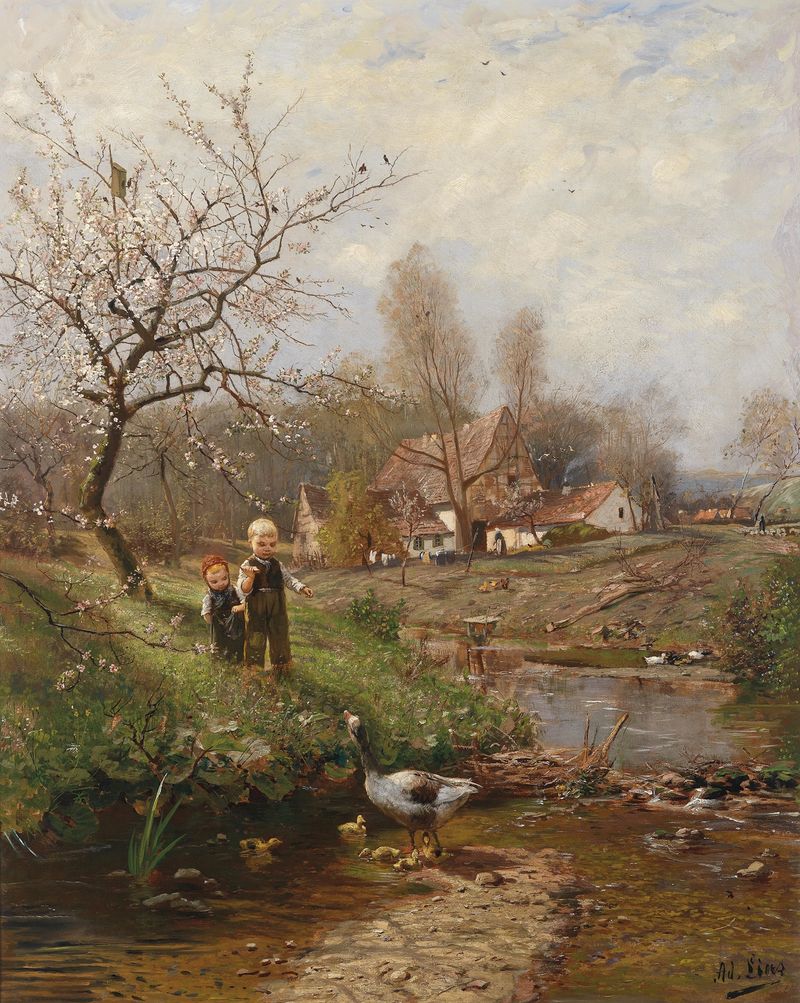
Who listens when art speaks of silence? In the stillness of Enten am Weiher, a haunting tranquility evokes a tension that lingers beneath the surface. Look closely at the serene pond, where reflections dance on the water's surface. The ducks, seemingly unperturbed, glide effortlessly through the rippling reflections of their surroundings. Notice how light filters through the leaves, casting dappled shadows that contrast with the muted earth tones of the landscape.
The gentle curves of the ducks and the harsh lines of the reeds create a dialogue between softness and rigidity, enhancing the painting's underlying unease. As you explore the details, consider the isolation of the scene. The tranquil water, while calm, serves as a veil over the potential violence lurking in nature. The juxtaposition of beauty and the instinctual struggle for survival envelops the viewer in a complex emotional landscape.
Can the quietude of the moment mask the darker impulses of the wild? Each element seems to whisper caution, inviting reflection on the balance between peace and survival. Created during an unspecified period, the artist captured this poignant moment in a still, contemplative manner. Lins, active in Germany, was influenced by the naturalistic movements of his time, focusing on landscapes that often evoke a deeper introspection of the human experience and nature’s duality. In this piece, he invites the viewer to ponder the intricacies of existence, suggesting that beneath calm surfaces lie the underlying currents of life and the inevitable violence inherent in nature.