Frühlingslandschaft mit zwei Kindern und Gänsen — History & Facts
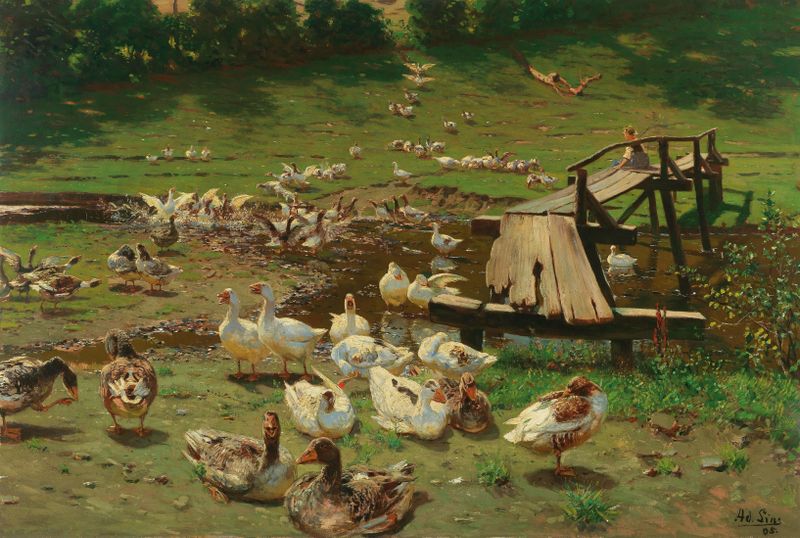
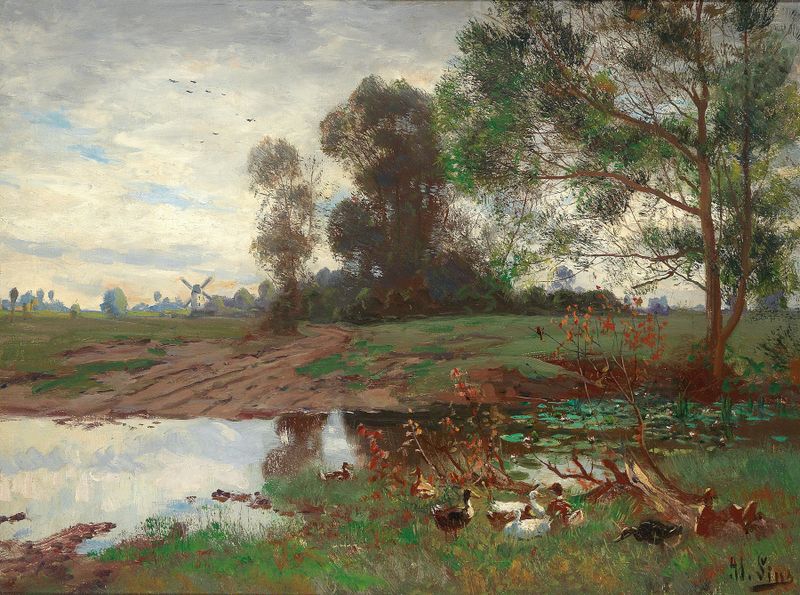
What if silence could speak through light? In the gentle embrace of spring, there lies a quiet revelation, waiting to be discovered in the interplay of nature and childhood innocence. Look to the left where the vibrant green of the rolling hills harmonizes with the soft pastels of blooming flowers. The figures of two children, blissfully engaged, draw the eye towards their joy. Notice how the delicate brush strokes of the artist evoke a sense of movement, as if the gentle spring breeze sweeps through the landscape.
The way sunlight filters through the trees creates a luminous contrast, illuminating the white geese that waddle nearby, their presence both playful and serene. Beneath the surface, the artwork invites contemplation about the relationship between youth and nature. The children's carefree interaction with the geese symbolizes an innocence untouched by the chaos of the world. The juxtaposition of their light-hearted play against the expansive, tranquil landscape speaks to a universal longing for connection — a moment suspended in time.
The blending of colors serves not only to represent spring but also to evoke a sense of hope and renewal. Adolf Lins created this piece during a period marked by a growing interest in capturing the essence of rural life and natural beauty. Although the exact date remains uncertain, it aligns with an era where artists sought to reflect intimate moments that resonate with universal themes. Lins' ability to marry innocence with nature reflects a profound understanding of a world that was slowly changing, yet still held pockets of tranquility.