
Eruption of Mount Vesuvius — History & Facts
What if silence could speak through light? The explosion of colors in this artwork reveals an obsessive dialogue between nature's fury and human vulnerability. Look to the foreground, where the delicate silhouettes of townsfolk scatter in a chaotic flight. The vivid oranges and reds of the molten lava contrast starkly with the muted earth tones of their homes, suggesting the fragility of life against the overwhelming force of nature. Notice how the artist uses billowing clouds of ash, painted in grays and blacks, to frame the summit of Vesuvius, creating a brooding backdrop that draws the eye upward and amplifies the scene’s tension. Every brushstroke is charged with emotion, as the relentless advance of the eruption captures both the awe and dread of the moment.
The figures' frozen gestures convey a mix of panic and resignation, reflecting humanity’s eternal struggle against an indifferent universe. The light cascades from the glowing lava, casting an unnatural illumination, which acts almost like a spotlight on the human drama unfolding below, hinting at our obsession with both nature and destruction. In 1887, this piece emerged from a time when the fascination with natural disasters was prevalent in art, particularly within the Italian School. The artist, influenced by Romanticism, sought to evoke strong emotions through landscape depictions.
As society grappled with industrialization and its dangers, the eruption served as a powerful metaphor, merging history with the artist's contemporary struggles in an era marked by both wonder and fear of nature's might.
More Artworks by Italian School
Browse all →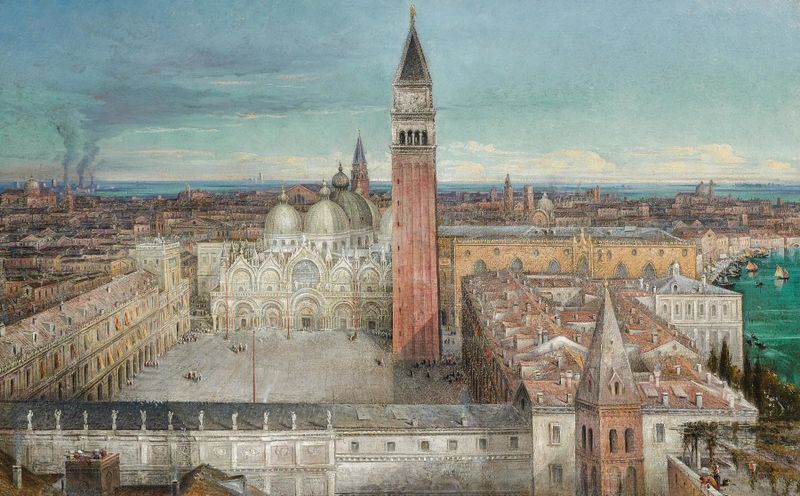
Venice, a bird’s eye view of St Mark’s Square
Italian School
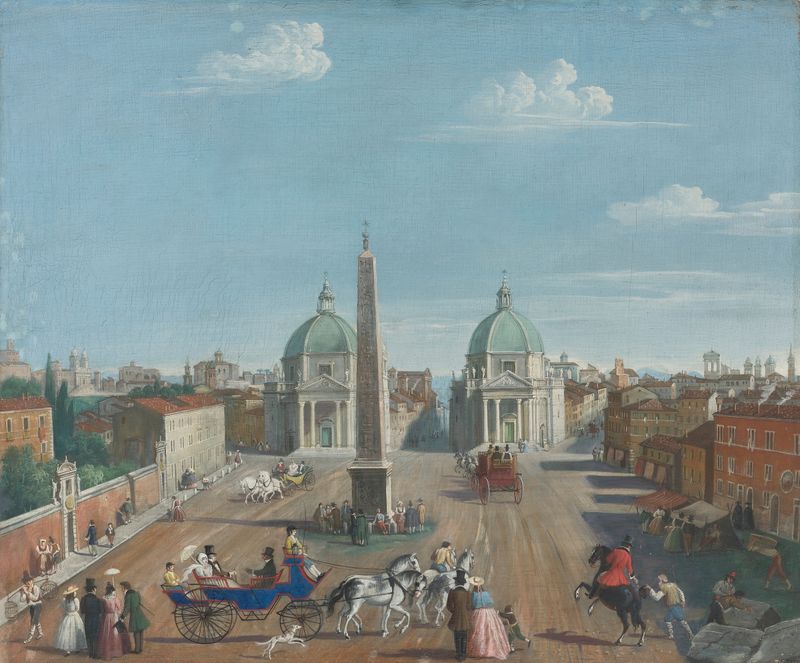
Rome, A View Of The Piazza Del Popolo
Italian School
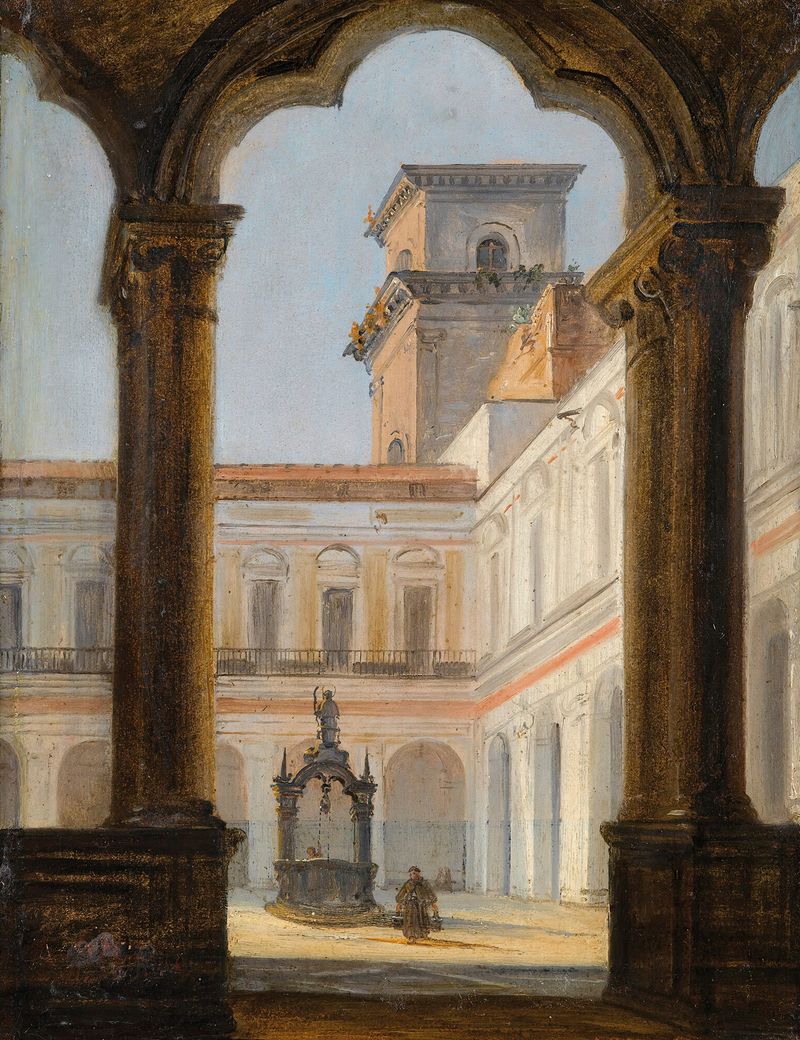
View of San Lorenzo cloister in Naples
Italian School
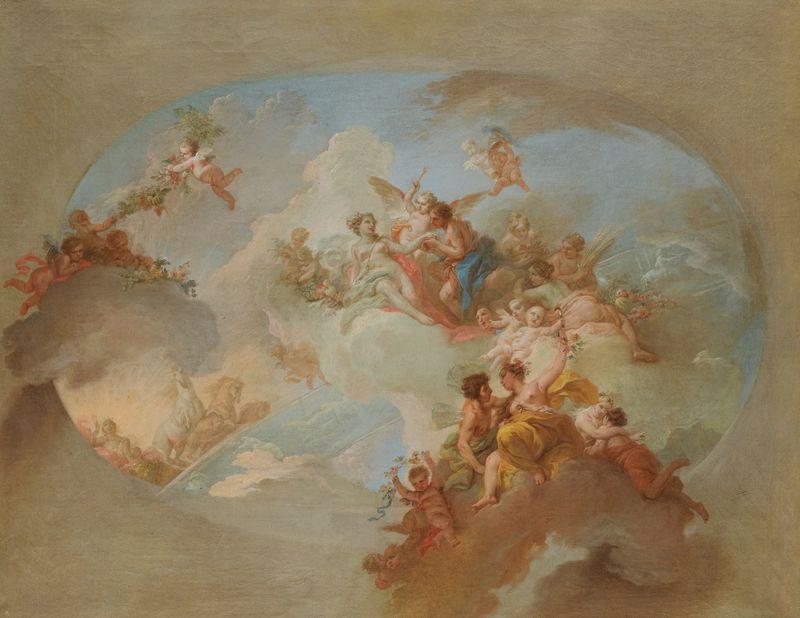
A Bozetto With Flora And Zephyr, Mars And Venus And The Signs Of The Zodiac
Italian School
Classical Landscape
Italian School
A view of Gibraltar harbour
Italian School





