
Classical Landscape — History & Facts
In the stillness of a painted landscape, silence becomes a profound language, whispering truths that often elude the clamor of daily life. Look to the left, where lush greenery meets the horizon, inviting the viewer into a serene expanse. Notice how the soft brushwork captures the gentle undulations of the hills, each stroke alive with a vitality that belies their quiet surface. The palette, a harmonious blend of verdant greens and warm earth tones, bathes the landscape in a golden light, hinting at the golden hour’s embrace.
The sky, with its delicate gradients of blue, draws the eye upward, suggesting an infinite space that transcends the canvas. Yet, within this tranquility lies a subtle contrast. The foreground depicts a solitary figure, almost dwarfed by nature's grandeur, evoking feelings of isolation in a vast world. Their posture, slightly hunched, reflects a moment of contemplation, inviting viewers to ponder the delicate balance between man and nature.
The painstaking detail of wildflowers scattered at their feet speaks to both beauty and transience, highlighting the fragility of life amidst the enduring landscape. Created around 1750, this work emerged during a period of flourishing artistic exploration in Italy, where artists sought to escape the confines of baroque excess. The Italian School, flourishing in this era, embraced a return to nature, striving to capture the sublime beauty of the world. This painting reflects the cultural shift towards simplicity and harmony, resonating with a collective yearning for peace and introspection in an increasingly complex society.
More Artworks by Italian School
Browse all →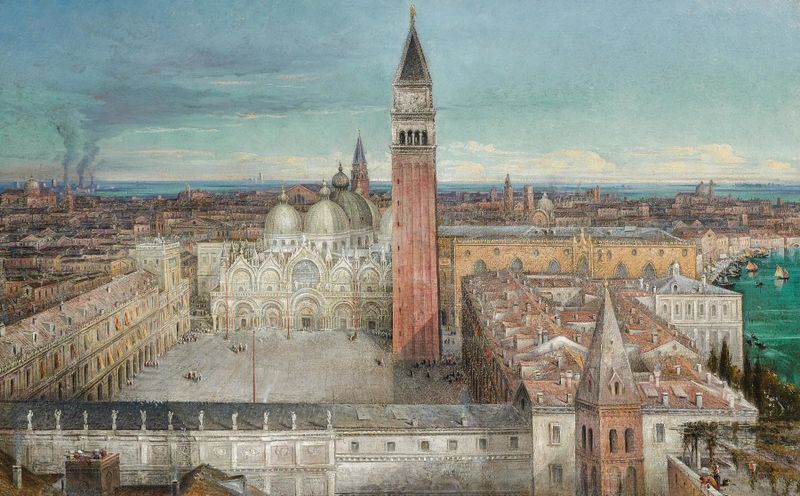
Venice, a bird’s eye view of St Mark’s Square
Italian School
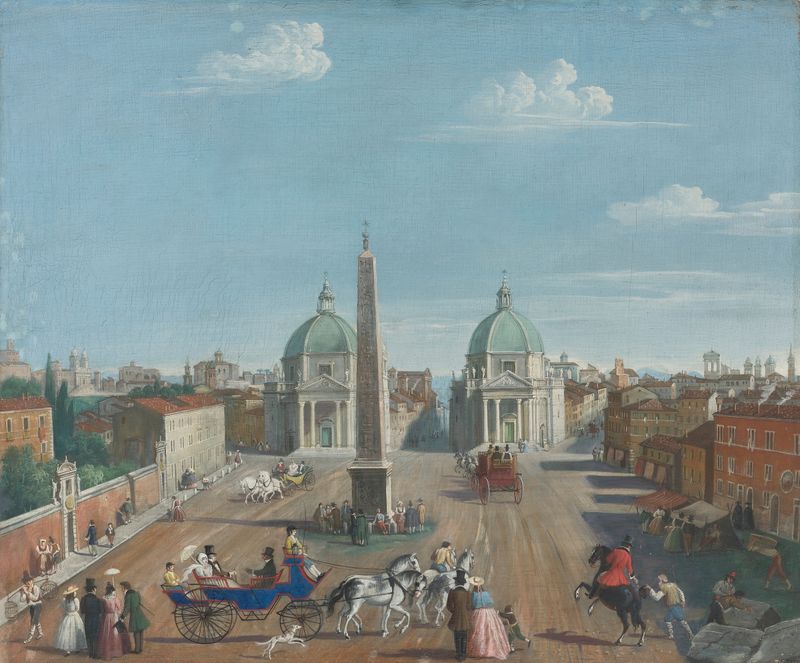
Rome, A View Of The Piazza Del Popolo
Italian School
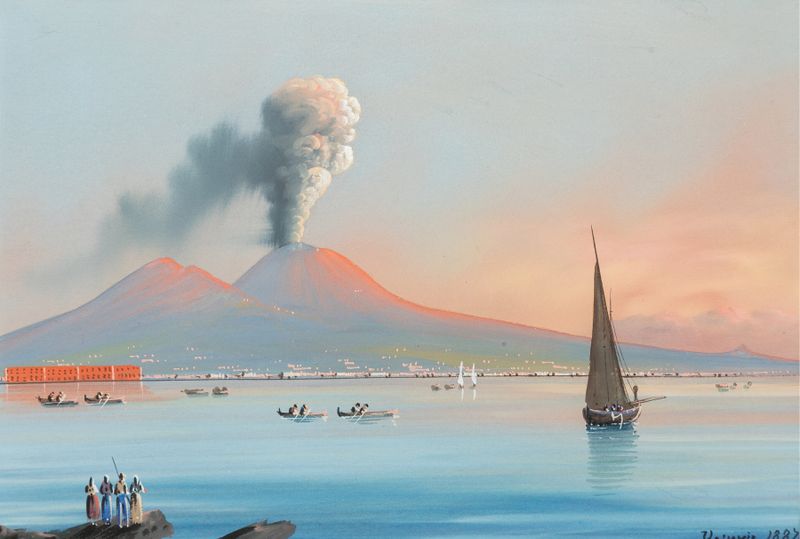
Eruption of Mount Vesuvius
Italian School
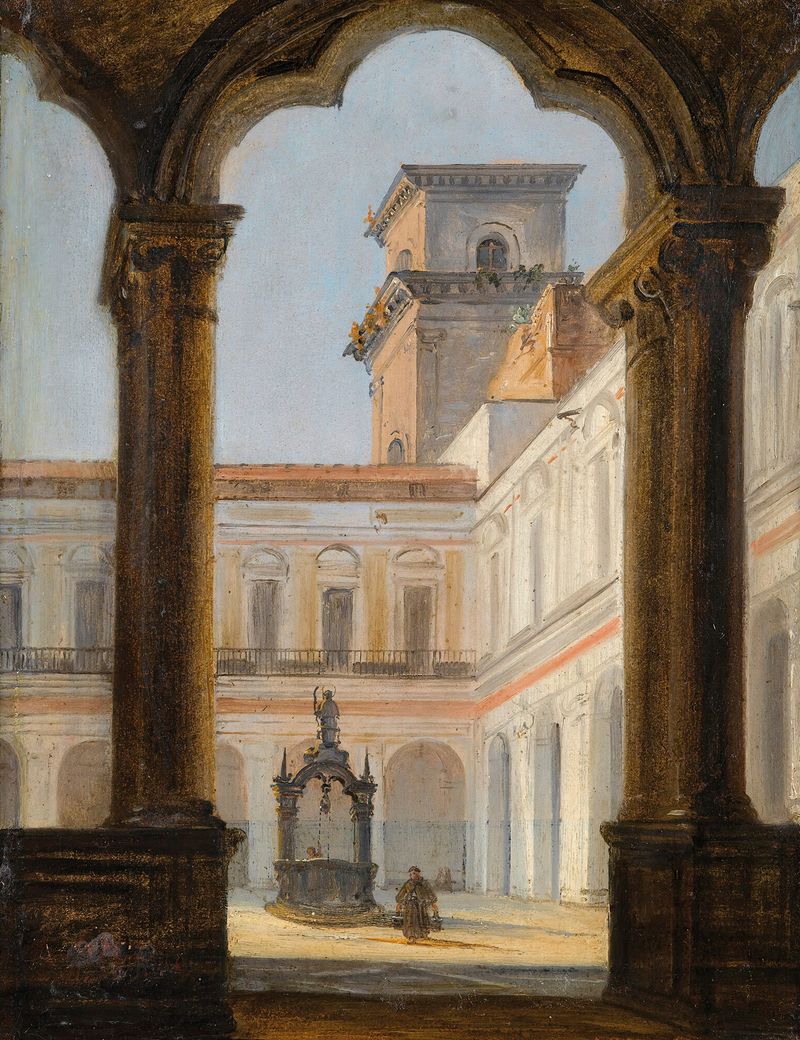
View of San Lorenzo cloister in Naples
Italian School
A Bozetto With Flora And Zephyr, Mars And Venus And The Signs Of The Zodiac
Italian School
A view of Gibraltar harbour
Italian School





