Estonian Scene — History & Facts
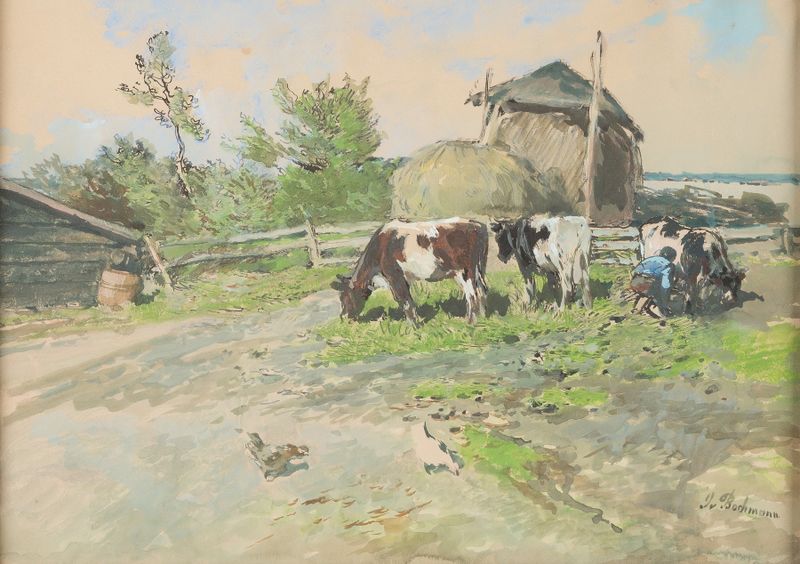
What if silence could speak through light? In the stillness of Estonian Scene, every beam and shadow whispers untold stories, inviting viewers to listen closely. Look to the right at the soft glimmer of sunlight filtering through the trees, casting dappled patterns on the forest floor. The rich greens and browns pulsate with life, while delicate brushwork captures the texture of the leaves, inviting you to feel their velvety surfaces. The composition leads your gaze seamlessly across the canvas, encouraging contemplation of the interplay between light and shadow, reflecting both serenity and mystery. Beneath the surface, tensions emerge: the juxtaposition of vibrant colors against the muted background evokes the fragility of nature, suggesting a moment both ethereal and transient.
Subtle hints of decay, represented by the darkening leaves, remind us of the cycle of life, while the radiant light symbolizes hope and renewal. This delicate balance between the seen and the unseen urges us to ponder our relationship with the natural world and the passage of time. Gregor von Bochmann painted Estonian Scene during a period when he was deeply engaged with capturing the essence of his homeland's landscapes. Though the exact date remains unclear, it reflects the artist's commitment to embodying the serene beauty of Estonia, amidst the evolving movements in European art of the late 19th and early 20th centuries.
During this time, artists were increasingly exploring the emotional qualities of light, paving the way for a deeper understanding of nature's subtle narratives.