Fisher by the beach — History & Facts
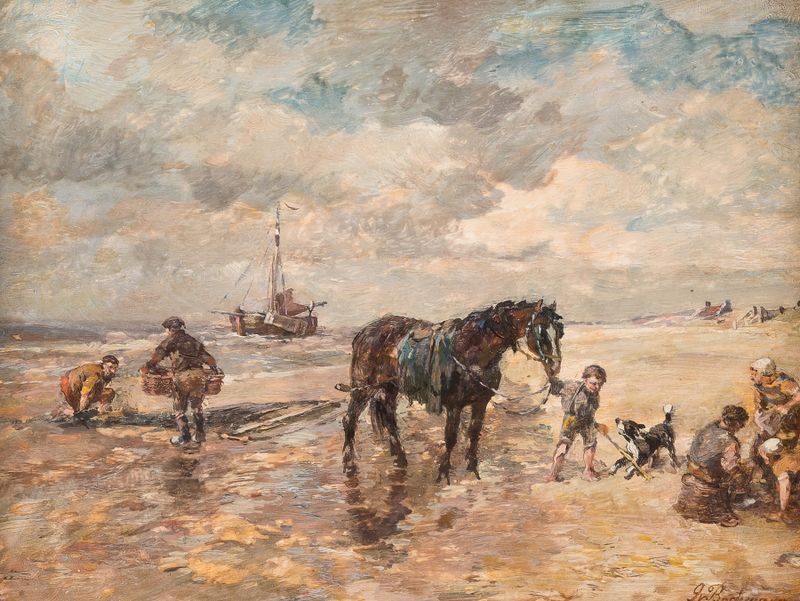
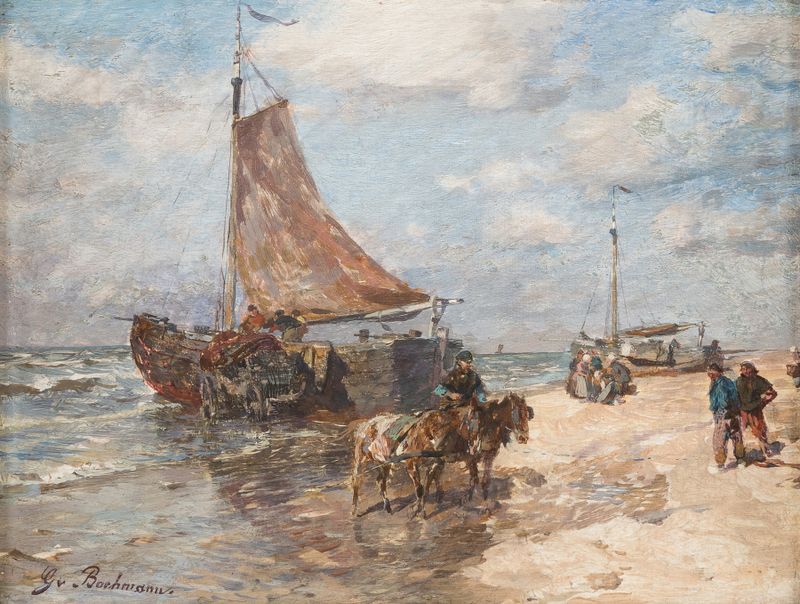
Is this a mirror — or a memory? In Fisher by the Beach, the boundary between past and present blurs, inviting the viewer into a moment suspended in time, where the whispers of the sea mingle with the weight of solitude. Look to the left, where the fisherman's figure is bathed in soft, golden sunlight, the light almost spilling from the canvas. The brushwork is meticulous, portraying the textured grains of the sand and the rhythmic dance of sea waves. Notice how the deep blues of the water contrast against the warm earth tones of the beach, creating a visual dialogue that evokes both calm and melancholy.
The composition draws your eye to the horizon, a subtle reminder of the endless possibilities beyond the immediate. The solitary figure embodies the tension between isolation and connection. His gaze is fixed on the water, suggesting a conversation with the depths below, a yearning for understanding that remains unfulfilled. The void around him amplifies this sense of longing, leaving viewers to ponder what he seeks—perhaps a catch of fish or something far more elusive.
The interplay of light and shadow hints at the dichotomy of hope and despair, inviting deeper reflection on the nature of existence. During 1926, as Fisher by the Beach took shape, Gregor von Bochmann was navigating the complexities of post-war Europe. Living in Germany, he was influenced by the changing tides of modernist thought and the remnants of a world scarred by conflict. The painting reflects both a personal struggle and a collective search for meaning amid chaos, embodying the artist’s exploration of identity and memory within a shifting cultural landscape.