
Etter solnedgang — History & Facts
In Etter solnedgang, the viewer is invited into a moment of serene creation, where the artist’s brush becomes a vessel for the soul’s deepest reflections. The canvas breathes life into the twilight, echoing the soft whispers of nature as day surrenders to night. Look to the horizon, where a delicate gradient of pink and gold fades into the deepening blue of dusk. The gentle strokes of paint replicate the fleeting moment when the sun dips below the trees, illuminating the sky with a celestial glow.
The composition is balanced yet dynamic, with the silhouettes of the landscape embracing the horizon, suggesting both the end of day and the promise of night to come. The blending of colors speaks to the transition of light, creating a palpable sense of calm that envelops the viewer. Within this tranquil scene lies a deeper exploration of creation itself. The interplay of light and shadow suggests a duality — the end of one phase and the beginning of another, much like the cyclical nature of life.
The quiet shadows of the trees serve as guardians of the twilight, reflecting our own inherent fears of change and the unknown. This stillness resonates, evoking a moment of introspection and connection to something greater than ourselves. In 1889, Amaldus Nielsen crafted Etter solnedgang during a vibrant period in Norwegian art, marked by a growing fascination with natural beauty and the effects of light. Living in a country where nature's grandeur was both inspiration and subject, Nielsen sought to capture the sublime essence of the Norwegian landscape.
This work illustrates his mastery in merging impressionistic techniques with a profound emotional depth, positioning him as a pivotal figure in the evolution of Scandinavian art during this era.
More Artworks by Amaldus Nielsen
Browse all →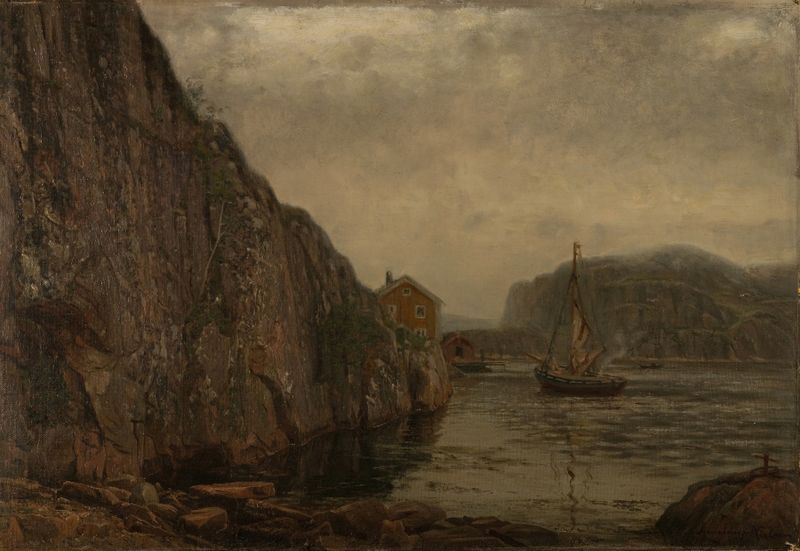
Skjærgård, Ny-Hellesund
Amaldus Nielsen
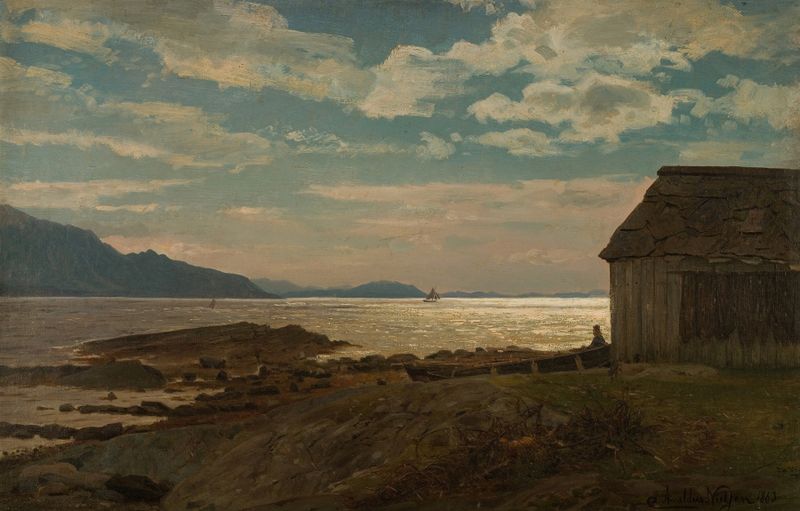
Fra Ølvestranden, Hardanger
Amaldus Nielsen
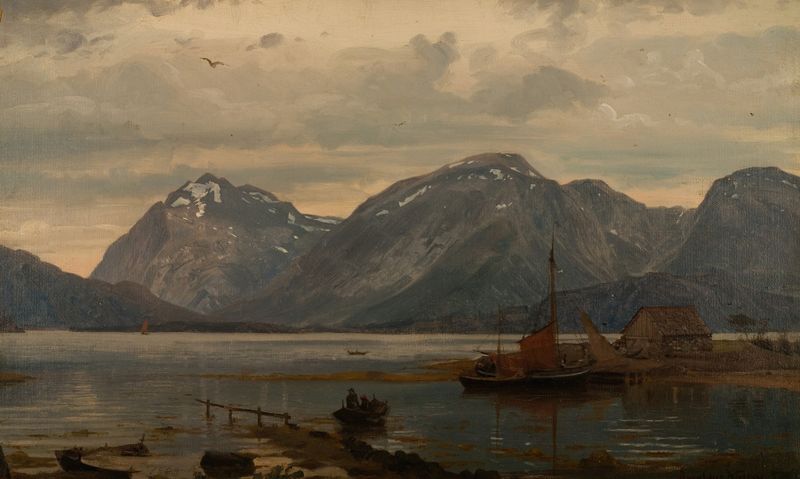
Fra Englafjellene, Hardanger
Amaldus Nielsen
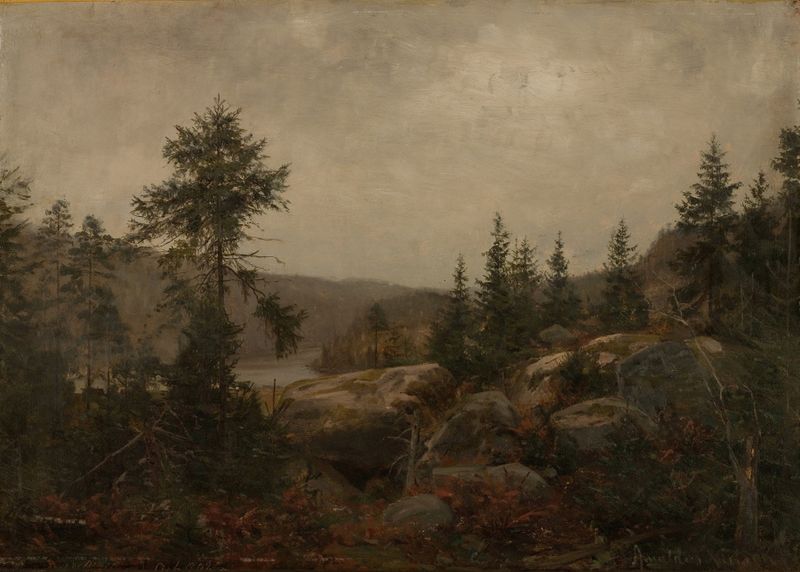
Duskregn . Gården Foss, Mandalselven
Amaldus Nielsen
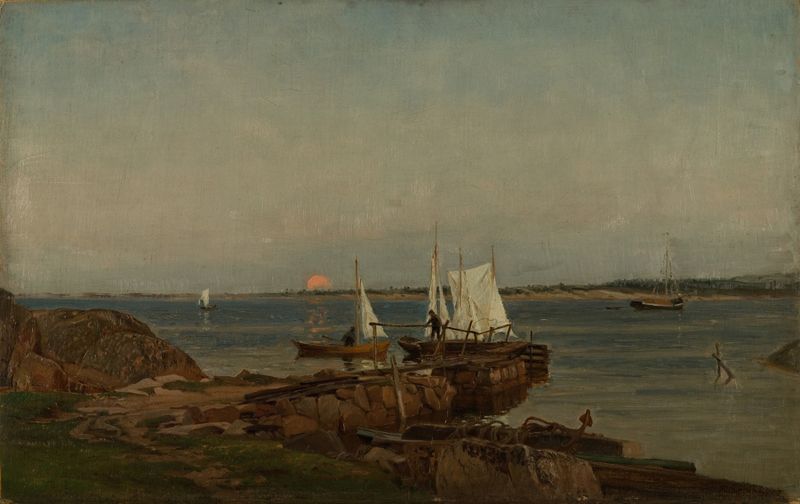
Sommernatt, Hvaler
Amaldus Nielsen
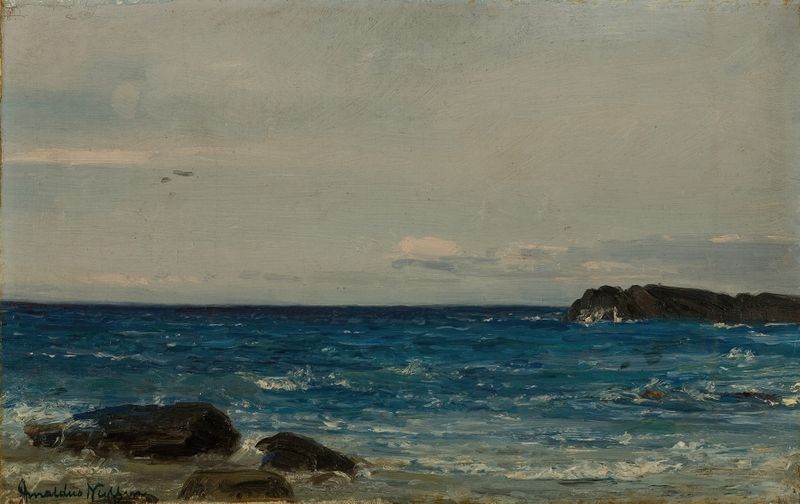
Fra Jæren
Amaldus Nielsen
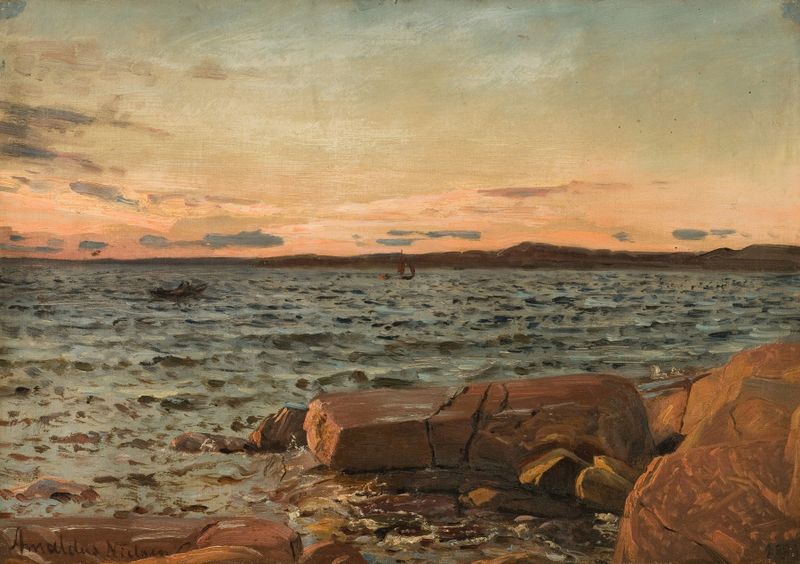
Solgangsvind, Hvaløene
Amaldus Nielsen
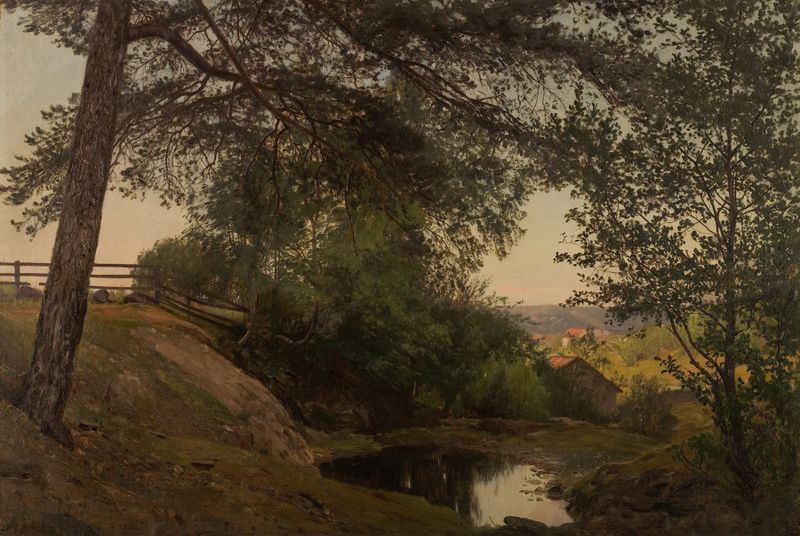
Mellom trærne. Lervik, Stord
Amaldus Nielsen

Båtbyggeri, Lillesand
Amaldus Nielsen
Regnstemning, Gudvangen
Amaldus Nielsen





