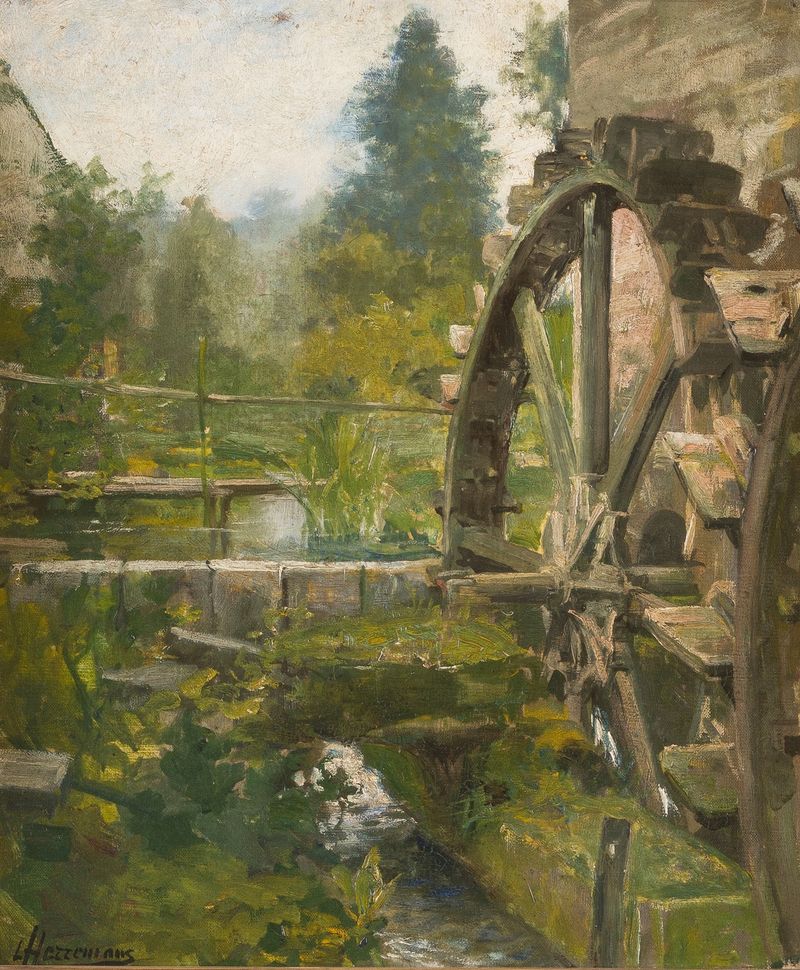
Evening at the Ostend Harbour — History & Facts
Who listens when art speaks of silence? In Evening at the Ostend Harbour, a stillness cloaks the canvas, inviting contemplation of the quiet fear that looms in the dusk. Look to the left at the gentle, wavering waters of the harbor, where the last traces of sunlight meld into deep blues and purples. The horizon hovers low, and the silhouettes of boats rest like forgotten dreams. Notice how the flickering glow from a solitary lantern casts shadows that dance across the shoreline, accentuating the poignant solitude of the scene.
Herremans’ delicate brushwork and muted palette convey a sense of profound stillness, almost as if time itself has paused, leaving the viewer suspended in this tranquil yet haunting moment. Beneath the surface lies a tension that belies the serene exterior. The absence of figures hints at isolation, evoking a sense of longing or loss. The darkening sky looms, embodying an encroaching fear that stirs in the heart of the viewer, amplifying the emotional weight of the scene.
Each brushstroke seems to whisper of fragility, capturing the fleeting nature of both day and life itself, while the calm waters reflect the uncertainty of what lies beneath. Lieven Herremans painted this work in a period when he was deeply engaged with the themes of light and atmosphere, often capturing the emotional resonance of quiet moments. Created in the 17th century, he was part of a Dutch artistic milieu that celebrated realism and landscape, yet his approach subtly diverged, intertwining stillness with a deeper exploration of human emotion and existential dread.