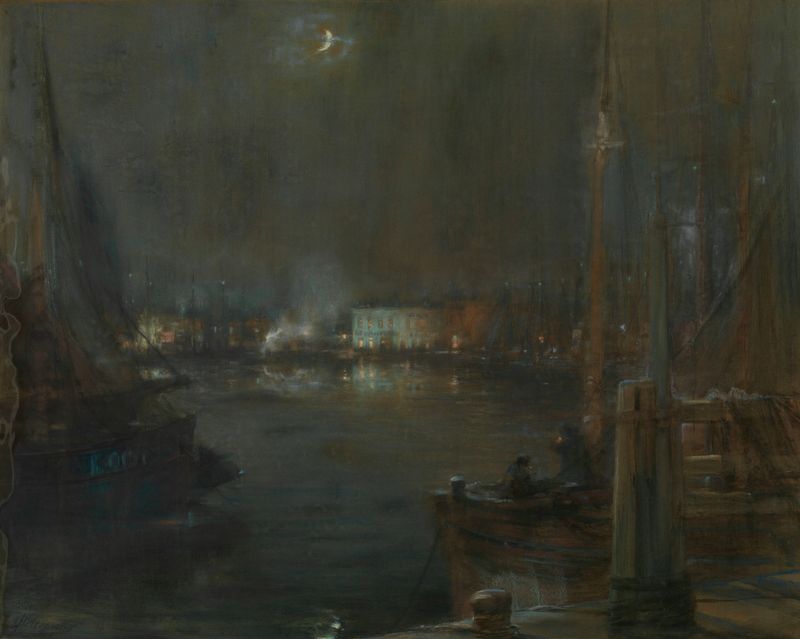
Romantic water mill — History & Facts
The serenity captured in the stillness of a water mill evokes a powerful nostalgia, a longing for simpler times and forgotten moments. It invites viewers to ponder the stories hidden in the gentle flow of water and the whispering trees, reminding us of the intimacy of nature and the passage of time. Look to the left at the water's edge, where soft brushstrokes create a rippling reflection of the mill’s structure. The artist employs a muted palette of greens and browns, evoking a sense of harmony with the landscape that surrounds the mill.
The delicate interplay of light and shadow accentuates the tranquil atmosphere, guiding the eye towards the mill's wheel, poised to turn but captured in stillness. The composition draws the viewer inward, establishing a connection with the scene that feels both personal and profound. Beneath the surface lies a contrast between the enduring strength of the mill and the ever-flowing water, symbolizing the tension between permanence and transience. The way the sunlight glances off the surface hints at fleeting moments, while the solidity of the structure offers a sense of stability in the face of change.
Each detail, from the textured bark of the trees to the soft wash of clouds, enhances the emotional depth of the painting, inviting reflection and introspection. Created during a time when Lieven Herremans was exploring themes of rustic life, this work embodies the artist's fascination with the harmony of nature and human craftsmanship. Though the exact date remains unknown, Herremans was active in the late 17th century in the Netherlands, a period marked by the growing appreciation for landscape painting. His dedication to capturing pastoral scenes was a response to an era increasingly influenced by urbanization and industrial growth.