Evening In Biskra — History & Facts
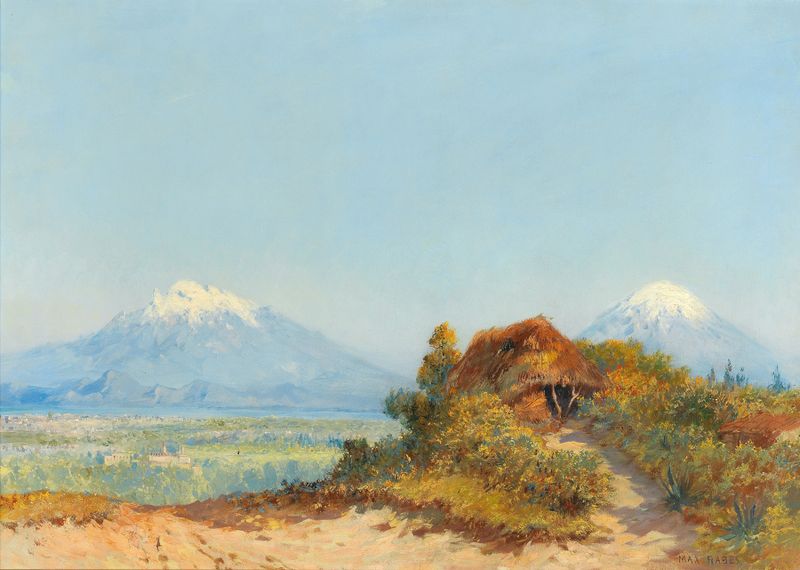
Can beauty exist without sorrow? This question lingers as one encounters the captivating depths of Evening In Biskra. Look to the foreground, where the warm, golden hues of the setting sun gently embrace the landscape. The artist skillfully employs rich oranges and subtle purples that meld into the sky, casting a serene glow over the distant mountains. Notice how the silhouettes of palm trees frame the scene, their dark forms contrasting against the vibrant sky, creating a palpable sense of peace and stillness.
Each brushstroke whispers of a tranquil moment, inviting the viewer to linger in its serene beauty. Yet beneath this allure, a deeper narrative emerges. The juxtaposition of the radiant sky with the darkened figures hints at the complexities of faith and the human experience. The landscape, while breathtaking, evokes a longing—a reminder that beauty often carries the weight of unspoken stories and struggles.
The nightfall signals a transition, a metaphor for the duality of existence where joy and sorrow coexist, urging reflection on the nature of hope and belief. Created during an uncertain period in the late 19th century, this work captures Rabes’ exploration of light and landscape. While the exact date remains unknown, it reflects a time when the artist was immersed in the vibrant art movements of Europe, seeking inspiration from North African landscapes. The rise of Orientalism in art was casting new perspectives, and this piece stands as a testament to a moment where beauty and faith intertwined, rooted in the quest for meaning amid a changing world.