Evening Light — History & Facts
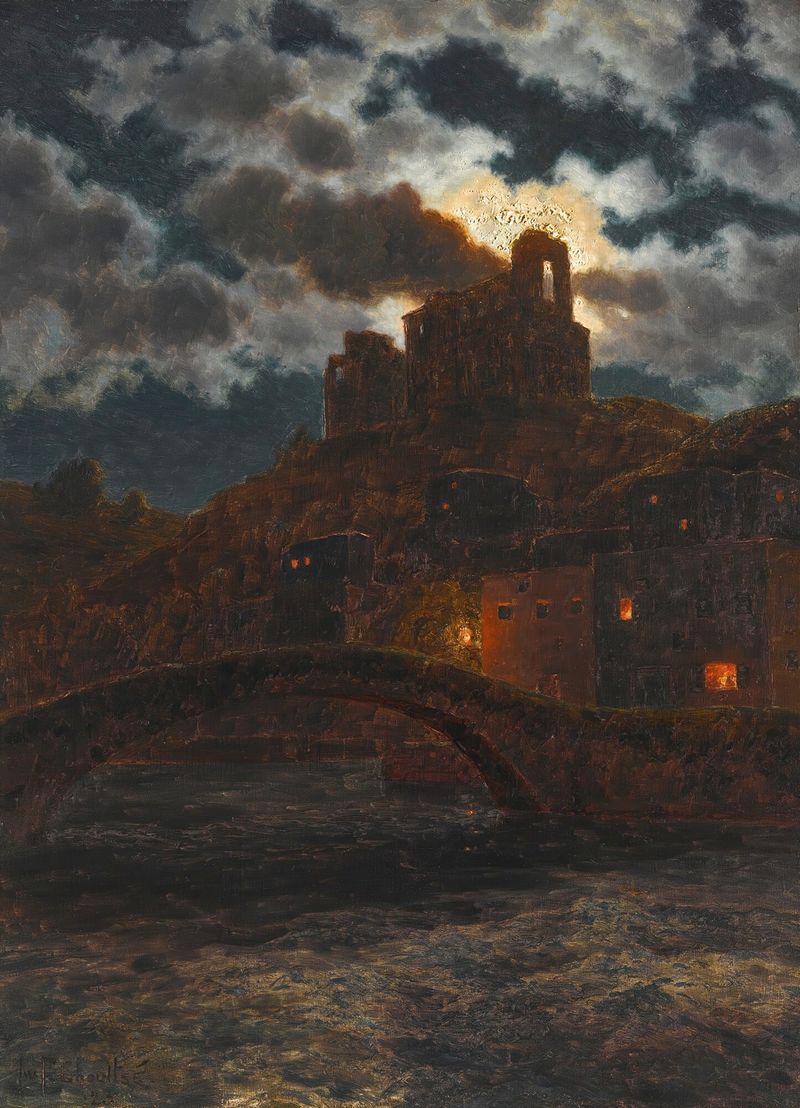
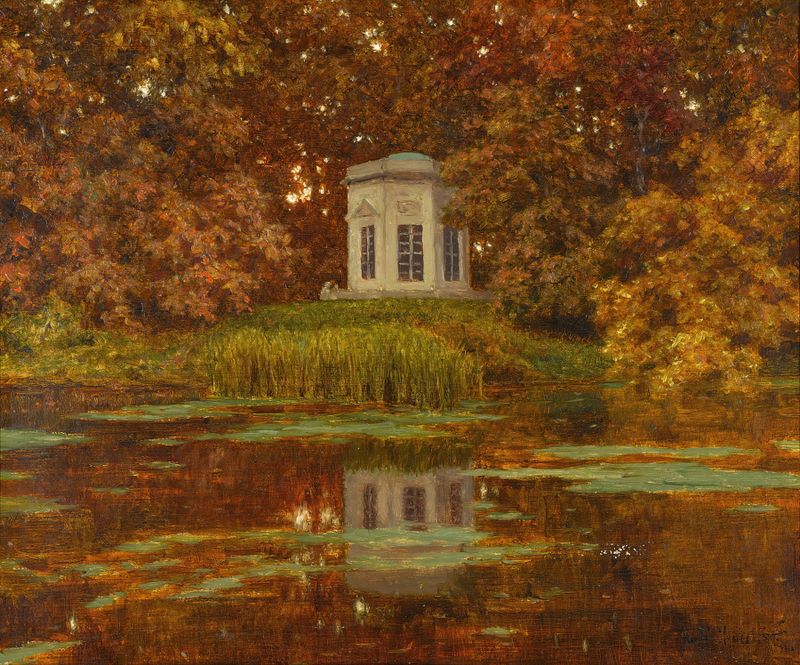
Can paint confess what words never could? In Evening Light, the canvas whispers stories of transformation, radiating the quiet power of change. Look toward the left where a gentle cascade of golden hues spills over the horizon, casting a warm embrace upon the scene. The soft transition from bright yellows to deep oranges captures the fleeting moment of dusk, inviting the viewer to linger. Notice how the artist’s deft brushwork creates a shimmering quality in the water below, mirroring the sky’s brilliance while enhancing the sense of tranquility and promise intertwined within the fading light. Beneath this serene exterior lies an undercurrent of unrest.
The interplay between light and shadow suggests a duality, mirroring the tensions of a world on the brink of upheaval. The tranquil landscape is punctuated by dark, looming trees, hinting at the conflicts brewing just beyond the painted frame. As evening descends, it evokes introspection — a moment held between what was and what may come, capturing a profound sense of anticipation. Choultse created this piece during a period of significant social and political change in Russia, likely in the late 19th century, a time when impressionism was gaining traction.
Amidst the chaos of revolution, he sought solace in nature, producing works that encapsulated both beauty and the looming specter of transformation. The painting serves as a testament to his mastery of light and color while reflecting the emotional landscape of his era.