On The Banks At Twilight — History & Facts
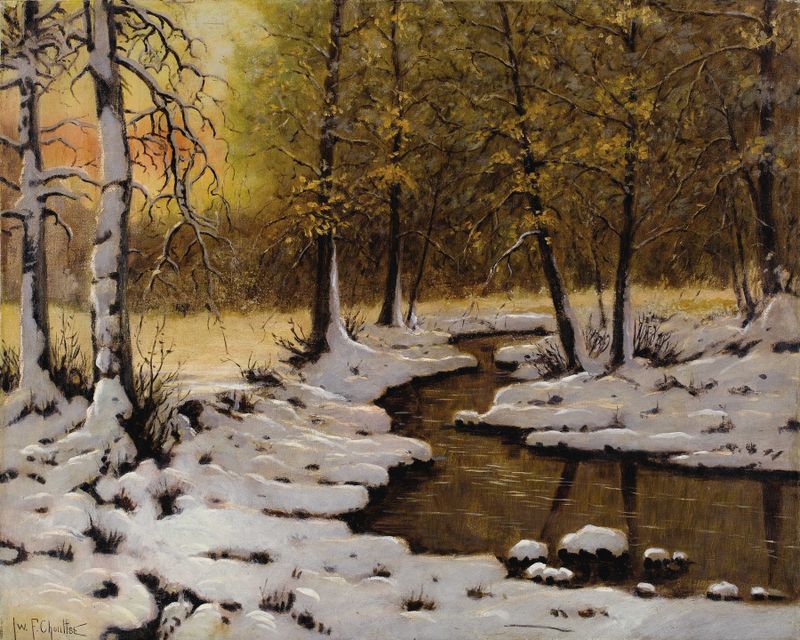
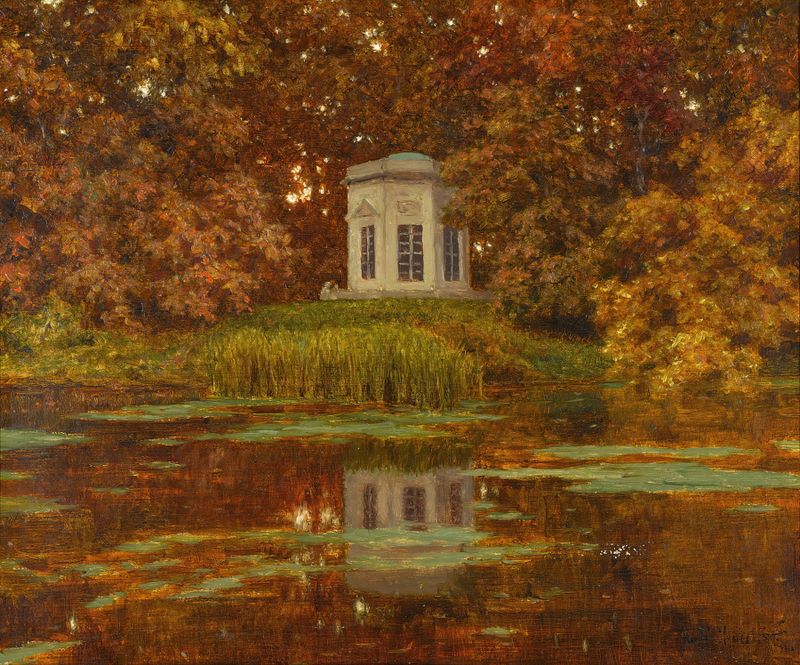
Can paint confess what words never could? In On The Banks At Twilight, vibrant hues and soft shapes unite to whisper the secrets of a fleeting moment, capturing a serene yet profound atmosphere. Look to the lower left at the gentle ripples dancing across the water's surface, where the twilight sky meets the horizon. The rich blend of blues and purples paints an ethereal backdrop, while hints of gold reflect off the water, guiding your gaze toward the horizon's embrace. Notice how the delicate strokes create a sense of movement, suggesting the quiet rustle of leaves and the subtle sway of nearby trees, seamlessly merging land, sky, and water in perfect harmony. Yet beneath this tranquil veneer lies an emotional tension.
The faint silhouette of figures at the river's edge evokes a sense of longing and contemplation, their stillness contrasting with the vibrant life around them. This interplay between light and shadow hints at deeper themes of transience and introspection, inviting viewers to ponder not just the beauty of nature, but the complexities of human experience intertwined with it. In 1923, in the aftermath of World War I, On The Banks At Twilight emerged as Choultse sought solace in the natural world, reflecting a broader movement in art toward escapism and emotional depth. Residing in Russia, he combined Impressionist influences with a unique vision that captured the essence of the landscape, embodying a collective yearning for peace and renewal in a time of change.