
Exterior View of Keylas (Kailasanatha) — History & Facts
What if beauty was never meant to be finished? This notion echoes through the elaborate façade of the Exterior View of Keylas, a testament to architectural ambition and spiritual yearning. Look to the center of the composition, where the intricately carved temple towers rise majestically against a clear sky. The artist’s meticulous attention to detail is evident in the delicate patterns that adorn the stone surfaces, inviting the viewer to trace the ornate designs with their eyes. Notice how the warm hues of ochre and muted earth tones harmonize with the soft shadows, evoking a sense of timelessness and reverence.
The gentle interplay of light and form suggests a sacred atmosphere, echoing the profound significance of this architectural marvel. Delve deeper into the scene, and you'll find hidden narratives etched within the temple's walls. The swirling motifs might symbolize the eternal dance of life and divinity, while the stark contrasts between light and shadow reflect the dualities of existence—creation and decay, hope and despair. This piece captures not just a physical structure, but the emotional landscape of those who seek solace and connection within its embrace, embodying a yearning for transcendence that resonates through the ages. Created in 1795, Exterior View of Keylas emerged during a period of rich cultural synthesis in India.
Gangaram Chintaman Tambat painted this work in the wake of colonial influences, where traditional artistry encountered the complexities of a changing world. The temple, a prime example of Dravidian architecture, stands as a statement of resilience and devotion amidst the evolving landscape of Indian art.
More Artworks by Gangaram Chintaman Tambat
Browse all →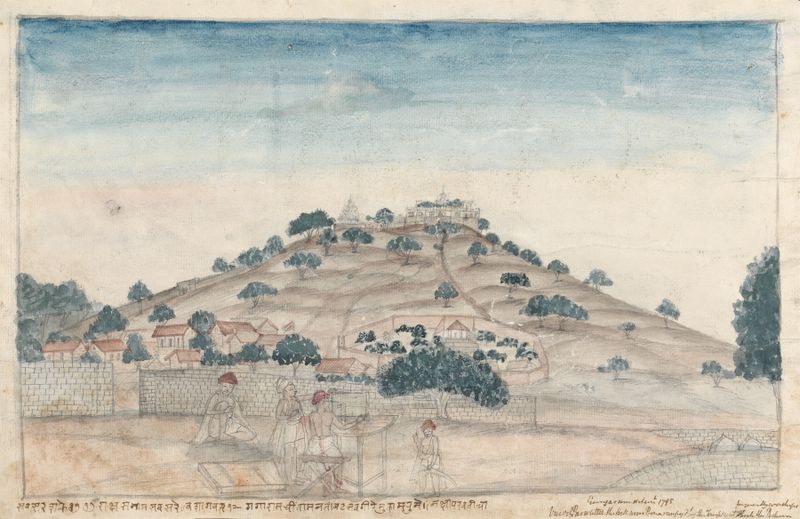
More Architecture Art
Browse all →
The statue of Liberty
Frédéric Auguste Bartholdi

View of Houses in Delft, Known as ‘The Little Street’
Johannes Vermeer

View of Houses in Delft, Known as ‘The Little Street’
Johannes Vermeer

The Cathedral in Rouen. The portal, Grey Weather
Claude Monet

The yellow house
Vincent van Gogh

The Church in Auvers-sur-Oise, View from the Chevet
Vincent van Gogh