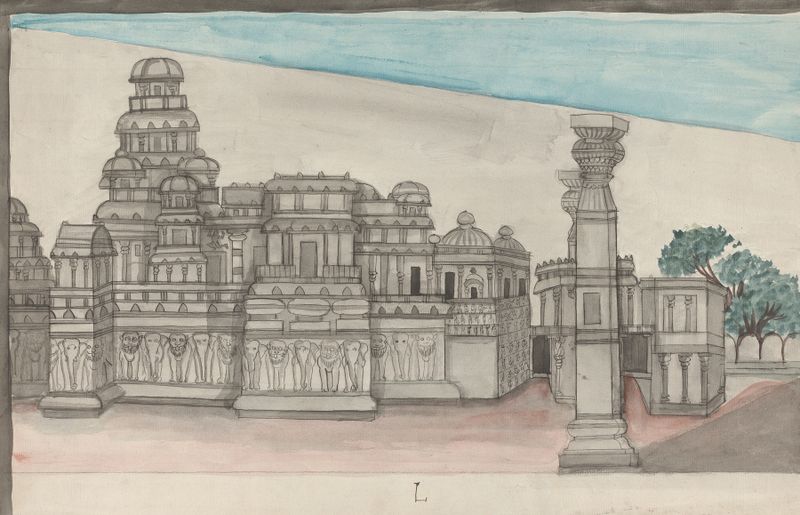
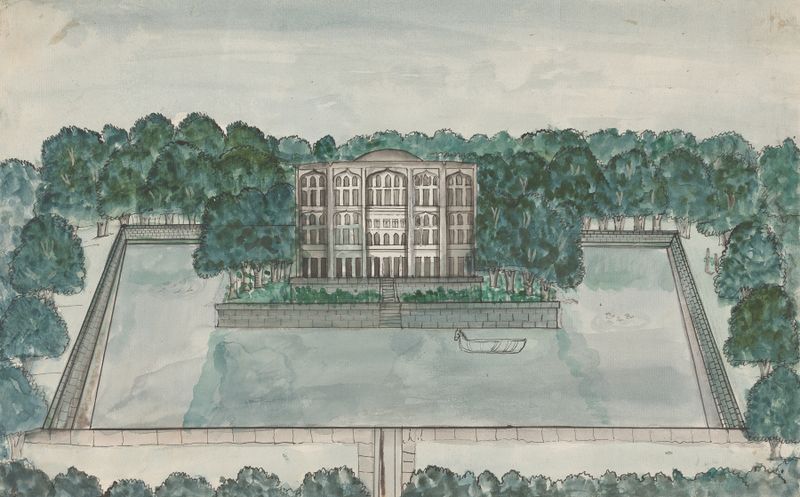
View of Parbati, a Hill near Poona Occupied by the Temples at which the Peshwa frequently Worships — History & Facts
In the quiet spaces where light dances, meaning emerges, revealing the soul of a landscape. Look to the left at the vibrant greens of the hills, punctuated by the delicate whites of the temples. Notice how the artist captures the interplay of light and shadow, each brushstroke evoking a sense of reverence for the sacred places nestled within the natural world. The sky, a soft gradient of blues, envelops the scene, inviting the viewer to linger and reflect on the serene beauty before them. Delve deeper into the contrasting elements at play: the lively foliage symbolizes the flourishing life surrounding the temples, while the serene structures suggest a tranquil devotion.
The composition invites contemplation of the balance between nature and spirituality, where the temples stand as beacons of worship amidst the ever-changing landscape. The sunlight bathes everything in warmth, hinting at a harmony that exists between the earthly and the divine. In 1795, Gangaram Chintaman Tambat created this work while the Peshwa's rule was prominent in Pune, a time marked by a vibrant fusion of culture and spirituality. The artist’s keen focus on the local environment and sacred spaces reflects a significant period in Indian art, where nature became a canvas for religious expression and cultural identity.
This piece serves as a window into both the land and the devotion that shaped it.