
Facade for a Church with a Sculpture Representing Faith — History & Facts
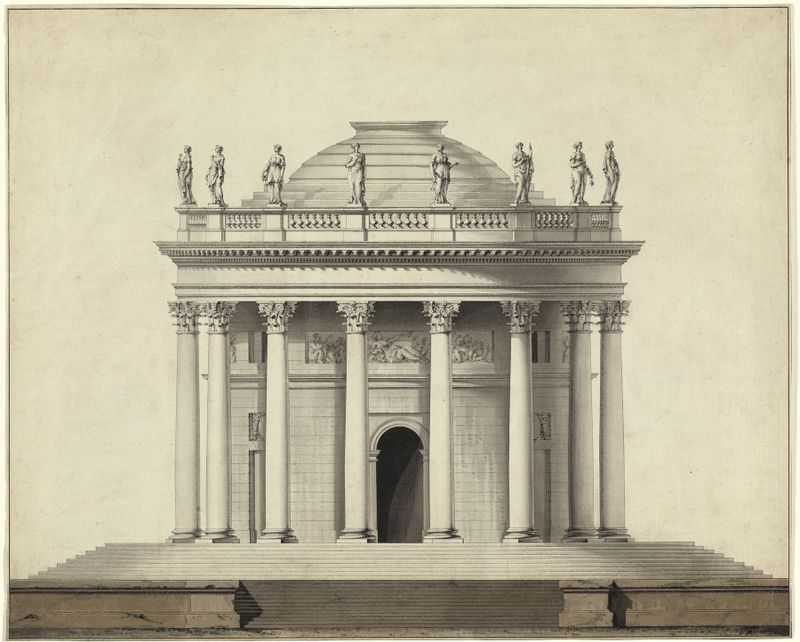
Did the painter know this moment would outlive them? Capturing the delicate void between art and faith, this work invites us to contemplate eternity amid transience. Focus on the intricate details of the facade, which draws the eye upward toward the soaring archways and ornate sculptures. Notice how the light delicately caresses the stone carvings, illuminating the figure of Faith with ethereal clarity. The deep shadows contrast with the sunlit highlights, creating a dynamic interplay of light that breathes life into the stillness of the stonework. Within the facade lies a tension between permanence and impermanence.
The figure's serene expression speaks to unwavering belief, yet the wear of time on the material evokes a sense of fragility. The juxtaposition of the sturdy architecture and the ephemeral nature of human existence offers a poignant reflection on what endures in the face of decay. Each carefully rendered detail whispers the stories of countless worshippers, their faith echoing long after their voices have faded. In 1768, while residing in France, Louis Gustave Taraval executed this piece during a time of artistic transition.
The Rococo style, characterized by elegance and ornamentation, was giving way to Neoclassicism's focus on simplicity and moral clarity. As Europe navigated the complexities of Enlightenment thought, Taraval’s work stands as a testament to the enduring dialogue between faith, art, and society, reflecting a moment where beauty and belief intertwine.
More Artworks by Louis Gustave Taraval
Browse all →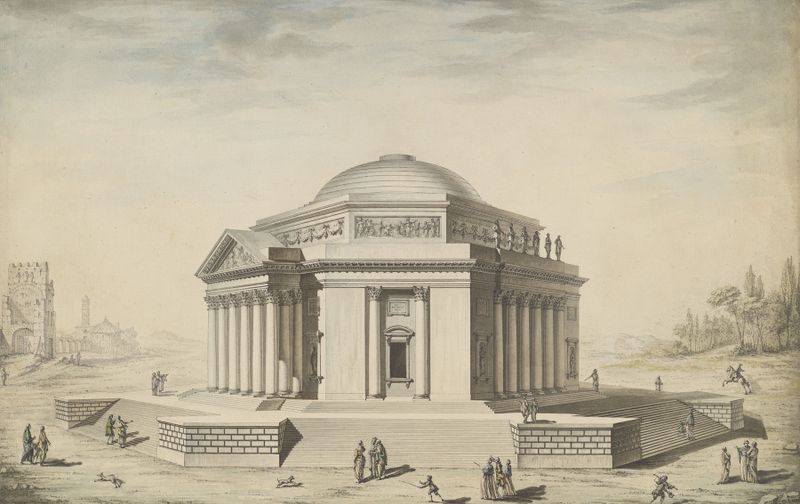
More Architecture Art
Browse all →
The statue of Liberty
Frédéric Auguste Bartholdi

View of Houses in Delft, Known as ‘The Little Street’
Johannes Vermeer

View of Houses in Delft, Known as ‘The Little Street’
Johannes Vermeer

The Cathedral in Rouen. The portal, Grey Weather
Claude Monet

The yellow house
Vincent van Gogh

The Church in Auvers-sur-Oise, View from the Chevet
Vincent van Gogh