Hexagonal Temple in an Italianate Landscape — History & Facts
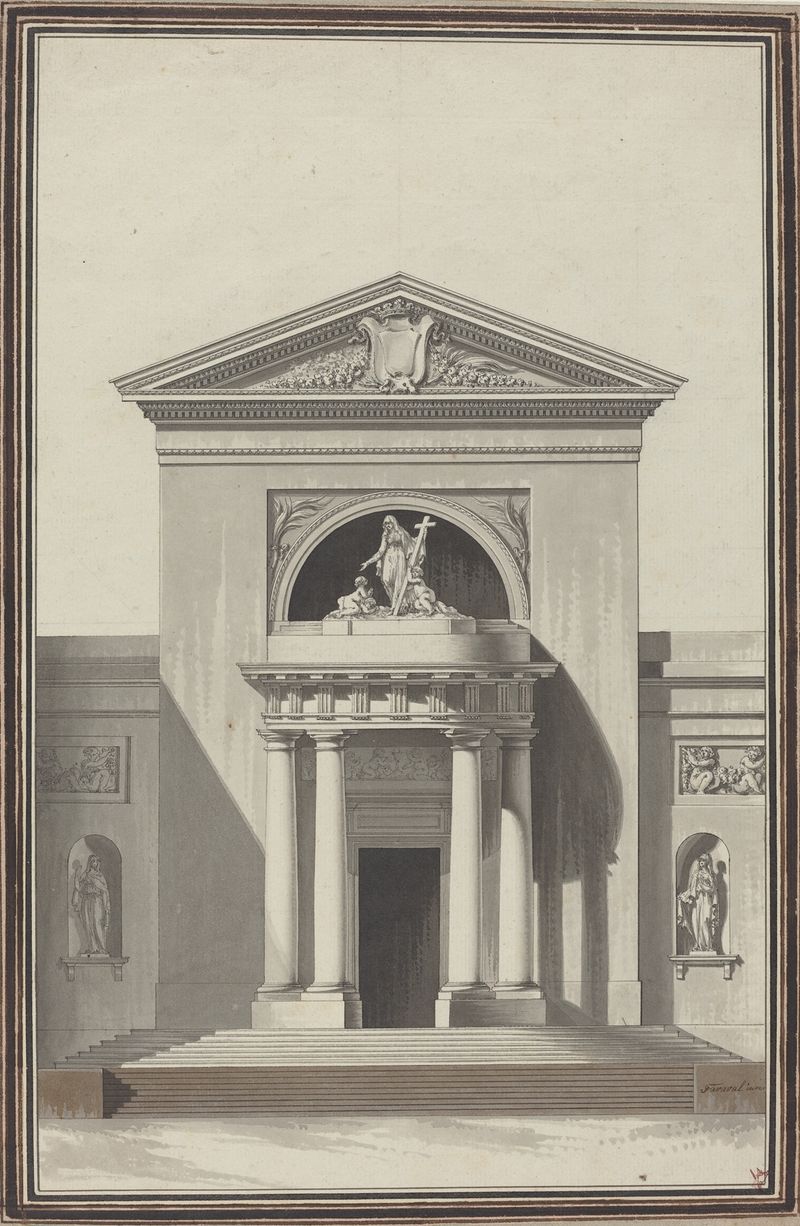
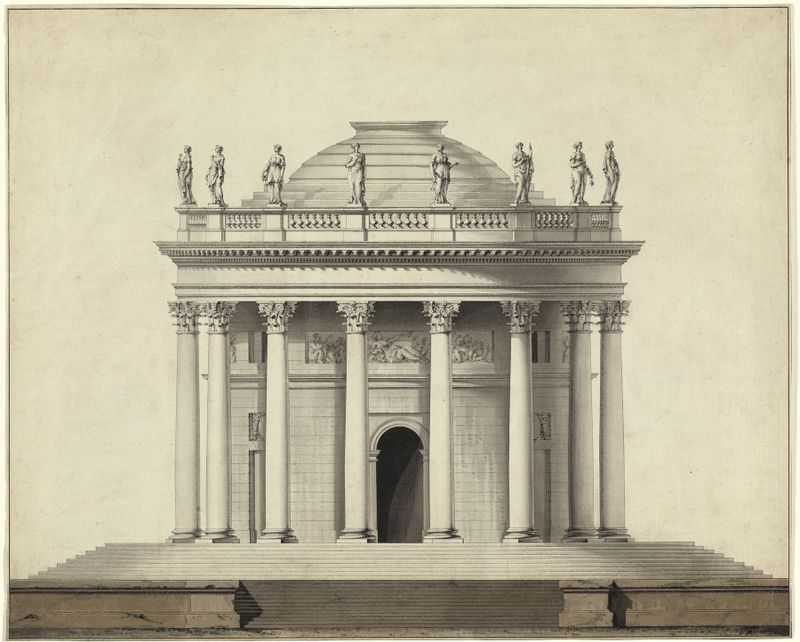
Did the painter know this moment would outlive them? The stillness of creation captures an eternity, where silence speaks volumes amid the whispers of nature. Look to the center of the canvas, where the hexagonal temple rises, its geometric precision contrasting beautifully with the flowing lines of the surrounding landscape. The soft, muted colors blend harmoniously, creating a serene atmosphere that invites contemplation. Pay attention to the gentle play of light, which filters through the clouds, illuminating the temple's facade and casting delicate shadows that suggest the passage of time. Beneath the tranquil surface lies a deeper tension between the permanence of human achievement and the transience of nature.
The temple, an emblem of architectural stability, stands resolute against a backdrop of rolling hills and ethereal skies, evoking a sense of quiet reverence for both human ingenuity and the natural world. The choice of a hexagonal shape, often associated with harmony and balance, hints at an idealized vision, inviting viewers to ponder the fleeting nature of existence within an immutable landscape. In the late 18th century, while creating this piece, the artist found himself in a period of artistic transition in France, marked by shifting styles and emerging neoclassicism. Taraval painted it around 1780, amidst a flourishing interest in Italian landscape and architecture, reflecting the romantic aspirations of a society on the brink of change.
His work, deeply rooted in classical ideals, sought to merge the beauty of nature with human design, capturing a moment that resonates across the ages.