Fair in Scheveningen — History & Facts
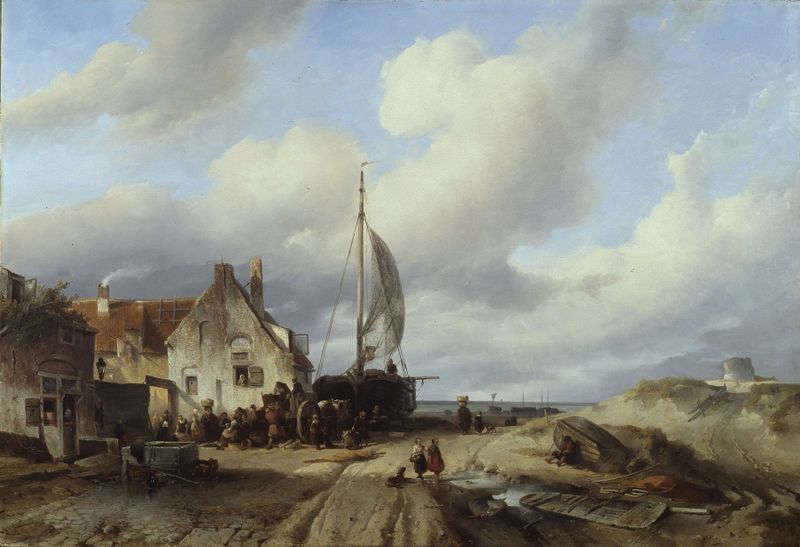
In the stillness of a fair, the echoes of laughter and joy linger, yet the canvas captures a moment when the noise fades and intimacy reigns. Look to the right at the vibrant tents, their stripes undulating like ribbons in the breeze, drawing the eye into the busyness of the fair. The pale sky drapes over the scene, casting an ethereal light that softens the figures depicted. Notice how the brush strokes create a sense of movement amidst the stillness, with subtle details like a child tugging at an adult’s hand, hinting at desires unvoiced, yet palpable in the air. Beneath the charm of this festive gathering lies a juxtaposition of light and shadow, revealing deeper tensions.
Each figure, whether lost in conversation or momentarily gazing into the distance, embodies the layers of human connection. The fairness of the day contrasts with the underlying silence of individual thoughts, suggesting a fleeting harmony overshadowed by the unspoken. This duality invites contemplation on how moments of joy often coexist with hidden anxieties or dreams. In 1859, Samuel Verveer painted this scene during a time when art was transitioning into more personal expressions, moving away from grand historical themes.
Living in the Netherlands, he focused on capturing the essence of daily life and festivities, reflecting the cultural vibrancy of his surroundings. This work exemplifies his ability to portray not just a moment, but a shared human experience, deepening the viewer’s engagement with the silence that speaks volumes.