Fantasy View of the Ponte Molle, Rome and the Abbey of Saint Nilus at Grottaferrata — History & Facts
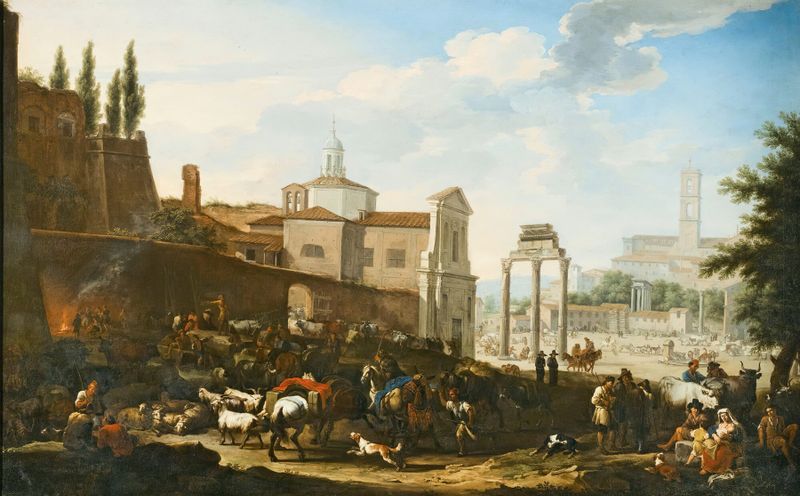
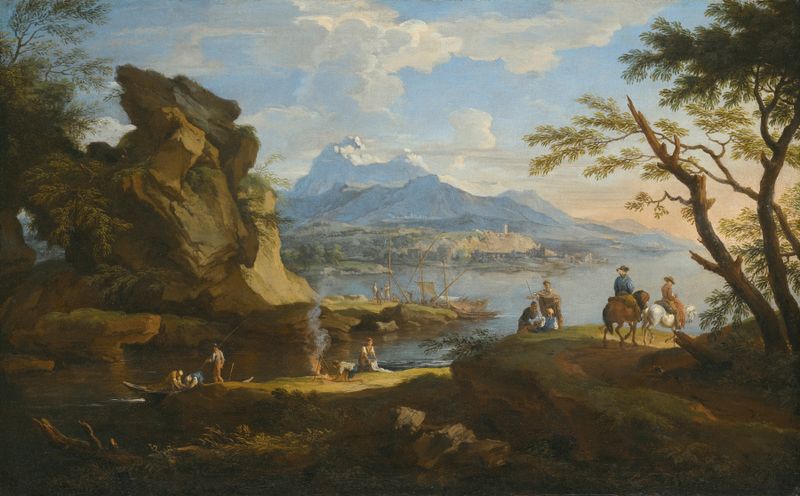
Could a single brushstroke hold eternity? In Fantasy View of the Ponte Molle, Rome and the Abbey of Saint Nilus at Grottaferrata, illusion dances upon the canvas, inviting the viewer to lose themselves in a vision of serene beauty and architectural marvel. Focus on the horizon where the Ponte Molle arches gracefully over a shimmering river, its ancient stones bathed in the golden hues of dusk. Notice how the sun casts elongated shadows, creating a delicate interplay of light and shadow on the water’s surface. The abbey, perched amidst lush greenery, draws the eye with its distinctive dome and soft, earthen palette that blends seamlessly with the landscape, suggesting harmony between man and nature. Delve deeper into the details, where the painter’s choice of soft, atmospheric colors evokes a dreamlike quality, blurring the lines between reality and fantasy.
The juxtaposition of the sturdy, historical architecture against the fluidity of the water embodies a contrast between permanence and transience. Each tree, each ripple in the water speaks to a fleeting moment captured, a pause in the eternity of time—a reminder that even in stillness, life pulses beneath the surface. Jacob de Heusch painted this piece between 1690 and 1700, during a time when the Baroque movement was flourishing in Europe. Living in the Netherlands, he found inspiration from both his travels and his surroundings, infusing his work with a sense of idealized beauty.
The interplay of light and landscape in this artwork reflects not only his technical prowess but also the artistic explorations of his time, as artists sought to evoke emotion through rich landscapes and architectural grandeur.