A Harbour Scene With Fishermen Returning To Shore, Some Travellers Setting Up Camp And Two Riders On A Pass, Mountains Beyond — History & Facts
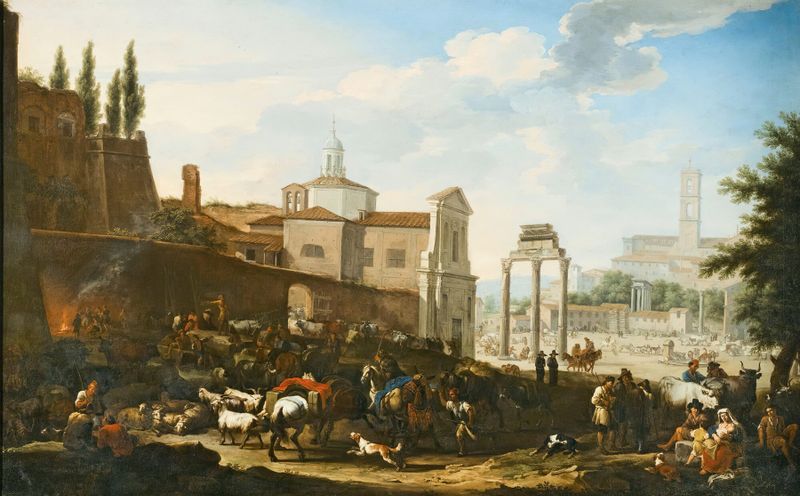
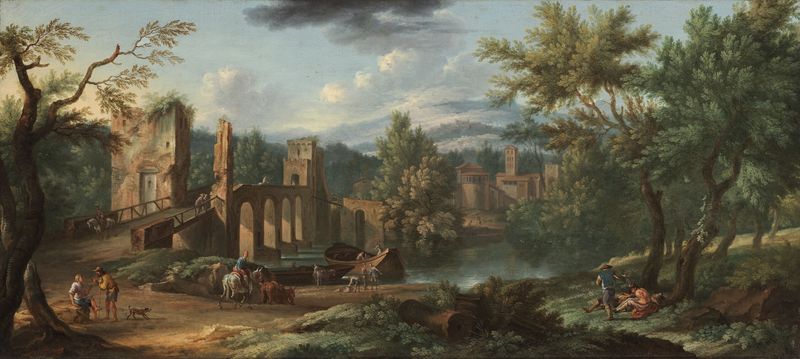
What secret hides in the quiet of the canvas? In a world where the echoes of time settle among shadows, decay intertwines with the living, exposing the fragility of life and purpose. Look to the left at the fishermen returning to shore, their weathered faces carved by the sun and salt. The touch of twilight softens the harsh lines of their labor, while a palette of muted earth tones speaks to the passage of days. In the foreground, travelers begin to set up camp, their tent's fabric billowing like a gentle sigh, contrasting the solid, majestic mountains looming in the background.
Notice how the light bends across the water's surface, shimmering with hints of gold that suggest both warmth and the undeniable passage of time. Delve deeper into the canvas, where the interplay of movement and stillness unveils a story of transition. The two riders, positioned on the path above, appear as fleeting presences, their figures shrouded in mystery and distance. Meanwhile, the fishermen’s resigned expressions convey a silent understanding of the cycles of nature — the decay of day fading into night, the perpetual rhythm of life and loss.
Each brushstroke seems to whisper a tale of survival against the inevitability of time, with the mountains standing as ancient witnesses to it all. In his unnamed work, Jacob de Heusch captured this vivid scene likely in the 17th century, a period marked by maritime exploration and socio-economic shifts in his native Netherlands. Amidst the bustling art world, where the Baroque style reigned, he sought to blend realism with a reverence for the natural landscape, echoing the complexities of life along the coast and the delicate balance between human existence and the passage of time.