The Campo Vaccino, Rome — History & Facts
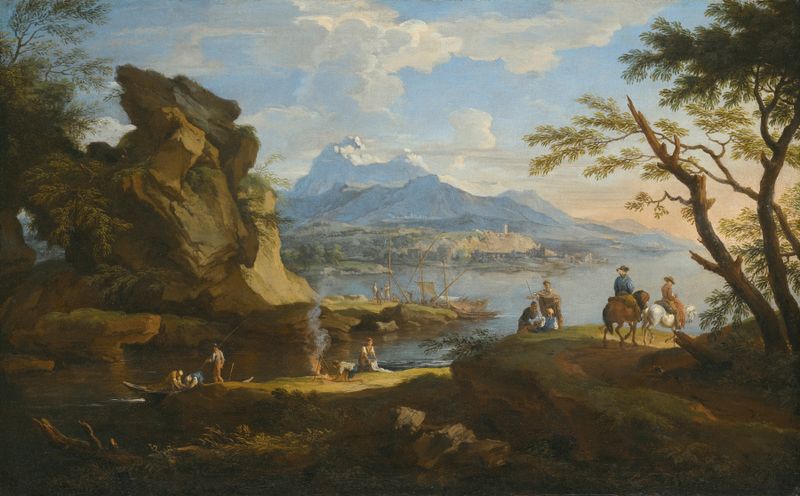
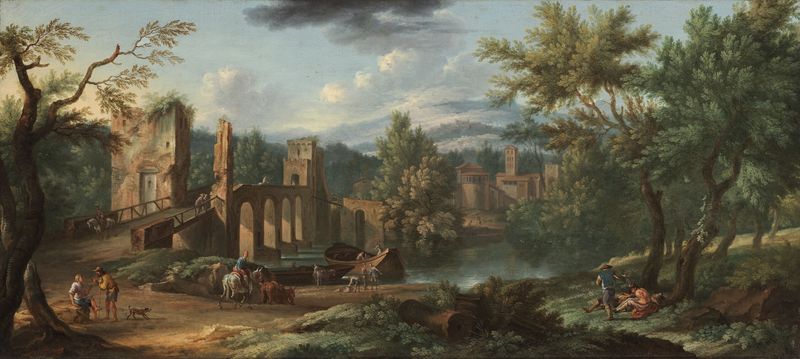
In this stillness, we find ourselves enveloped by the melancholy of a past once vibrant, now faded. A longing permeates the air, urging us to reflect on what has been lost amidst the ruins and the passage of time. Look to the left at the crumbling columns standing stoic against a backdrop of distant hills, their ancient presence whispering stories of glory. Notice how the soft, muted palette of ochres and grays evokes a sense of nostalgia, while the brushstrokes intricately capture the texture of the weathered stone.
The composition draws the eye toward the figure in the foreground, seemingly lost in thought, a mere silhouette against the grandeur of history, inviting you to linger in the moment. The juxtaposition of the lively sky and the solemn ruins creates a profound emotional tension, illustrating the coexistence of beauty and decay. Subtle figures roam the landscape, their smallness amplifying the grandiosity of the space, portraying the inevitable passage of time and the impermanence of human existence. Each detail, from the fleeting clouds to the distant mountains, reflects a world that once thrived but is now suffused with a haunting sadness. During the period Jacob de Heusch created this work, possibly in the mid-17th century, Rome was experiencing a resurgence as a center of art and culture.
Influenced by the Baroque movement, he explored the theme of landscapes echoing history. Amidst his own artistic journey, he navigated the complexities of capturing beauty intertwined with melancholy, a sentiment reflective of both his life and the broader artistic landscape of the time.