Farm at Dusk — History & Facts
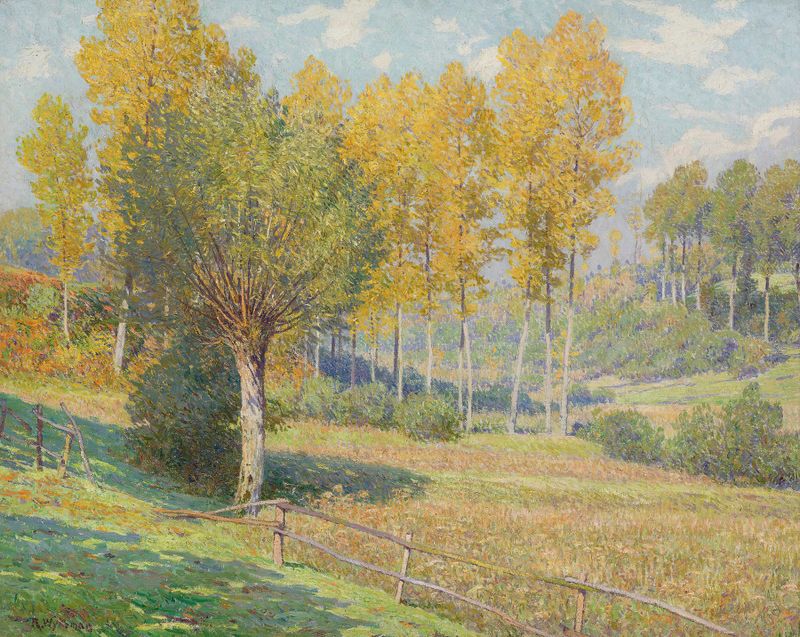
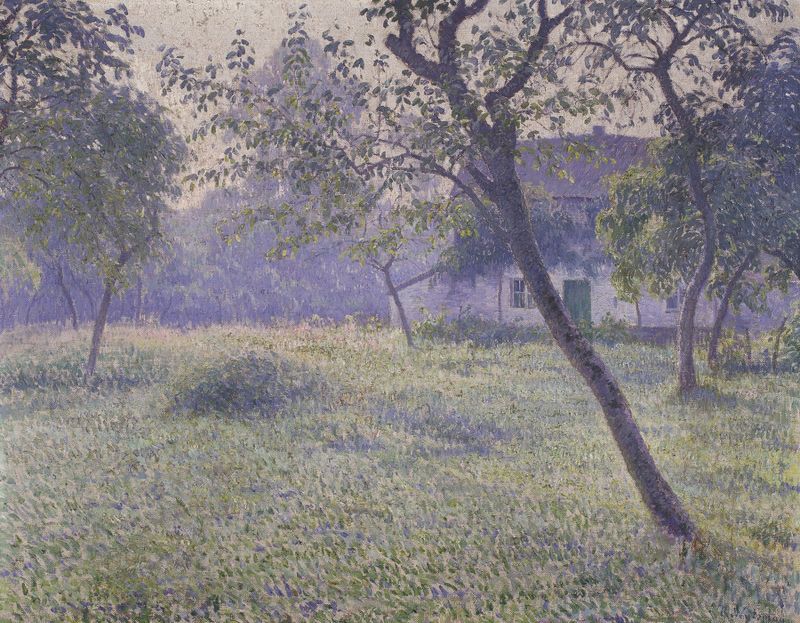
What if beauty was never meant to be finished? As dusk descends, the world holds its breath, suspended between day and night, inviting contemplation of time’s relentless march. Focus on the canvas, where hues of deep indigo and soft amber blend seamlessly in the twilight sky. The farm sits quietly in the lower left, its rustic structures enveloped by gentle shadows, beckoning your gaze to linger on the warm glow spilling from the windows. Notice how Wytsman expertly captures the transition of light, illuminating the fields while casting long, expressive shadows that seem to stretch and pull with the fading day. Beneath the surface of this serene scene lies a tension between stillness and the inevitable passage of time.
The fading light reflects the fleeting nature of beauty, evoking a bittersweet nostalgia for moments that cannot be held. The juxtaposition of the vibrant sky and the encroaching darkness suggests a cycle of renewal, where endings and beginnings are woven together in a delicate balance. In 1884, Rodolphe Wytsman created this work in Belgium during a period marked by a growing interest in Impressionism. His exploration of color and light was influenced by the shifting artistic landscape of his time, as artists began to seek new ways to depict the world around them.
This painting reflects not only his personal journey as an artist but also the broader movement towards capturing ephemeral beauty in a rapidly changing world.