Orchard at Night — History & Facts
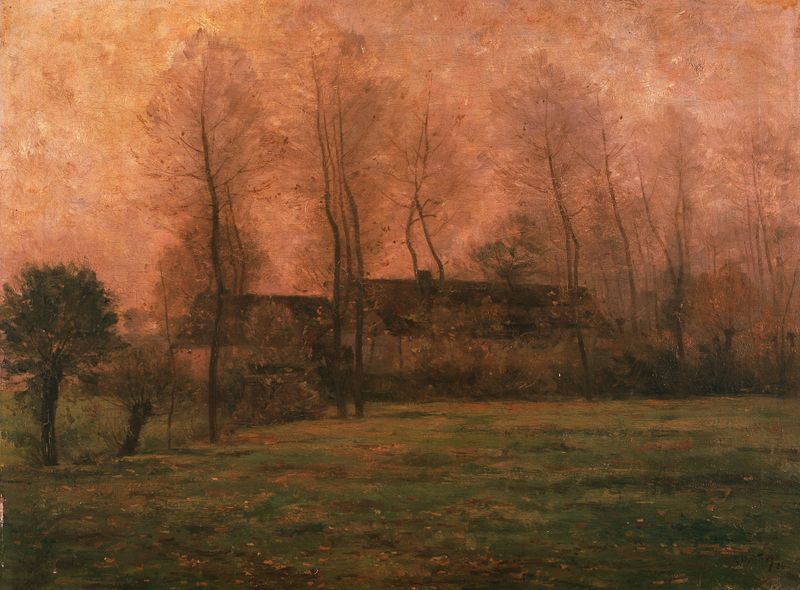
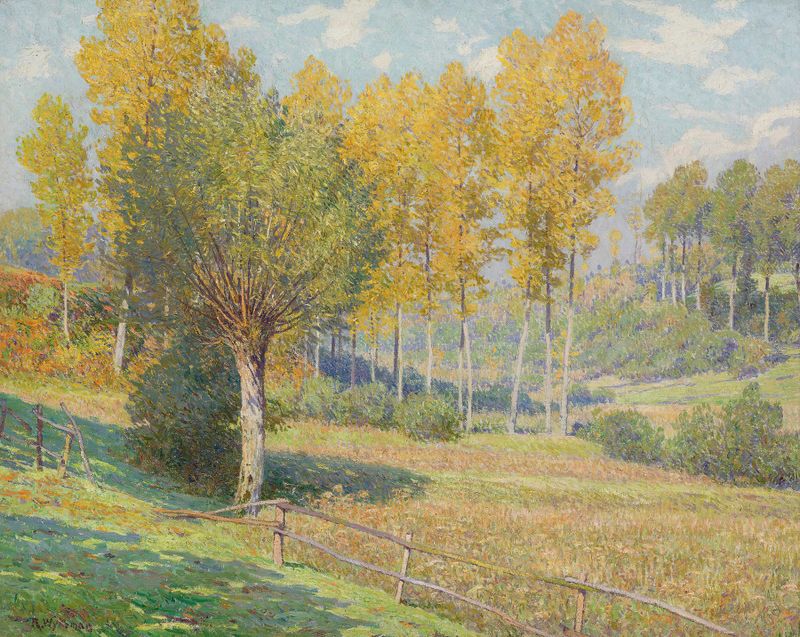
In the depths of the night, shadows dance softly beneath the moonlight, beckoning the viewer to contemplate the unseen. An orchard holds its breath, each tree a sentinel in the dark, standing guard over the mysteries hidden within the void of night. Look to the left at the vibrant, contrasting hues of green and blue, as they blend seamlessly into the darkness that envelops the canvas. Notice Wytsman’s deft brushwork, which creates the illusion of movement among the leaves, whispering secrets to the wind.
The delicate strokes juxtaposed against the deep, inky background heighten the tension, drawing your eye into a world both familiar and profoundly mysterious. Amidst this serene landscape, consider the stark contrast between the lively orchard and the oppressive shadows. Each flickering light suggests life bursting forth from a space that feels paradoxically empty, a reminder of nature's duality—its beauty and the void that exists alongside it. The painting invites a reflection on absence, encouraging an exploration of what lingers unspoken between the branches and the sky. During the early 20th century, Rodolphe Wytsman created Orchard at Night, a work that echoes the Symbolist movement prevalent at the time.
Living in Belgium, he was influenced by the tension between reality and the imaginative realms artists sought to explore. This piece reflects not only personal introspection but also the broader cultural inquiries into light, shadow, and the emotional weight of the unseen.