Paysage — History & Facts
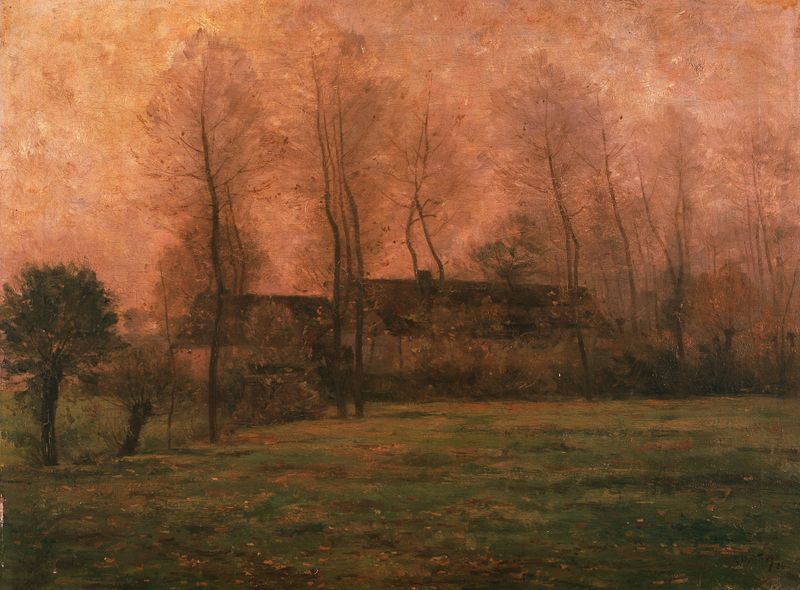
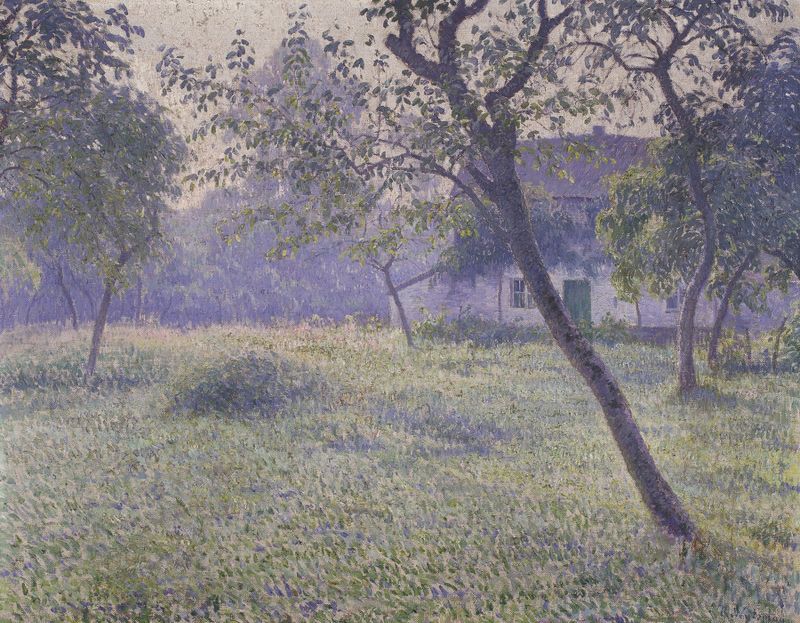
In the quiet embrace of nature, creation unfolds, revealing the intricate dance of hues and forms that breathe life into the canvas. Look to the left at the gentle undulation of the rolling hills, where vibrant greens blend seamlessly into soft pastels. The brushstrokes evoke a sense of movement, capturing the whisper of the breeze that rustles through the foliage. Notice how the light filters through the trees, casting delicate shadows that invite you to explore the depth of the landscape, while the interplay of warm and cool tones evokes a serene harmony. As you delve deeper into the scene, consider the emotional undercurrents present here.
The contrast between the bright foreground and the shadowy background suggests a tension between optimism and introspection. The placement of the trees, standing tall yet isolated, speaks to the solitude inherent in creation—a reminder that even in beauty, there exists a sense of loneliness. Each stroke reveals the artist’s contemplation of nature, inviting viewers to reflect on their own connection to the world. Rodolphe Wytsman created this piece during a period marked by the rise of Impressionism, likely in Belgium, where he explored the depths of color and light.
His dedication to capturing the essence of landscapes reflected a broader movement in art, as artists sought to convey not just the visual reality, but the emotional truths behind it. This painting encapsulates his journey as an artist striving to balance the vibrant chaos of life with the profound silence found in nature.