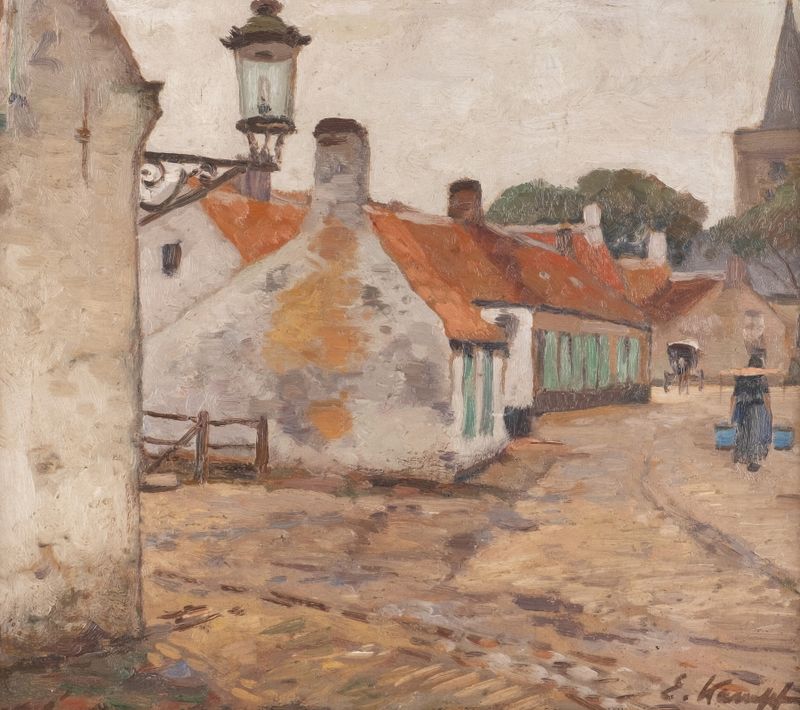
Farm in stormy landscape — History & Facts
In the silent embrace of a storm, where nature's fury meets the serene stillness of a rural life, one can find unexpected beauty. The tension between the elements evokes a profound sense of introspection, compelling us to seek tranquility amid turmoil. Look to the foreground where a solitary farmhouse stands resilient against the backdrop of swirling clouds. Notice how the stormy palette of dark blues and grays envelops the scene, while slivers of light break through, illuminating the structure.
The brushstrokes convey movement, capturing both the wind's rage and the earth’s steadfastness. The horizon dances with errant strokes, infusing the landscape with life, while the farmhouse remains a beacon of calm amidst the chaos. Yet, beneath the tumultuous skies lies a deeper narrative. The storm symbolizes the inner conflicts we all face, illustrating the struggle between nature and humanity.
The stark contrasts between dark and light reflect the duality of existence—the chaos of the natural world juxtaposed with the tranquil resilience of the human spirit. The silence enveloping the farmhouse hints at a moment of reflection, as if time pauses to allow for contemplation amidst the turmoil. Eugen Kampf painted this work during a period often characterized by rapid industrial change, where the rural landscapes faced encroachment from modern development. The lack of a specific date suggests a timeless quality, perhaps reflecting his personal turmoil or broader societal shifts.
In this painting, Kampf captures not only the visual drama of the storm but also the profound silence that dwells within it, inviting us to find grace amid chaos.