Farm Near Kerrville — History & Facts
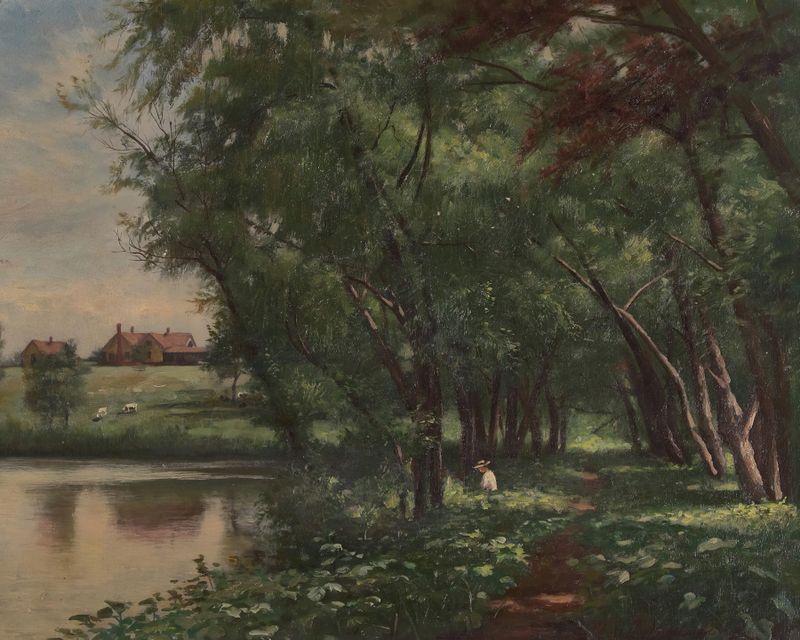
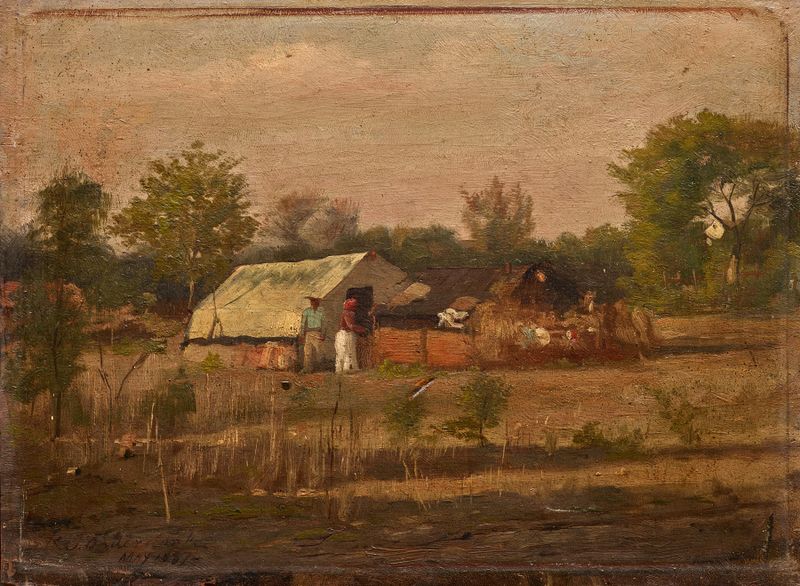
In a world laden with tumult, it is through the lens of transformation that we find beauty and serenity. Look to the left at the sprawling fields, where gentle hills roll into the horizon, kissed by the soft hues of dawn. The artist employs a delicate palette of greens and yellows, harmoniously blending them with patches of ochre, evoking the vibrant life of the Texas countryside. Notice how the brushstrokes dance upon the canvas, their textured layers creating an inviting landscape that draws the viewer into the heart of nature.
The composition is anchored by a modest farmhouse, its simplicity becoming a refuge amid the splendor of the surrounding land. Yet, beyond the idyllic scene lies a complex interplay of solitude and connection. The farmhouse stands as a symbol of resilience, embodying the human spirit's enduring link to the land. The subtle play of light captures the moment of daybreak, suggesting the dawn of new possibilities, while shadowed areas hint at the challenges that linger beneath the surface.
This dichotomy reflects not only the physical landscape but also the emotional landscape of its inhabitants, who toil beneath the vast Texas sky. In 1901, Robert Jenkins Onderdonk painted this work during a period of personal transformation and exploration within the American art scene. Settled in San Antonio, he was influenced by the burgeoning Impressionist movement, which sought to capture the ephemeral beauty of the natural world. This painting stands as a testament to his dedication to portraying the essence of Texas landscapes at a time when the region was on the cusp of modernization, inviting viewers to reflect on the harmony between man and nature amidst evolving times.