Tranquil Silence — History & Facts
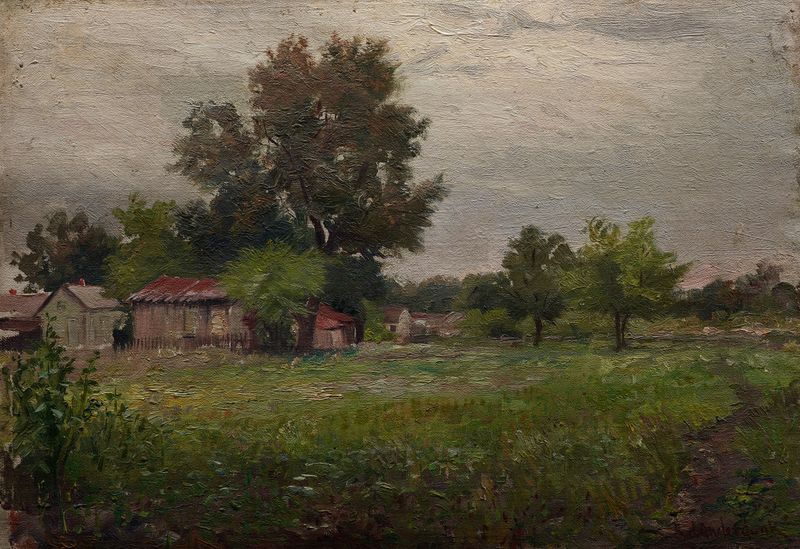
Could a single brushstroke hold eternity? In the quiet expanse of memory, where emotions linger like echoes, Tranquil Silence invites us to reflect on the delicate and often fleeting nature of our experiences. Look closely at the soft interplay of hues that blend seamlessly across the canvas. The gentle gradient of blues and greens draws your eyes into a serene horizon, while the faintest whispers of warmer tones evoke the warmth of a distant sun. Notice how Onderdonk expertly uses light to illuminate the foreground, creating depth and a sense of calm that seems to transcend time itself.
Each stroke feels intentional, revealing a world where peace reigns and the chaos of life is momentarily suspended. Yet, amidst the tranquility, a subtle tension emerges. The juxtaposition of cool and warm colors suggests an underlying complexity, perhaps a yearning for connection or the weight of unspoken words. The soft textures invite touch, while the layered compositions elicit a sense of depth, hinting at the memories that lie just beneath the surface.
This quiet yet rich environment captivates the viewer, urging them to contemplate their own experiences of stillness and reflection. At the time Tranquil Silence was created, Onderdonk was navigating the evolving art landscape of the early 20th century, marked by shifts toward Impressionism and a focus on capturing ephemeral beauty. Living in the cultural hub of Texas, he was influenced by both his surroundings and his contemporaries, embracing techniques that emphasized atmosphere and emotion. This painting stands as a testament to his exploration of memory and the moments that define our lives, inviting us to find peace within our own recollections.