Mexican Jacal — History & Facts
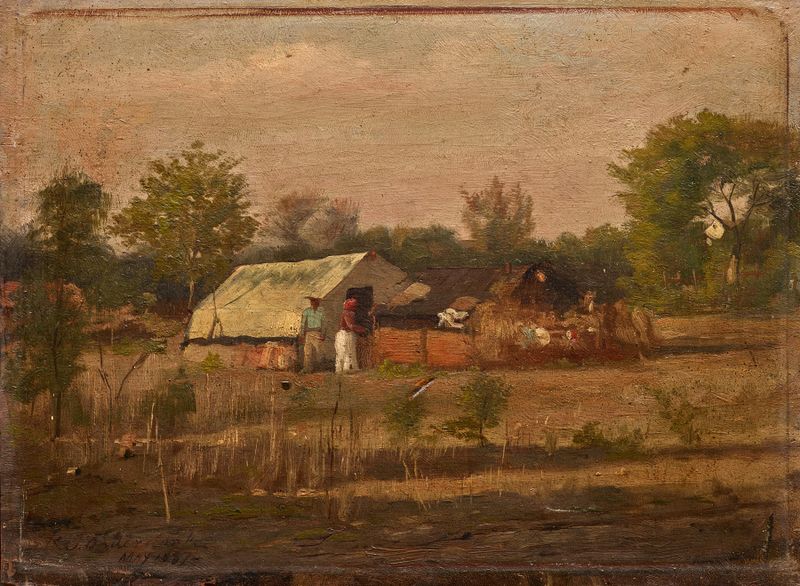
What secret hides in the quiet of the canvas? In the stillness, an obsession with the details emerges, inviting us to explore the depths of an unspoken narrative. Look closely at the left side of the painting, where the sun spills its warm glow over the textured adobe walls of the jacal. Notice how the soft, earthy hues of ochre and sienna blend seamlessly into one another, creating a harmonious background. As your gaze travels to the right, observe the delicate play of shadow cast by the wooden beams, each line and angle meticulously crafted, pulling you deeper into the intimate space. The simplicity of the structure belies a rich emotional undercurrent.
The juxtaposition of light and shadow speaks to the duality of comfort and isolation often found in rural life. The quietness of the scene evokes a sense of longing, while the intricate brushstrokes hint at an artist's desire to capture not just a physical space but a state of mind—a reverie suspended in time. Each element, from the rustic thatching to the inviting doorway, draws the viewer into a world both familiar and distant. Robert Jenkins Onderdonk painted this work during a period marked by an interest in regionalism and the celebration of local culture in the early 20th century.
Living in Texas, he was deeply influenced by Mexican landscapes and architecture, reflecting a growing appreciation for the cultural richness surrounding him. At this time, artists were increasingly seeking to establish their identities within the broader narrative of American art, and Onderdonk's focus on everyday life captured that spirit of exploration and connection.