Farmers wife and shepherd boy with cattle and a flock of sheep by the lakeside — History & Facts
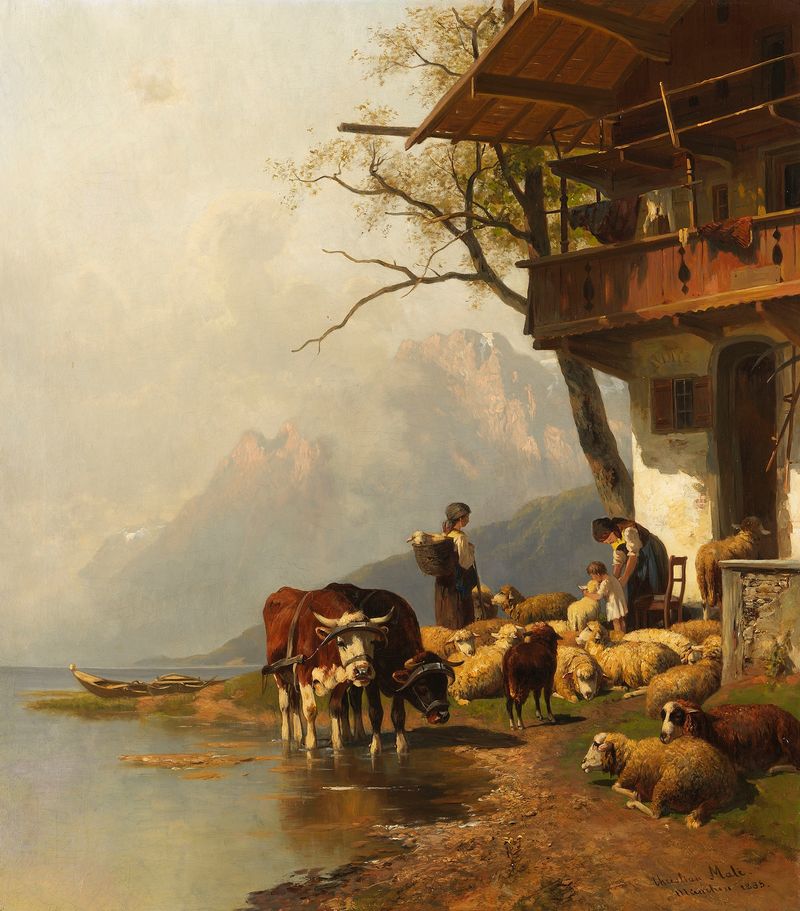
In the stillness of a lakeside, beauty unfolds through a quiet harmony between figures, nature, and time. Each stroke of paint carries the weight of lives lived, moments captured, and emotions felt. Here, the interplay of light and shadow invites you to look closer, revealing layers of meaning that pulse just beneath the surface. Look to the center, where the farmers’ wife stands poised, a gentle grace radiating from her figure.
The warmth of her clothing contrasts with the cool, reflective waters behind her, creating a visual dialogue between land and sky. Notice how the vibrant greens of the grass cradle the earthy tones of the cattle, grounding the scene in a tapestry of life. The shepherd boy, slightly to the left, watches over the sheep, his stillness suggesting a moment of contemplation amidst the gentle chaos of nature. Beneath the idyllic exterior lies a deeper narrative.
The juxtaposition of the farmer’s wife and the shepherd boy hints at the connections between their worlds — labor and leisure, responsibility and innocence. Each animal, meticulously detailed, embodies the cycle of life that sustains them, while the stillness of the water reflects not only the tranquility of the scene but also the transient nature of beauty itself. There’s a poignant tension here between the harmony of existence and the inevitability of change. In 1878, while creating this piece, the artist found himself in a world grappling with the impacts of industrialization.
Working in Germany, Mali was influenced by Romantic ideals, striving to capture the authenticity of rural life amidst a transforming society. This artwork encapsulates his desire to celebrate the simple beauty of the pastoral landscape, showcasing a serene moment that resonates with timelessness.