Farmhouse in ruins — History & Facts
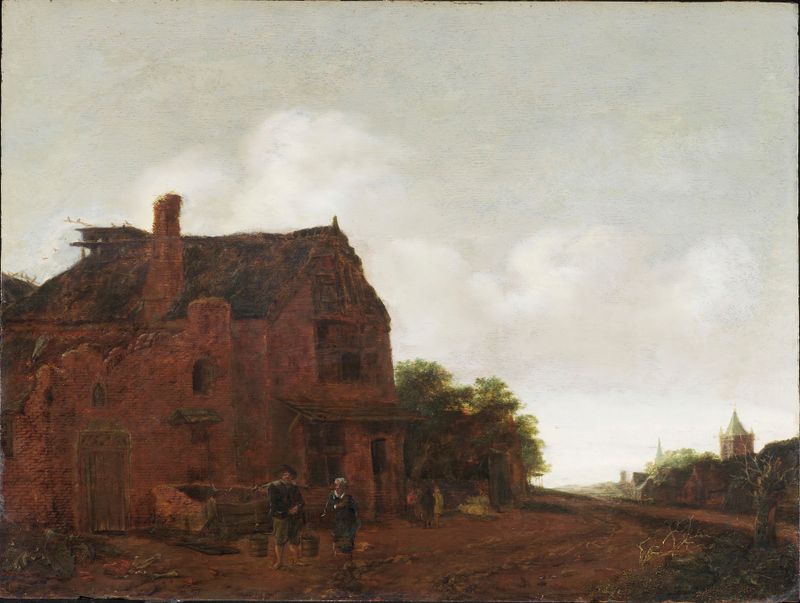
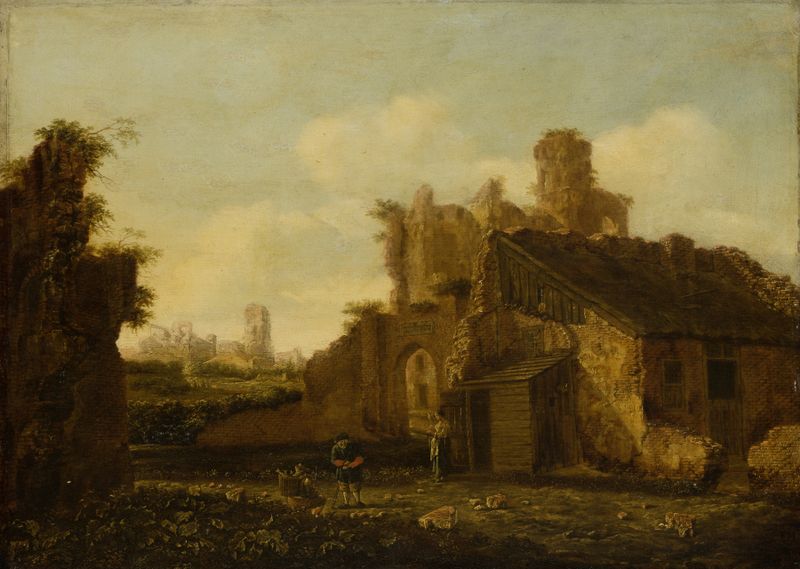
Did the painter know this moment would outlive them? In Farmhouse in Ruins, an echo of a forgotten world beckons us into an illusory realm of decay and resilience. Look to the left at the skeletal remnants of the structure, where crumbling walls lean into the embrace of nature. The artist employs a muted palette, allowing earthy browns and soft greens to intertwine, evoking a sense of nostalgia. Shadows stretch across the ground, hinting at the past while inviting the viewer to explore the depth of the composition.
Notice how the light filters through, illuminating fragments of wood and stone, and highlighting the delicate dance between permanence and transience. In the intricate details, the emotional tension of loss surfaces. The gnarled vines creeping over the ruins symbolize nature's reclaiming power, suggesting that human endeavor is ultimately ephemeral. Yet, the remnants of the farmhouse stand defiantly, a poignant reminder of dreams and toil encapsulated within the dilapidated walls.
Each brushstroke contributes to the narrative of resilience amid decay, creating a silent dialogue between the familiarity of home and the inevitability of time's passage. Emanuel Murant painted this work between 1650 and 1700, during a period of personal reflection and artistic experimentation. Living in a tumultuous era marked by social and political upheaval, artists like Murant sought to capture the fragility of existence. This piece stands as a testament to his ability to transform the mundane into a profound meditation on life’s impermanence, inviting viewers to ponder the stories held within the ruins.