
Farmyards — History & Facts
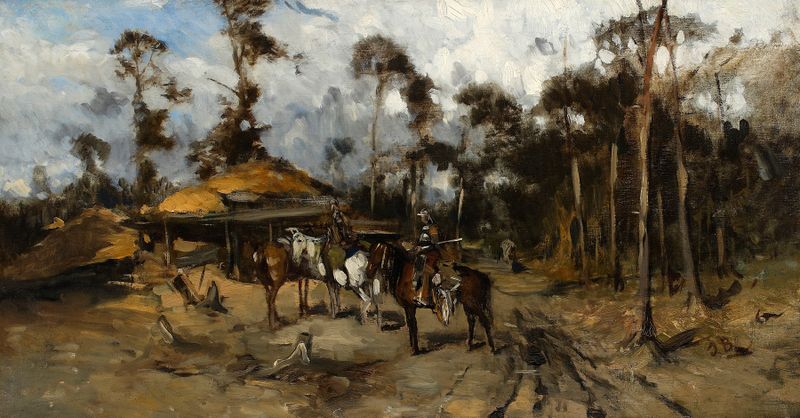
Did the painter know this moment would outlive them? In the tranquil embrace of rural life, where the earth meets the sky, Farmyards captures the divine simplicity of existence. Look to the foreground, where the modest farmhouses stand resilient against the backdrop of a vast, azure sky. Notice how the golden hues of sunlight caress the thatched roofs, creating a warm invitation to the viewer. The meticulous brushwork breathes life into the gentle curves of the landscape, while the soft contrasts between light and shadow evoke an intimate connection with nature's rhythms. Beneath its idyllic surface, the painting reveals deeper tensions: the juxtaposition of man’s labor against the timelessness of nature, and the solitude of the rural worker.
The scattered livestock, each rendered with careful detail, symbolize the divine trust humans place in the land. The quietude hints at an underlying spirituality, an acknowledgment of the cycles of life that bind both toil and tranquility. In the late 19th century, amidst the shifting tides of modernity, the artist painted this piece in Poland, a country grappling with its identity. At this time, Brandt sought to celebrate the agrarian life that seemed increasingly threatened by urbanization.
His work reflects a longing for the sacredness found in everyday moments, a desire to immortalize the simplicity of farm life in a rapidly changing world.
More Artworks by Jozef Brandt
Browse all →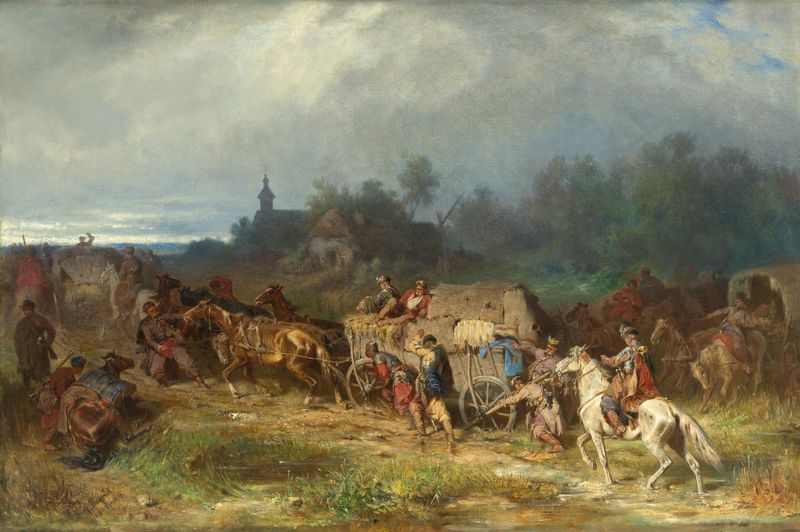
Returning Home, ‘Patient Transport (Polish Camp)’
Jozef Brandt

Landscape on the River Dniester, study for paintings
Jozef Brandt
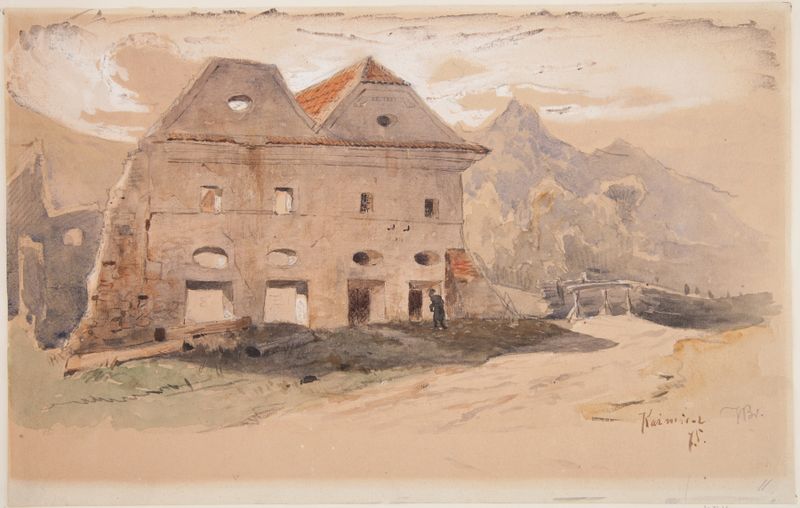
Granary in Kazimierz on the Vistula
Jozef Brandt

To The Forest
Jozef Brandt
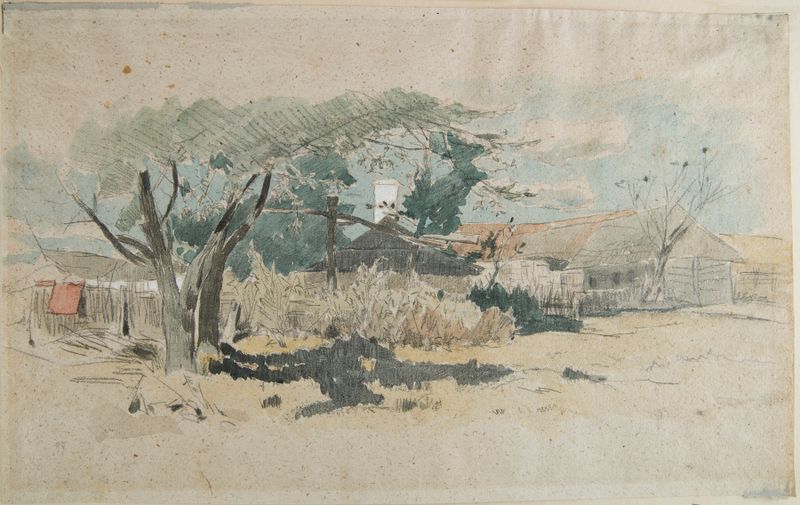
Country farms in Orońsk
Jozef Brandt
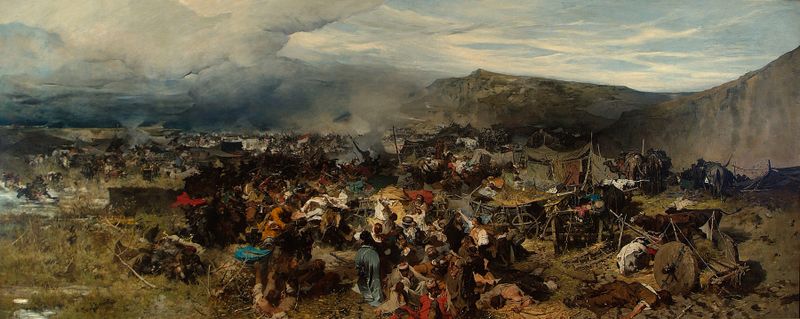
Rescue of Tatar Captives
Jozef Brandt
Horsemen in the woods, sketch
Jozef Brandt





