Country farms in Orońsk — History & Facts
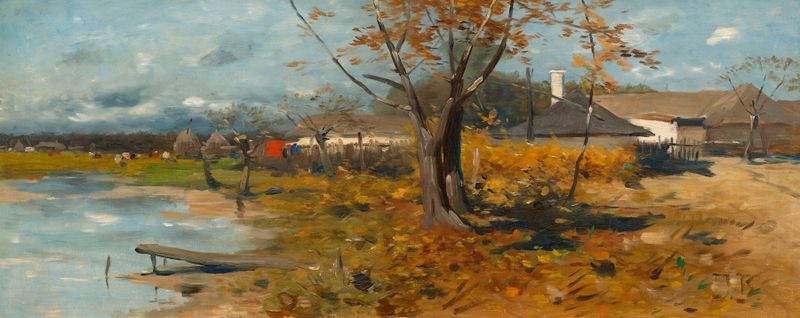
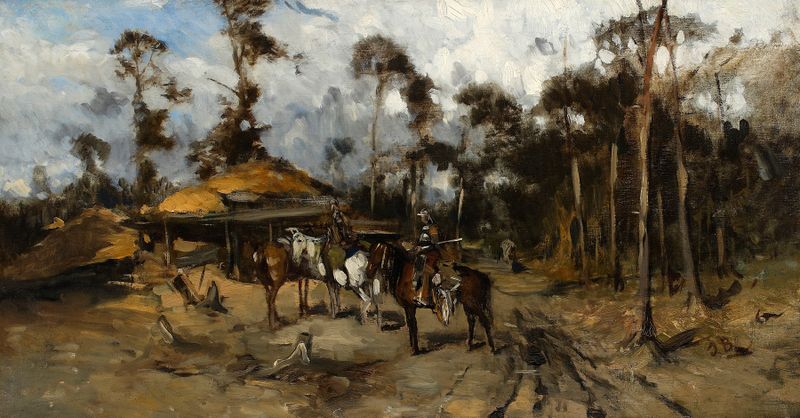
The emotional weight of nostalgia hangs in the air, as forgotten stories linger in the corners of memory. In the tranquility of rural life, time seems to pause, inviting reflection on simpler, yet profound moments. Look to the foreground of the painting, where gentle hills cradle a cluster of quaint farmhouses beneath an expansive sky. The earthy tones of browns and greens interweave with soft, golden strokes, creating an inviting scene.
Notice how the light delicately illuminates the thatched roofs, casting warm shadows that emphasize the bucolic charm. Each brushstroke breathes life into the landscape, capturing the essence of a countryside untouched by the rush of modernity. Yet, beneath the serene surface lies a deep contrast between nostalgia and the passage of time. The idyllic setting evokes a longing for a lost age, while the presence of the distant mountains hints at the challenges of nature and life beyond this tranquil scene.
The clouds above, swirling and dynamic, suggest the unpredictability of the future, all while the farms remain steadfast—silent witnesses to the cycles of life that have unfolded around them. Created in 1897, this work emerged during a period when Jozef Brandt was deeply engaged with themes of Polish rural life. Having established himself in the art scene, he captured the essence of his homeland amidst the rise of modernism. This decade sparked a growing appreciation for pastoral landscapes, reflecting both personal and collective identities tied to the land, a poignant reminder of heritage amidst the evolving world.