Fifth Lake — History & Facts
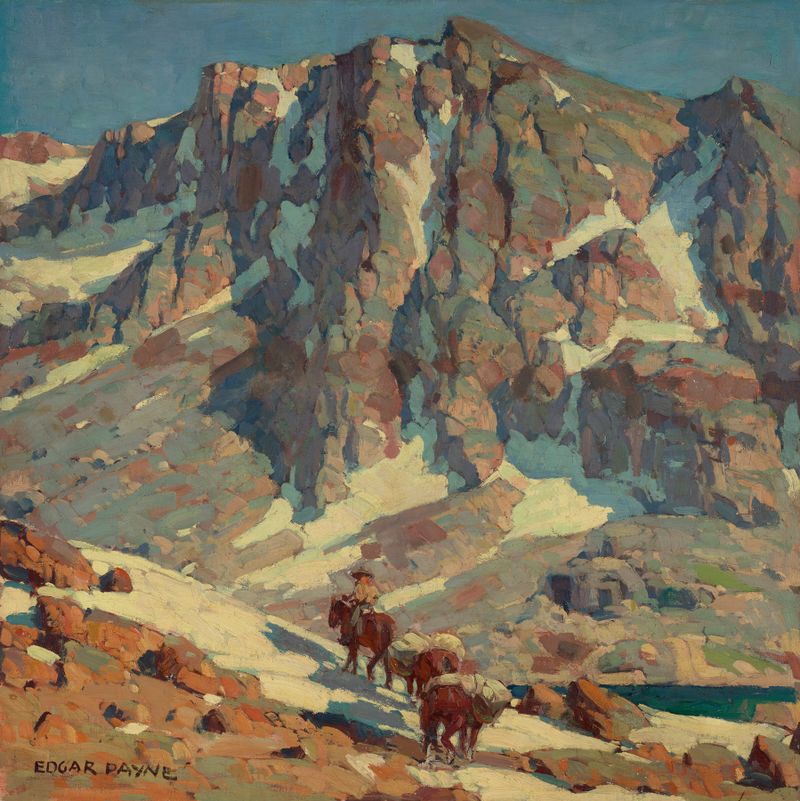
What if beauty was never meant to be finished? In Fifth Lake, tranquility and longing intermingle in a serene landscape, offering a glimpse of wilderness untainted by time, yet marked by an undercurrent of loss. Look to the left at the vivid blue of the lake, its depths punctuated by the gentle strokes of lighter hues that mimic the ripples on its surface. Notice how the surrounding mountains rise majestically, their silhouettes softened by a delicate mist, creating a haunting, ethereal atmosphere. The palette, rich with deep greens and earthy browns, conveys a sense of harmony, yet the sporadic bursts of white clouds evoke a fleeting nature of beauty, reminding us that permanence is an illusion. The contrasts within the painting speak volumes: the stillness of the lake juxtaposed with the towering, imposing mountains suggests a dialogue between serenity and the overwhelming force of nature.
The soft edges around the horizon create a sense of longing, as if the landscape is in a state of waiting, echoing the theme of beauty that is both celebrated and inevitably lost. Each brushstroke captures the fleeting moments of light, imbuing the scene with an emotional resonance that invites reflection on what remains when beauty fades. In 1928, Edgar Alwin Payne painted Fifth Lake during a period when he was deeply engaged with the California landscape, striving to capture its essence through color and form. Having gained recognition within the artistic community for his vivid depictions of nature, Payne's work during this time reflected his personal exploration of the wilderness as both a source of inspiration and a meditation on transience and existence.