
Figures In A Mountainous River Landscape — History & Facts
Can beauty exist without sorrow? In Figures In A Mountainous River Landscape, tranquility envelops the scene, yet a subtle tension underlies the serene appearance. Look to the left where rugged mountains loom, their jagged peaks softened by a gentle cascade of clouds. Notice how the vibrant greens of the riverbank contrast with the cool blues of the water, drawing the eye across the canvas and into the heart of the scene. Figures are skillfully placed along the river’s edge, their postures suggesting a moment of quiet reflection, while light dances upon the water's surface, hinting at a deeper current of emotion beneath the apparent calm. The juxtaposition of the monumental landscape and the intimate figures evokes a profound sense of transformation, capturing the ephemeral nature of existence.
The shimmering water symbolizes movement and change, while the immovable mountains represent permanence and endurance. This duality prompts contemplation of both the beauty of the moment and the inevitable progression of time, inviting viewers to ponder what remains constant amidst the flux of life. In 1862, Johan Fredrik Eckersberg was deeply immersed in the Romantic movement, which celebrated the sublime beauty of nature juxtaposed with human emotion. Working in Norway, Eckersberg was influenced by contemporary currents in art, as he sought to blend realism with romanticism, focusing on the connection between humanity and the natural world.
The painting reflects his dedication to capturing the essence of his homeland while engaging in the broader dialogues of 19th-century European art.
More Artworks by Johan Fredrik Eckersberg
Browse all →
Landscape from Romsdalen
Johan Fredrik Eckersberg
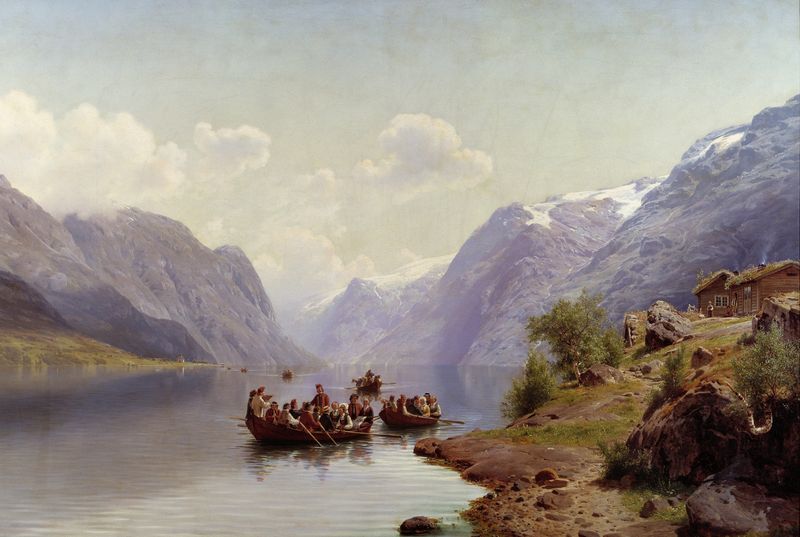
Bridal Escort on the Hardanger Fiord
Johan Fredrik Eckersberg
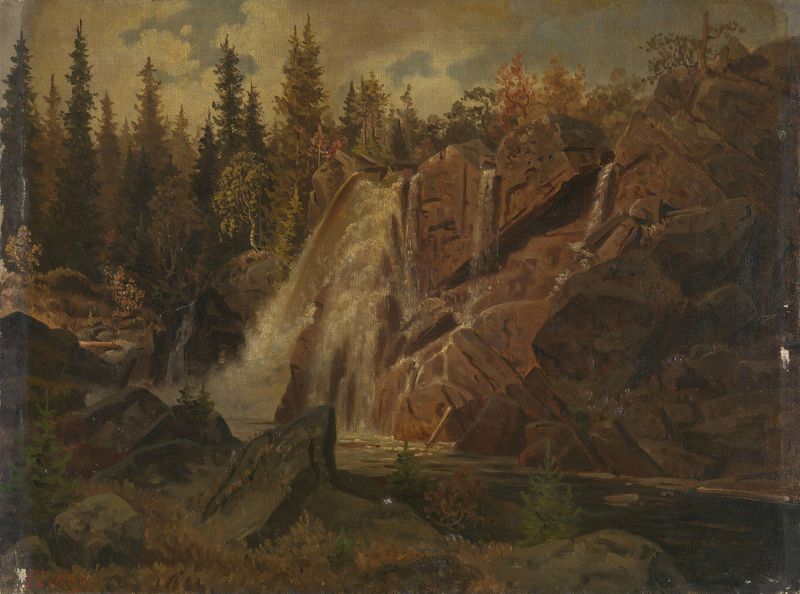
Norwegian Landscape
Johan Fredrik Eckersberg
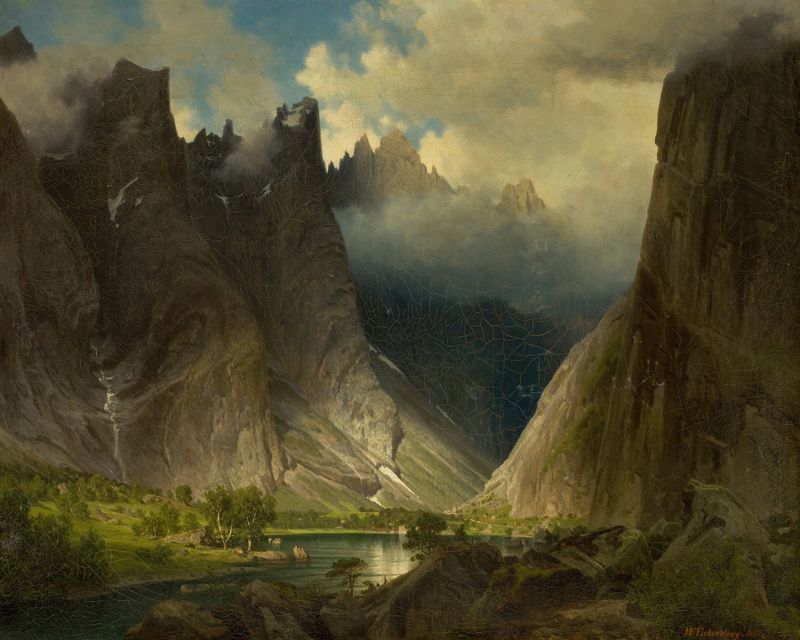
Valley of Romsdalen
Johan Fredrik Eckersberg
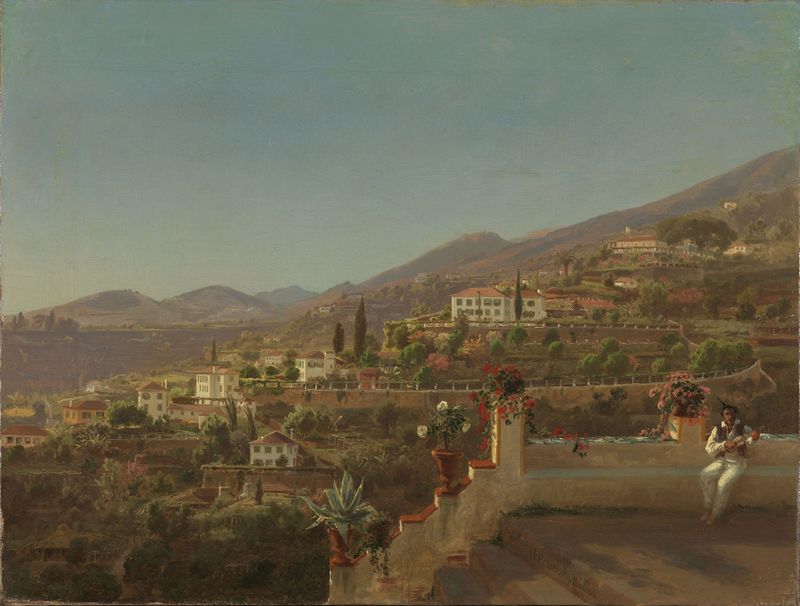
View of Funchal, Madeira
Johan Fredrik Eckersberg

Sunset in the Mountains
Johan Fredrik Eckersberg

Landscape In Norway
Johan Fredrik Eckersberg

Utsikt over Funchal på Madeira
Johan Fredrik Eckersberg





