Figures On The Outskirts Of A Village — History & Facts
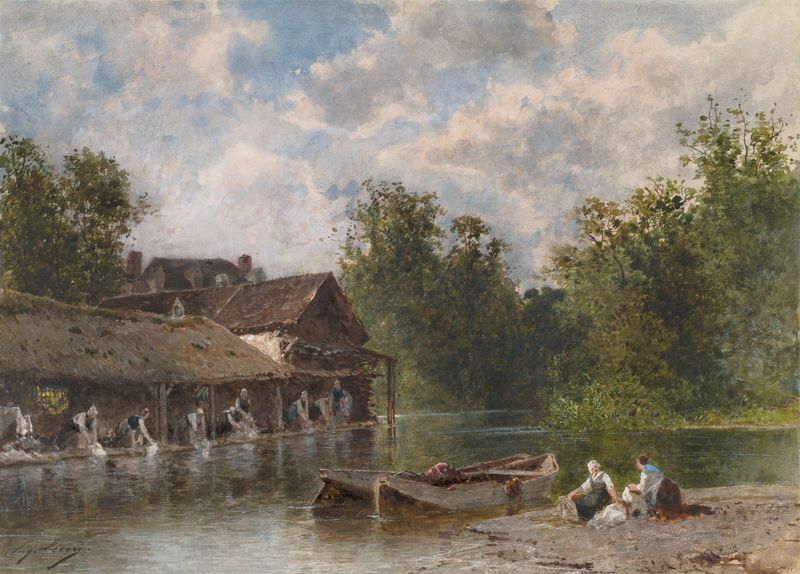
Where does light end, and longing begin? In the delicate embrace of fading twilight, the boundaries blur, revealing the fragile balance between sanity and madness. Look to the left at the figures huddled together, their silhouettes cast against the warm hue of the setting sun. The gentle strokes of Ciceri’s brush create a soft, golden light that bathes the scene, emphasizing the contours of their faces and the textures of their garments. Notice how the muted colors of their clothing echo the earthy browns of the village, creating a harmony that draws the eye inward, inviting contemplation of their quiet existence. As you delve deeper into the composition, the contrasts emerge like whispers in the dusk.
The warm light illuminates the figures, suggesting comfort and companionship, while the looming shadows hint at isolation and a deeper yearning for connection. Each element, from the distant trees to the serene village, forms a backdrop to the unspoken madness of longing; a reminder that even in the calm of twilight, turmoil lies just beneath the surface. In 1875, Ciceri painted this evocative scene during a period steeped in the tension between Romanticism and Realism. Living in France, he was influenced by the rapid changes of the modern world and the desire to capture human emotion amid shifting landscapes.
This work reflects not only his technical prowess but also the unsettled spirit of an era grappling with the complexities of mental states and social interactions.