Fischerboote — History & Facts
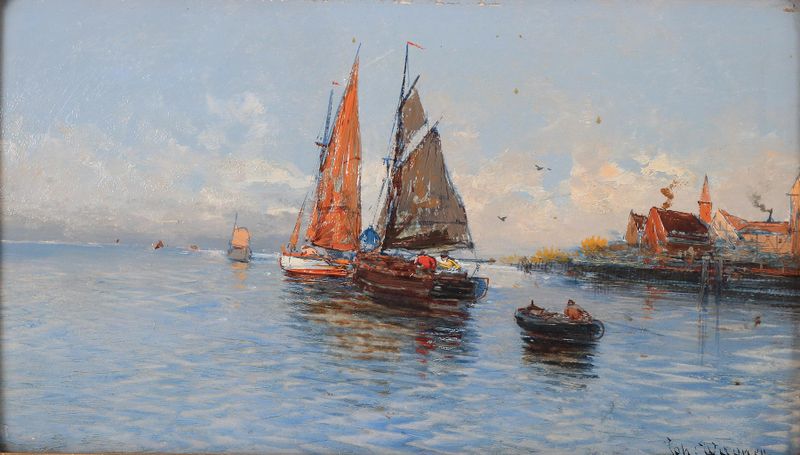
Art reveals the soul when the world turns away. In this stillness, one finds the void brimming with unspoken stories and emotions waiting to be discovered. Focus your gaze on the gentle curves of the boats, nestled together under a muted palette that whispers of solitude and nostalgia. Notice how the soft light caresses the surfaces, creating a subtle interplay of shadow and texture that invites you to imagine the experiences etched into the wood.
The composition, with boats anchored against a tranquil backdrop, draws you into a space that feels both intimate and expansive, evoking a sense of transport to a quieter time. Here, the contrast between the robust forms of the fishing boats and the ethereal nature of the surrounding water invites contemplation. The enduring presence of the boats speaks to resilience, while the surrounding void hints at loss and absence. It’s as if the artist captures a moment frozen in time—a fleeting reflection of life’s uncertainties.
Each brushstroke contributes to an atmosphere of stillness, where silence reigns and the weight of unexpressed thoughts lingers heavily in the air. Hans Johann Wagner created this work during a period marked by introspection and a search for meaning in the wake of the tumult of early 20th century Europe. While the exact date remains elusive, his art often mirrored the disconnection felt by individuals during times of societal upheaval. The boats symbolize not just a means of livelihood, but also the journey of the human soul navigating through the vastness of existence and the emotional void that sometimes follows.