Fischerboote II — History & Facts
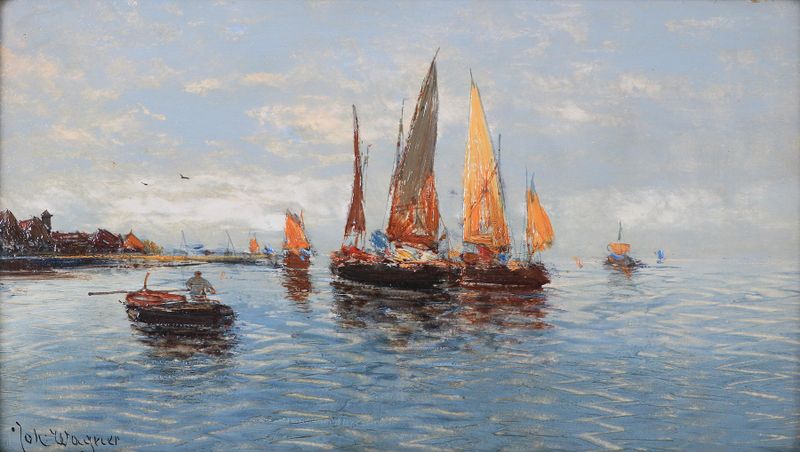
Within the strokes of Fischerboote II, a vibrant reminder of fleeting moments pulses with life and movement, as if beckoning us to stay in a world that is ever-changing. Look closely at the swirling brushstrokes that suggest the gentle undulation of water, where the boats seem to sway and dance with the rhythm of the currents. The rich hues of blue and green command your gaze, while the delicate play of light across the surface evokes a sense of shimmering vitality. Notice how the boats, depicted in warm earth tones, stand out against the backdrop, their forms nearly merging with the waves, both present and ephemeral. In this work, tension emerges from the juxtaposition of stability and flux.
The solid shapes of the boats represent human endeavor and the harsh reality of existence, while the restless water speaks to the relentless passage of time. This contrast between the static and the dynamic invites a deeper reflection on the nature of memory and the impermanence of life, where each ripple carries away the past yet cradles the promise of new journeys. Created during the early 20th century, Wagner immersed himself in the vibrant artistic milieu of Germany, a time marked by rapid industrialization and a burgeoning expressionist movement. Working in this dynamic environment, he sought to capture the essence of life's transience, a theme that resonates deeply within Fischerboote II, inviting viewers to contemplate the delicate balance between permanence and change amidst the ebb and flow of existence.